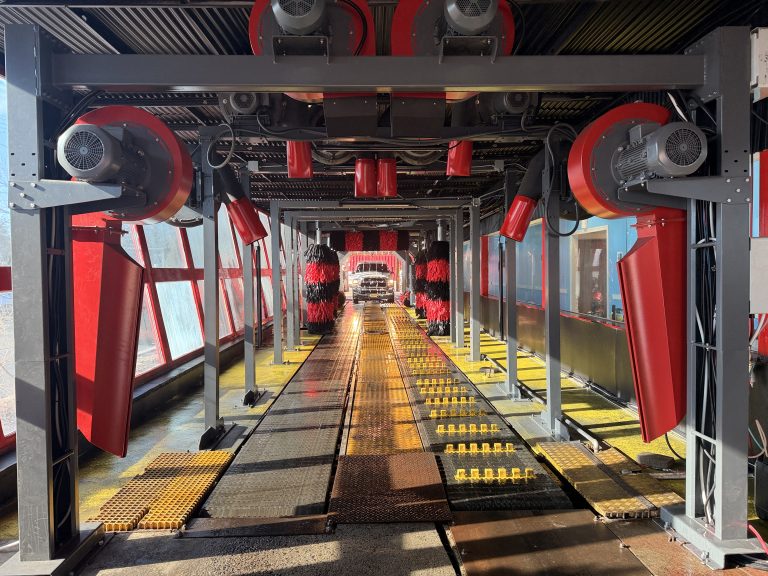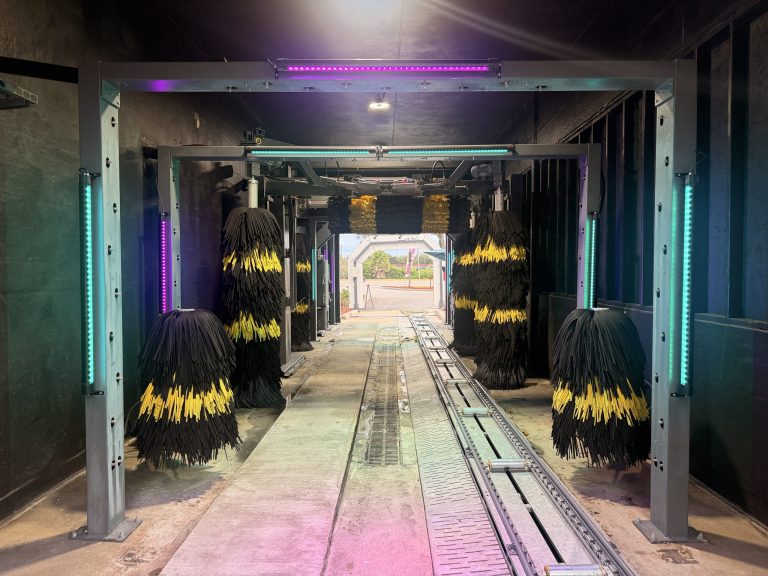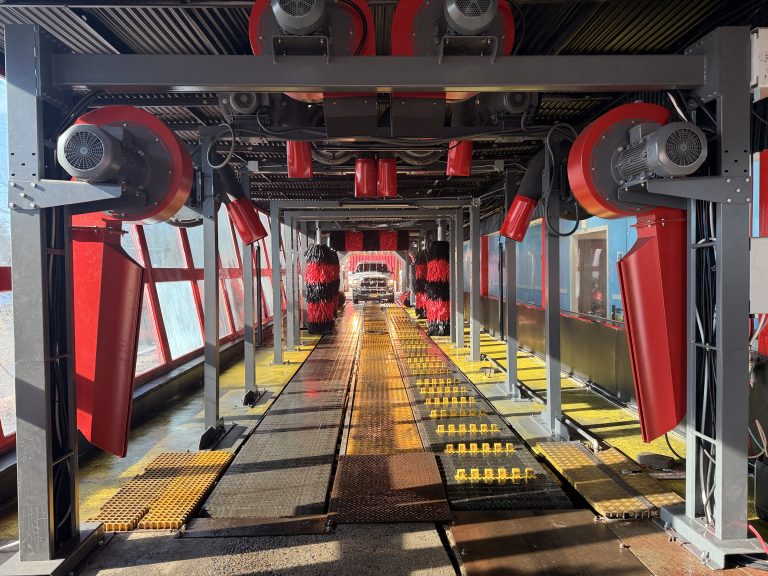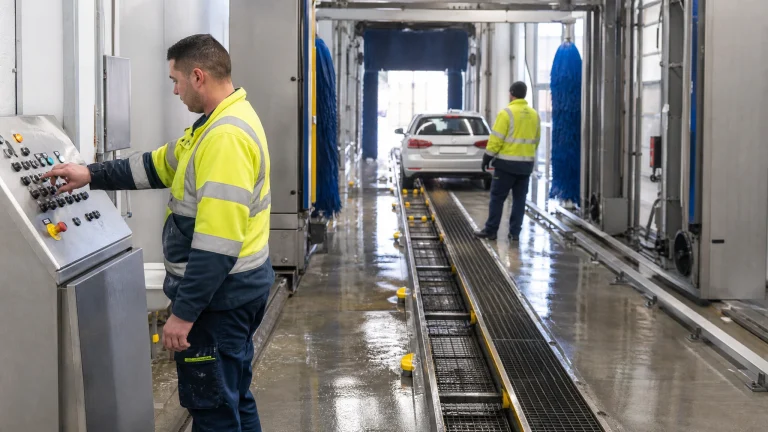
Before you sign a turnkey car wash agreement, you want proof that the developer can hand you a business that opens on time and stays open, not a set of promises. The best way to get that proof is to ask specific questions and to insist the answers appear in the contract. A good developer welcomes this. What follows is a due-diligence checklist arranged by project phase, from pre-contract to daily operation, so you can interrogate any proposal before capital leaves your account.
What does “turnkey” actually mean in this contract?
“We handle everything” is a sales line, not a scope of works. Ask for a line-item schedule: site preparation, drainage, utilities, the structure, the wash equipment, signage, and the payment and point-of-sale systems. Then ask what is explicitly excluded, because that is where surprises live. Land purchase, financing, ongoing utility bills and the marketing spend for opening week are often left out, and reasonably so, but you need to know.
Get the scope attached to the agreement as a signed appendix, not floating in a slide deck. If you want a baseline for what a complete package should cover before you compare quotes, read what a turnkey car wash actually includes.
Who owns the permits and the approvals?
Permitting is where turnkey projects most often stall, so the contract must name who is responsible for each approval and who carries the cost and the delay if one is refused. A car wash discharges wastewater, which in the US is regulated under the National Pollutant Discharge Elimination System, and industrial process water can trigger its own discharge permitting depending on where the water goes. The EPA has published effluent guidance for the auto and related sectors that is worth understanding before you assume recycling alone settles the question.
Ask the developer to show comparable sites where they secured these approvals themselves, and ask for evidence: copies of past applications and consents. A developer with a genuine track record can produce them. One who cannot is asking you to fund their first attempt.
Who is responsible for the build and for site safety?
During construction, someone must hold overall responsibility for coordination and safety on site. Ask for a named principal contractor or duty-holder and confirm the arrangement in writing. Construction sites in the US fall under OSHA’s construction standards, and the earthworks and stormwater management on a new site are governed by construction permitting such as the Construction General Permit. You are not expected to manage this, but you are entitled to know who is.
Then pin down the timeline. A fixed installation schedule with clearly defined milestones, and remedies if those milestones slip, is what turns a hopeful start date into a contractual one. Ask what happens, in money, if handover is late.
What exactly is being installed?
Ask for make and model numbers for the wash system, the water treatment or recycling plant, and the payment hardware, not just brand names. You are buying specific machines, and the specification determines your throughput, your water bill and your maintenance load. If you are still weighing rollover against tunnel, or touchless against brushes, the trade-offs are covered in reading a site before choosing a machine and what throughput figures actually mean.
For each equipment category ask three things: the warranty period, who performs the service under it, and the lead time. Then ask what the contract says if a machine is delayed or substituted for a different model. Substitution clauses are common and reasonable, but they should protect the specification you agreed, not give the developer a blank cheque.
What does the package do for staffing and training?
Equipment training and running a business are different things. Ask whether the package includes recruitment support or only operator instruction on the machines. Ask how many days of on-site training are included, whether that covers opening and closing routines, basic maintenance and customer handling, and whether refresher training is available after launch.
Ask to review the training materials before you sign: standard operating procedures, safety routines and service standards. Car washes have specific worker safety considerations, and OSHA maintains guidance for the car wash industry that your procedures should reflect. Materials you can read in advance tell you whether the training is real or improvised.
What happens after handover?
“Ongoing support” means nothing until it is defined. Ask precisely what it covers: remote troubleshooting, on-site engineer visits, spare parts supply, and the response and resolution times for each. Get it as a written service level agreement, not a verbal assurance. A wash that is down is a wash that is not earning, so response time is a commercial number, not a technicality.
Then ask what happens when the initial warranty or support period ends. What does renewal cost, and can you use third-party servicing without voiding anything? A predictable maintenance rhythm is what keeps a site open, and you should understand that rhythm before you own it.
Have you vetted the developer, not just the deal?
Check the company itself. Confirm its registration and review its standing before signing. Ask for references from two or three previous turnkey clients at a similar scale and contact them directly, away from the sales meeting. When you agree payment, tie each milestone to a verifiable stage of delivery. The SBA’s guidance on contracting responsibilities reflects a principle worth borrowing: payments should follow proof of performance, not precede it. Be wary of large deposits unconnected to any deliverable.
How does the contract end?
Finally, read the exit. What are your termination rights if the developer misses the date or the specification? Is there a defined dispute mechanism, with a stated governing law and jurisdiction? And do the designs, configurations and any bespoke payment software remain usable by you if the relationship ends? The clauses you hope never to use are the ones that protect your capital if the project goes wrong.
Where Europe Makine fits
Europe Makine builds turnkey car washes on this basis: it secures the site, clears permits, installs and calibrates the machines it manufactures, hires and trains the crew, and hands over a running operation. Its own site, Ali’s Car Wash in Ocala, Florida, runs on that process and is open to the public. If you take one thing from this checklist, take this: a developer worth signing with will answer every question above in writing and be glad you asked.