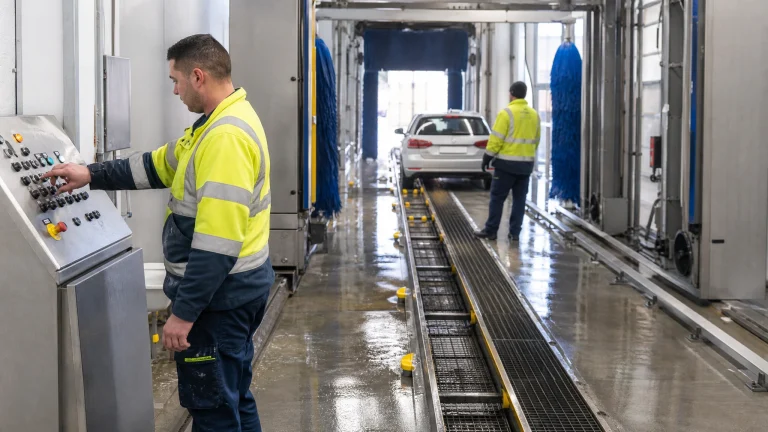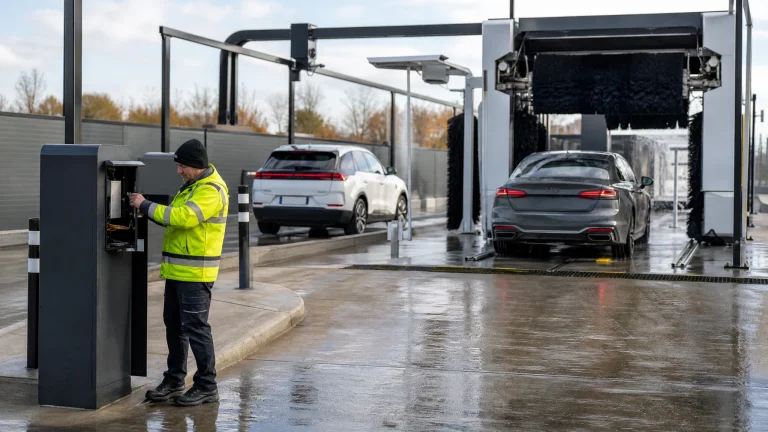
If you want to protect a wash’s monthly revenue, start with the two or three hours a day when the line is longest. A good queue design does one thing: it keeps cars moving through arrival, payment and loading without a single point where everything stops. Get that right and peak hours become your best hours instead of the moment customers give up and drive away. Get it wrong and you lose the retail traffic that is already the most volatile part of the business.
Peak hours are where the money is won or lost
Volume swings move revenue in a way that is easy to underestimate. Industry data compiled from operator point-of-sale systems has shown quarters of double-digit same-store sales growth, with one report putting combined year-over-year growth at 12.4 percent, membership revenue up 15.7 percent and retail up 6.8 percent, according to the International Carwash Association’s quarterly report. A later quarter told a more cautious story: total same-store sales up 5.6 percent, but retail revenue actually falling even as membership held up, as noted in a follow-up industry report.
The lesson underneath those numbers is simple. Members keep paying whether the line is long or short. Retail customers, the drive-up traffic that shows up on a sunny Saturday, are exactly the people who abandon a queue that looks slow. Queue design is how you keep that traffic.
Map the queue in three zones
Most peak-hour chaos comes from mixing jobs that should be separated. Treat the site as three distinct zones and the bottlenecks tend to spread out rather than pile up.
- Arrival and stacking. This is where cars wait off the public road. Size it by dividing your realistic cars-per-hour by your average cycle time, then add margin. If the stacking lane fills, the overflow goes onto the street, and that is when a busy site turns into a nuisance and a safety problem.
- Pay and greet. Keep the transaction separate from loading. A dedicated member lane that bypasses payment entirely is often the single biggest flow improvement, because it takes your most frequent customers out of the slowest step.
- Loading. The point where a car enters the machine or conveyor should never double as the point where someone is still deciding which wash to buy.
A short upstream prep station helps too. Pull the cars that need extra work, heavy bug or tar treatment, out of the main line so one dirty vehicle does not slow the whole conveyor.
Signage that shortens the wait people feel
Perceived wait matters as much as actual wait. Plain-language signs that assign lanes, separate members from retail, and set a clear first-in-first-out rule reduce the horn-honking and lane-cutting that make a queue feel worse than it is. Fairness that people can see keeps tempers down during the rush.
There is a second use for queue-side signage. Commercial washes are treated by the EPA as lower-risk for water pollution than home or fundraiser washing, precisely because they recycle water or treat it before it reaches the sewer, a point made in the EPA’s stormwater best-practice guidance. A simple sign explaining that your site reclaims its water gives waiting customers something to read and quietly makes the case for washing here rather than on a driveway.
Staff the rush without adding hazards
The busiest hours are also the most dangerous. Wet floors, more vehicles moving at once, and staff working quickly are the exact conditions where injuries happen. OSHA and the International Carwash Association run a formal safety alliance focused on slips, trips and falls, hazard communication, and vehicle operation safety, the three categories described on the OSHA alliance page. Those are the risks a peak-hour plan has to manage.
Practically, that means cross-training so a greeter can step in as a loader without a hand-off delay, scheduling breaks around your known busy windows rather than through them, and keeping a float position ready. The people doing this work are classified by the Bureau of Labor Statistics under code 53-7061, Cleaners of Vehicles and Equipment, and the same page is the place to benchmark local pay when you plan rush-hour headcount. For a fuller picture of the roles involved, see our note on who actually works at an automated car wash.
The hidden ceiling: your reclaim pit
Before you speed up the conveyor for Saturday, check whether the water system can keep up. Throughput is not only a physical-layout question; line speed is limited by how fast water can be captured, treated and reused.
The EPA’s WaterSense guidance sets concrete benchmarks: self-service nozzles should flow no more than 3.0 gallons per minute, retrofitted in-bay automatics should be held to 40.0 gallons per vehicle, and a well-designed reclamation system can cut in-bay use from 60.0 gallons per vehicle to as low as 8.0, per the WaterSense at Work vehicle-wash section. The same body’s vehicle washing guidance recommends running the conveyor at maximum speed within the manufacturer’s limits while building in a dwell time after the final rinse, so the reclaim pit keeps pace without spilling untreated water.
It is not theoretical. A grocery car wash chain in San Antonio installed reclaim systems across thirteen locations and, with combined upgrades, saved an average of 34 gallons per car and nearly 13 million gallons a year, as documented in the EPA’s efficiency case study. If your reclaim capacity is the constraint, adding stacking lanes will not raise real throughput. For more on how published rates translate to the cars you actually wash, see what throughput figures actually mean.
Heavy-vehicle and transit queues are a different discipline
Fleet, transit and rail washing follows a different rhythm, and it pays to design the queue around inspection and compliance rather than retail speed. Motor carriers must systematically inspect, repair and maintain their vehicles under 49 CFR Part 396, including inspecting bus emergency exits at least every 90 days, as set out in the FMCSA guidance on Part 396, while parts and accessories must be in safe operating condition at all times under Part 393. A depot wash bay is a natural point to fold these checks into scheduled downtime rather than treating washing and inspection as separate stops.
Transit agencies treat wash bays as capital infrastructure. The Federal Transit Administration tracks washing as a distinct facility function in its National Transit Database, and its state of good repair grant descriptions include new bus wash facilities built as part of larger maintenance projects. For engineers, that means a wash-bay or queue redesign can be pitched as a fundable capital project, not just an operating cost.
Discharge rules differ too. Cleaning tank trucks, rail tank cars and tank barges falls under the EPA’s Transportation Equipment Cleaning effluent guidelines, a separate federal framework from a retail tunnel, and municipal fleet washing has its own stormwater expectations for containment and oil-water separation in the EPA’s municipal washing guidance. The wash format you choose shapes the flow, which is why it is worth reading rollover or tunnel before you commit a layout.
Funding the fix
Sometimes the honest answer to chronic overflow is more capacity. Two SBA programs are relevant: the 7(a) loan program offers government-guaranteed loans of up to $5 million for acquiring, refinancing or improving real estate, and the 504 loan program provides long-term fixed-rate financing of up to $5.5 million for major fixed assets. If you scale by franchising, the FTC’s Franchise Rule requires a complete disclosure document and a reasonable basis for any earnings claim, as spelled out in an FTC enforcement action against a car wash franchisor. Any promise you make about what a new site will earn has to be substantiated.
Where Europe Makine fits
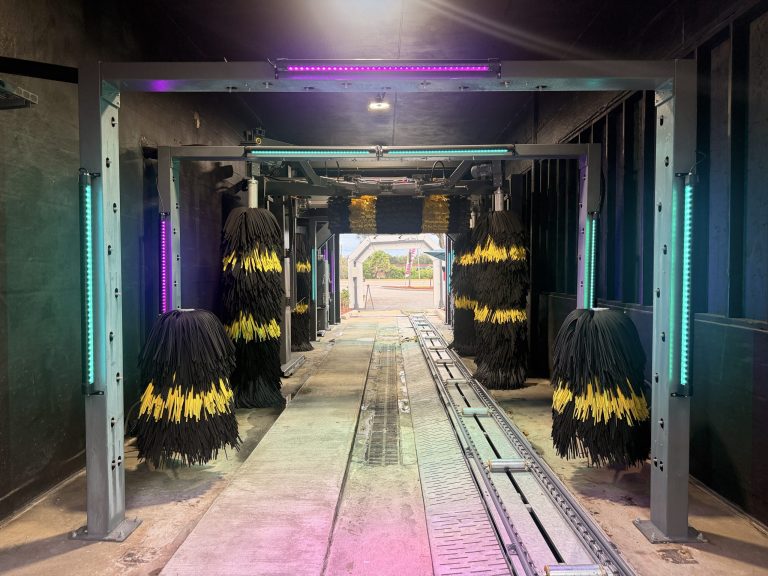
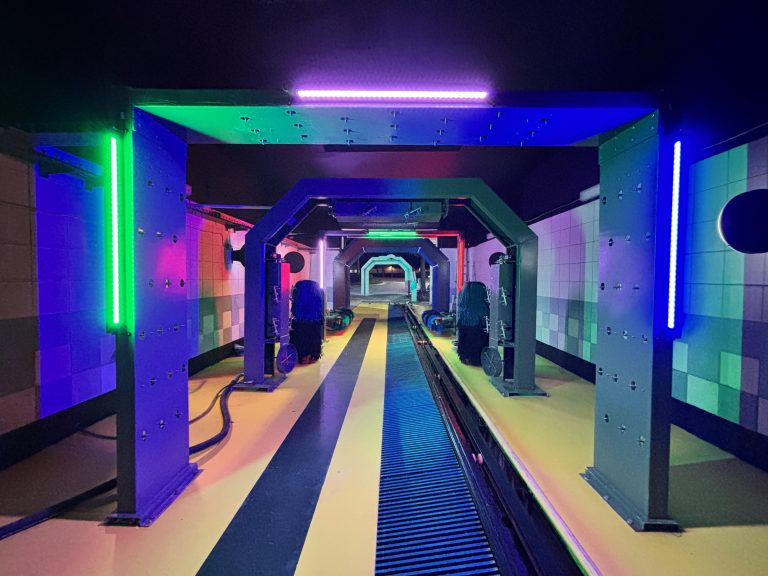
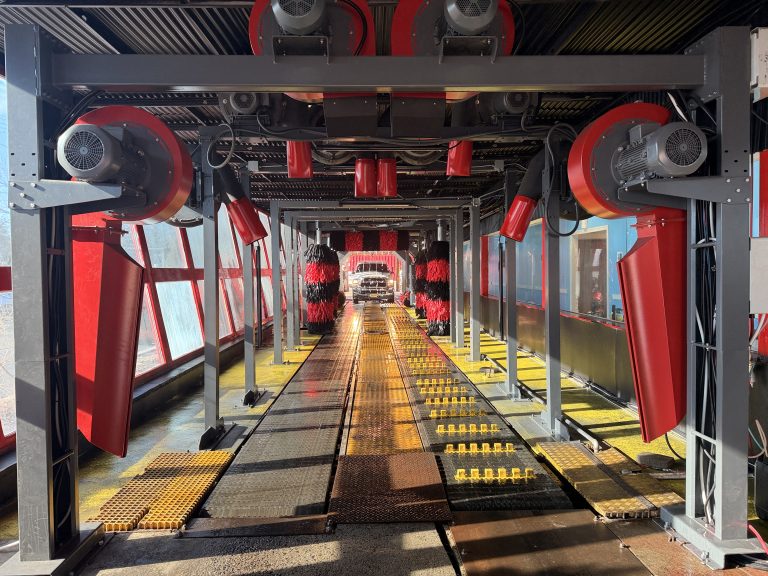
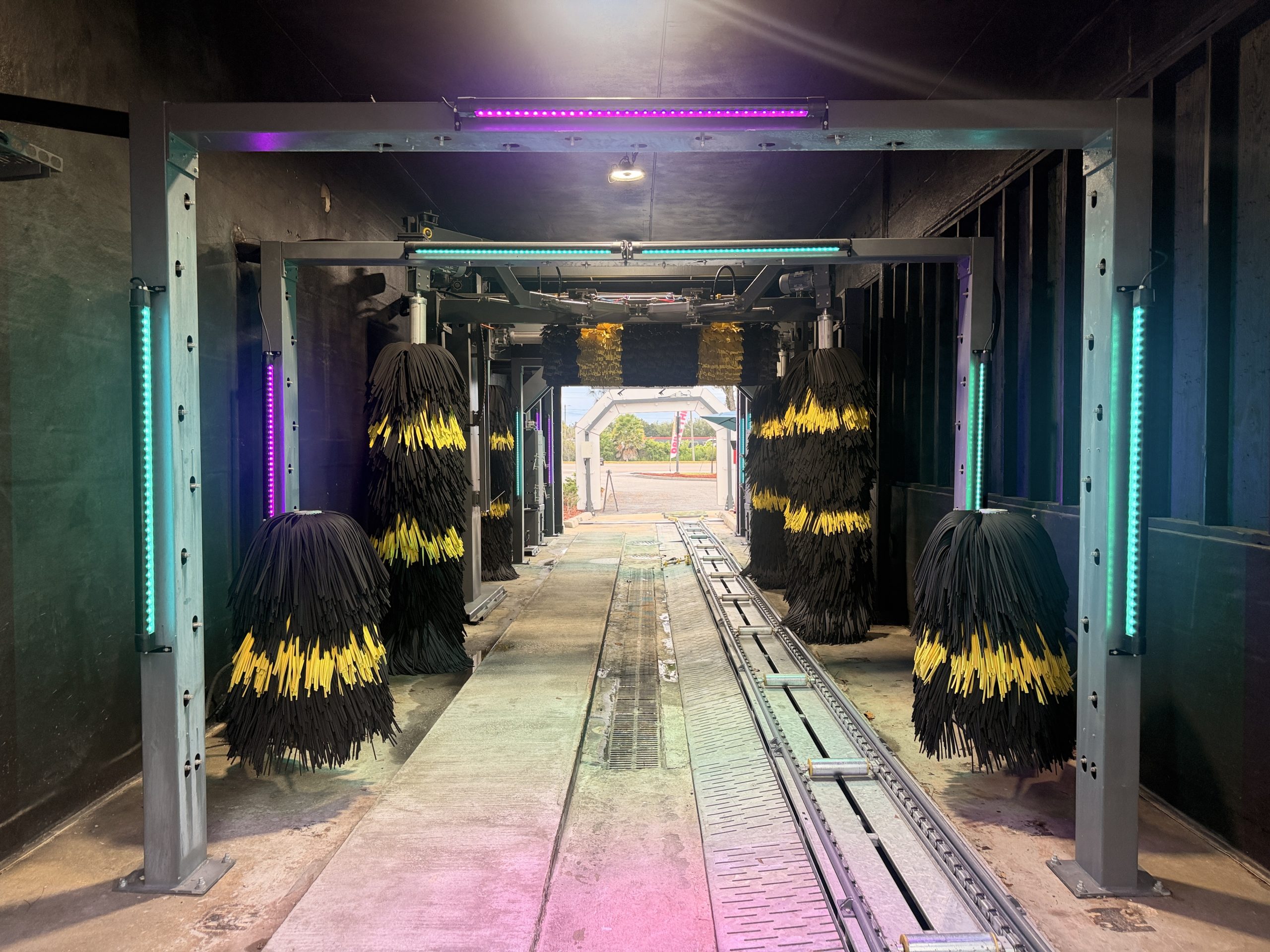
When Europe Makine builds a turnkey wash, the queue is part of the design, not an afterthought. The company reads the site, sizes the machine to the traffic, sets up the water system to match the line speed, and trains the crew to run the peaks. Its own site, Ali’s Car Wash in Ocala, Florida, was built this way and is open to the public. The point is not the equipment on its own; it is a wash that stays open and a line that keeps moving on the hours that matter.