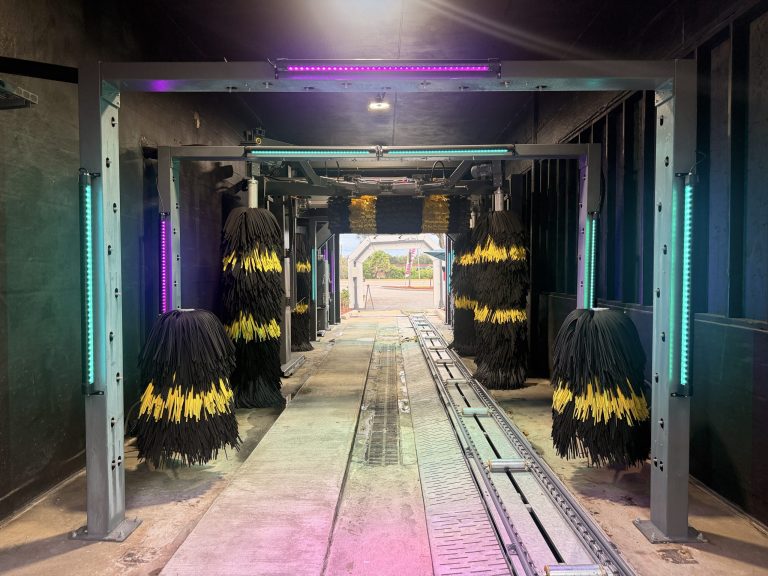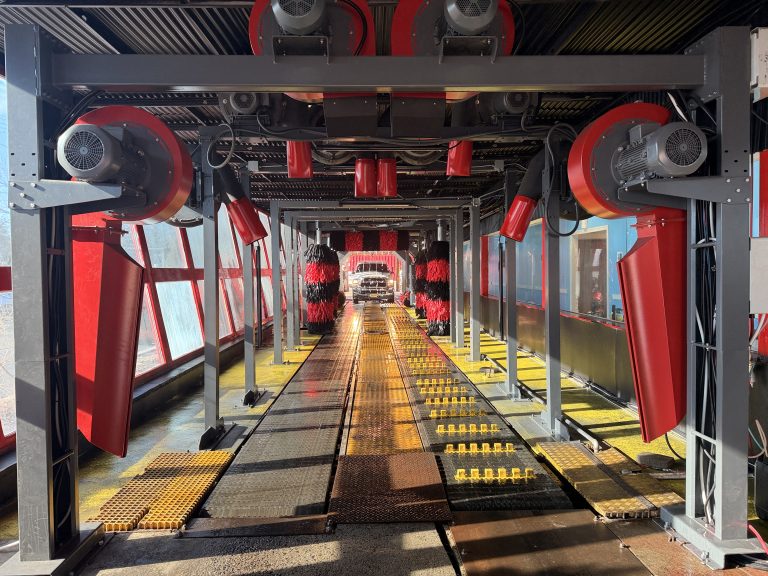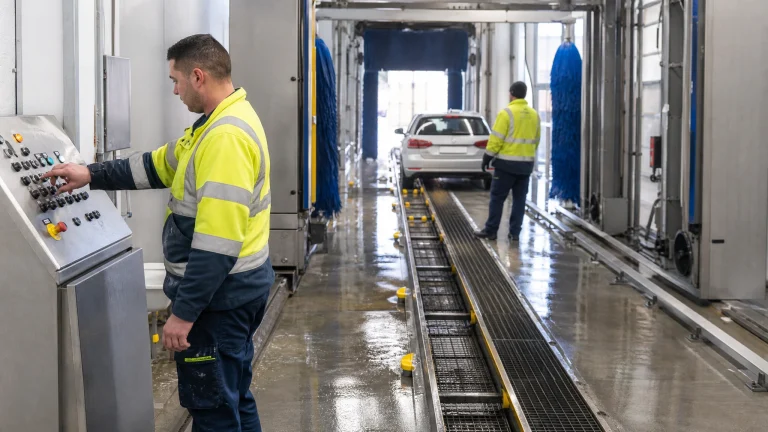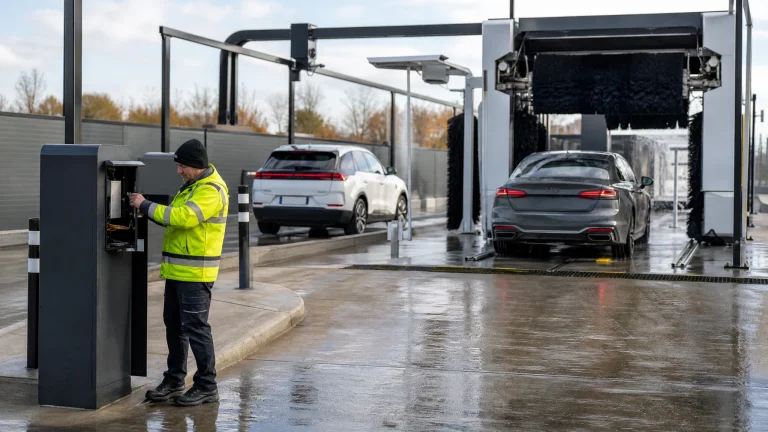
Weather shapes a wash site in two separate ways, and the sites that cope well plan for both. The first is demand: road salt and dirty cars pull volume up in some seasons, while holidays and extreme cold or heat pull it down. The second is equipment and compliance: freeze risk on exposed plumbing, heavier grit and salt in the reclaim pit, and cold-weather safety for the crew. Treat the calendar as a maintenance and marketing schedule, not a surprise, and the wash stays open when the cars arrive.
Demand moves with the weather, and it varies by region
The seasonal swing is real and measurable. Industry reporting from Rinsed, published through the International Carwash Association, found a general slowdown in wash volume around the holiday season and early new year, then an increase through spring, summer and autumn, with clear regional variation on top of that pattern. The West saw lower volume over the holidays and a summer peak; the Southeast ran higher in spring, dipped in summer, peaked again in autumn, then fell back over the holidays. The lesson is simple: read your own region’s curve rather than a national average.
Winter itself is a mixed case. Snowier conditions drive retail demand because salt and debris make cars visibly dirty, and in one recent quarter members washed more frequently than the year before. But winter is also structurally a weaker, more volatile demand period that operators actively manage. ICA’s marketing guidance treats targeted promotions, especially during the winter months or in bad weather, as a way to stabilise capacity utilisation and offset seasonal fluctuations. You can see where this points. The seasonal volume cycle and ICA’s marketing guidance both argue for smoothing the dips before they arrive.
A monthly plan is the most reliable smoothing tool. Memberships hold revenue steady across a bad-weather week far better than any single promotion, which is one reason they matter most in the weakest season. We cover that mechanism in how wash memberships change the business, and the flip side, keeping a queue moving through a salt-driven rush, in designing the queue.
A season-by-season readiness checklist
None of the items below is exotic. They fail sites only when nobody owns the calendar. Fold them into your standing routine; a maintenance schedule that keeps a wash open is where these belong permanently.
Before winter
Pressure-test and insulate exposed supply lines. Drain and blow down any unheated outdoor plumbing. Verify heat-trace, boiler and heat-exchanger function, and confirm that bay or tunnel entrance heating is sized for your harshest local design temperature, not an average day. Stage extra de-icing-safe chemical and floor-traction product before the first storm, not during it.
Through winter
Increase inspection frequency on undercarriage and rocker-panel components that take constant brine spray. Check the reclaim pit and oil/water separator for the heavier grit loading that salt season brings, and watch curtain and brush wear, since grit is abrasive. If your supply water runs colder, confirm your detergents still perform at that temperature.
Before spring
Recommission anything powered down or throttled for winter. Service reclaim filtration before the spring volume ramp, because salt and grit change what the filters have to handle. Audit site drainage and catch basins ahead of snowmelt and spring rain.
Before summer
Confirm water supply and reclaim capacity against peak-season throughput. Check for UV-driven algae growth in reclaim tanks, and service blower and drying equipment before the higher-volume, higher-heat months.
Before autumn and the holidays
Stage your promotional and membership campaigns ahead of the holiday dip the data shows. Complete major mechanical maintenance now, while warmer-weather scheduling is still easy, rather than in the cold.
What regulators expect does not pause for weather
Your discharge profile changes with the season even when your permit does not. EPA’s water-use benchmarks are a useful baseline before you size reclaim or heating: a 2018 study found conveyor washes used about 30 gallons of fresh water per vehicle on average, and EPA’s WaterSense at Work guidance notes that reclamation can cut fresh-water use by 50 to 83 percent, while adding filter and component maintenance of its own. Winter loads those filters harder.
What leaves the site matters too. A single-city study cited by EPA estimated that vehicle washing contributed thousands of pounds of solids and surfactants, plus metals and nutrients, to local water in a year, and salt and de-icer tracked in over winter only add to that load. For tanker, bulk and rail operations, the Transportation Equipment Cleaning effluent guidelines (40 CFR Part 442) cover exterior and equipment washwater discharged directly or through a treatment works. Heavier winter rinsing to shift salt can raise regulated discharge volume on the same permit, so plan for it rather than discover it. Depot operators will find the fuller treatment in keeping a depot wash working through winter.
Cold weather is a worker-safety question
OSHA sets no specific cold-weather standard, but its General Duty Clause still requires employers to provide a workplace free from recognised hazards, including winter-weather hazards. Its recommended employer practices are directly useful for a wash: schedule maintenance and repair for warmer months, and schedule unavoidable cold exposure for the warmer part of the day. That alone argues for doing your boiler, reclaim-pit and brush-tunnel work before the season, not during it. OSHA also flags carbon monoxide from engines, generators and heaters, and advises running gas equipment only in well-ventilated areas and keeping exhaust paths clear of snow and ice. Any bay running a heater in winter should take that seriously.
Paying for the upgrades before the season turns
Freeze-protection retrofits, reclaim upgrades and new equipment are easier to fund with lead time. The SBA’s 7(a) loan programme, its primary business loan, guarantees lender financing for uses that explicitly include improving real estate and buildings and purchasing and installing machinery and equipment, with a maximum loan amount of $5 million. Lining up capital months ahead means the work lands in the warm-weather window OSHA recommends, not in a January scramble.
Where the machine choice fits
The readiness checklist is easier on a wash that was specified for its climate in the first place: plumbing you can drain and heat, reclaim sized for the grit your region produces, and a system your installer actually knows. Europe Makine builds its wash systems in its own facility and, through its turnkey process, installs and calibrates them on site and trains the crew who will run them through the seasons. That matters most on the days the weather does not cooperate, because the people on site understand the machine. Whatever equipment you run, the principle holds: plan the year, service ahead of each change, and the wash stays open when the cars are dirtiest.