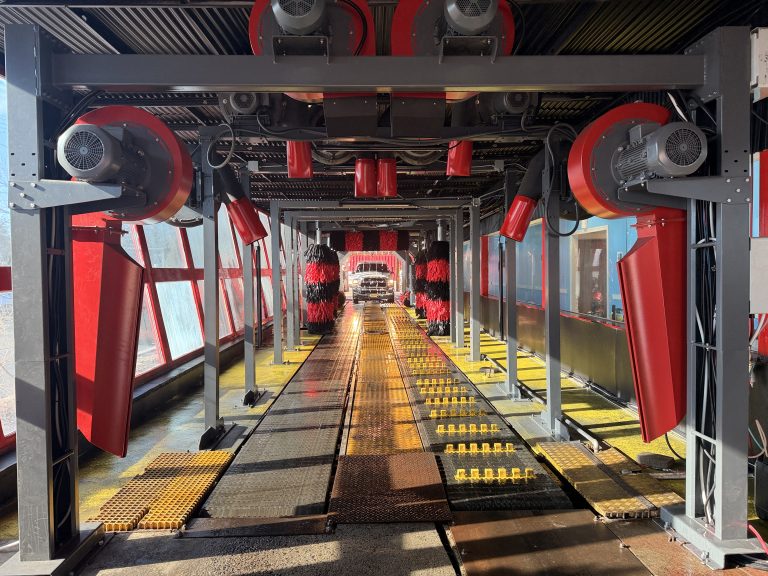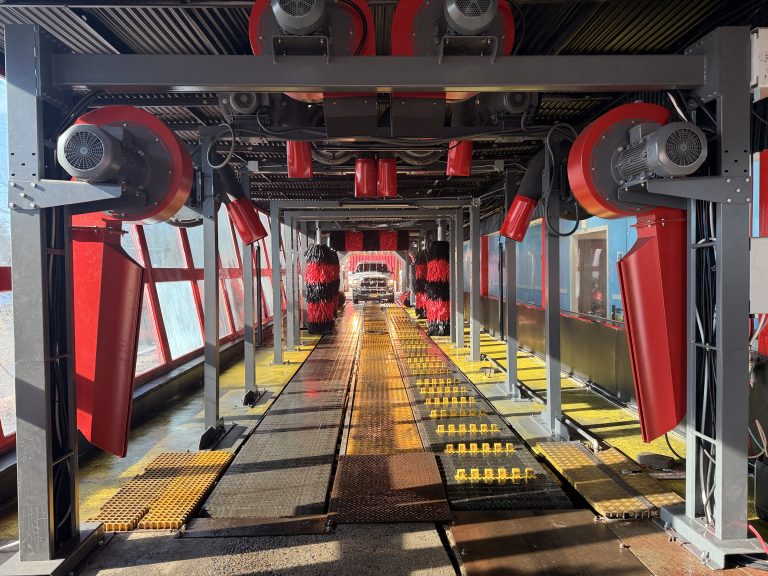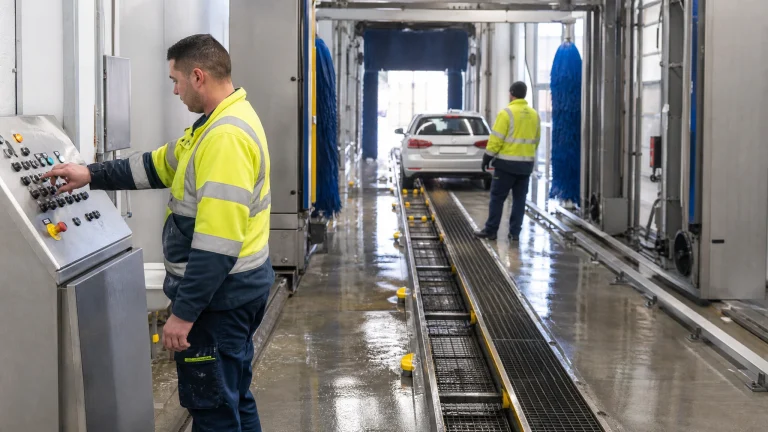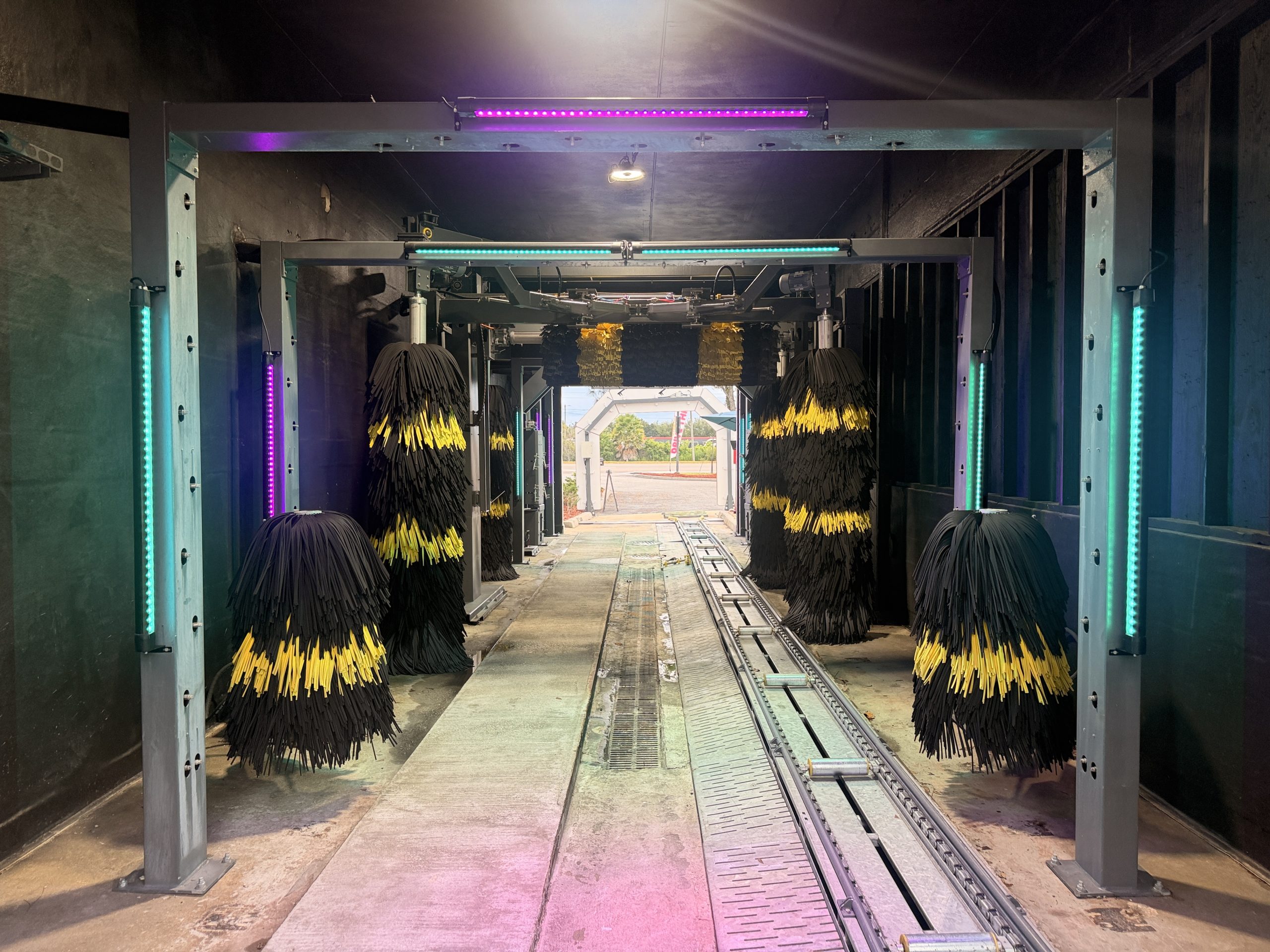
A car wash cycle is a sequence of chemical jobs, not one soapy blur. Pre-soak loosens bonded dirt, the foam stage lifts and emulsifies it, a protectant bonds to the clean paint, and the rinse carries everything away without leaving spots. Get the sequence and the dosing right and you have a clean car, a predictable chemical bill and equipment that lasts. Get it wrong and you see streaking, wasted product and corrosion inside your pumps. This is what each stage actually does, and why the dosing matters more than the brand on the drum.
Pre-soak breaks the bond before anything touches the car
The first chemical a car meets is usually a pre-soak. Its job is not to make the car look clean. Its job is to break the grip that road film, salt and traffic grime have on the paint. Pre-soaks do this with surfactants that lower the surface tension of water so it can creep under the dirt, and with chelating agents that grab onto the minerals holding that dirt in place.
This is chemistry buying you time. On a touchless system there is no brush to knock dirt loose, so the pre-soak and its dwell time do almost all of the mechanical work that a brush would otherwise do. That is one of the real trade-offs between the two approaches, and it is worth understanding before you choose a machine. We cover it in touchless or brushes: what each one trades.
Foam is mostly about dwell time, not cleaning
The thick foam most drivers associate with a good wash is doing less than it looks. The cleaning comes from the surfactant blend in the mix, anionic and non-ionic detergents that lift soil off the surface and hold it in suspension so it can be rinsed away rather than redeposited. Foam matters because it keeps that chemistry in contact with the paint for longer, and because it gives a visible, even coverage that tells you the product reached the whole car.
So foam is a delivery method. If a wash is producing beautiful foam but leaving dirt behind, the answer is rarely more foam. It is usually the wrong surfactant balance, too little contact time, or under-dosing at the pump.
The protectant stage relies on a clean surface
After the car is clean and rinsed, the protectant or sealant stage adds the shine and the water-sheeting behaviour customers notice. These products, cationic polymers and wax emulsions, carry a charge that bonds to the freshly cleaned paint. That is the important part: they only bond properly to a surface that is genuinely clean and free of leftover detergent. Skip or rush the earlier stages and the protectant has nothing clean to grip, so it beads unevenly and the finish disappoints.
Rinse quality decides whether the car spots
The last stage is where a lot of wash quality is won or lost, and it has as much to do with your water as your chemistry. Hard water and high dissolved solids leave mineral spots as the car dries. That is why a spot-free finish usually depends on a final rinse with softened or deionised water rather than any clever chemical. The cleanest car in the world will look neglected if it dries covered in white mineral marks.
Why dosing is the thing that actually pays off
Every stage above depends on the chemical arriving at the right concentration. Dosing is where wash chemistry meets the three numbers an owner cares about.
- Wash quality. Under-dose and soil is left behind or the protectant fails to bond. Over-dose and you get streaking, residue and hazing, which look like dirt to the customer.
- Running cost. Chemical is one of your recurring bills. Over-dosing is money running straight down the drain, cycle after cycle, and it adds up faster than most operators expect.
- Equipment health. The wrong pH or hard-water residue scales and corrodes pumps, valves and nozzles from the inside. A blocked or worn nozzle then sprays unevenly, which quietly degrades wash quality until someone notices.
Dosing also interacts with throughput. Dwell time, the seconds a chemical sits on the car, is part of the recipe, and it competes with how many cars you can push through in an hour. Cutting dwell time to move the queue faster changes the chemistry you need. That relationship is worth reading alongside what throughput figures actually mean, because the two are set together, not separately.
Handling and discharge are part of the chemistry too
Wash chemicals are cleaning chemicals, and the same properties that lift grime off paint can irritate skin, eyes and airways. Anyone mixing, decanting or servicing dosing systems should be trained and protected, and safety data sheets should be on hand. OSHA sets out the basics of protecting workers who handle cleaning chemicals in its guidance on cleaning chemicals and worker health.
The other end matters as well. The water leaving your bays carries detergent and loosened soil, and it should not run untreated to a storm drain. The US EPA’s guidance on car washing and stormwater explains why wash water needs to go to the proper drain or treatment, not the gutter. Your local discharge rules decide the detail, and they belong in your planning from the start rather than after the fact.
Where the machine fits
Good chemistry only works if the equipment delivers it accurately and repeatably, cycle after cycle. That means metered dosing pumps, consistent water pressure and nozzles that spray the pattern they were set for. Europe Makine builds five wash systems, from the Acrobat 2X touchless rollover to the conveyor tunnel, and dosing and water handling are part of how they are calibrated on commissioning rather than an afterthought (EM-F003). For owners taking on a whole site, the turnkey route hands over a wash that is already dosing correctly and running, with the crew trained on it. That is covered in what a turnkey car wash actually includes.
None of this requires you to become a chemist. It does help to understand that the drum on the shelf is only half the job. The other half is the dose, the dwell and the water, and those are the levers that keep a wash clean, affordable and open.