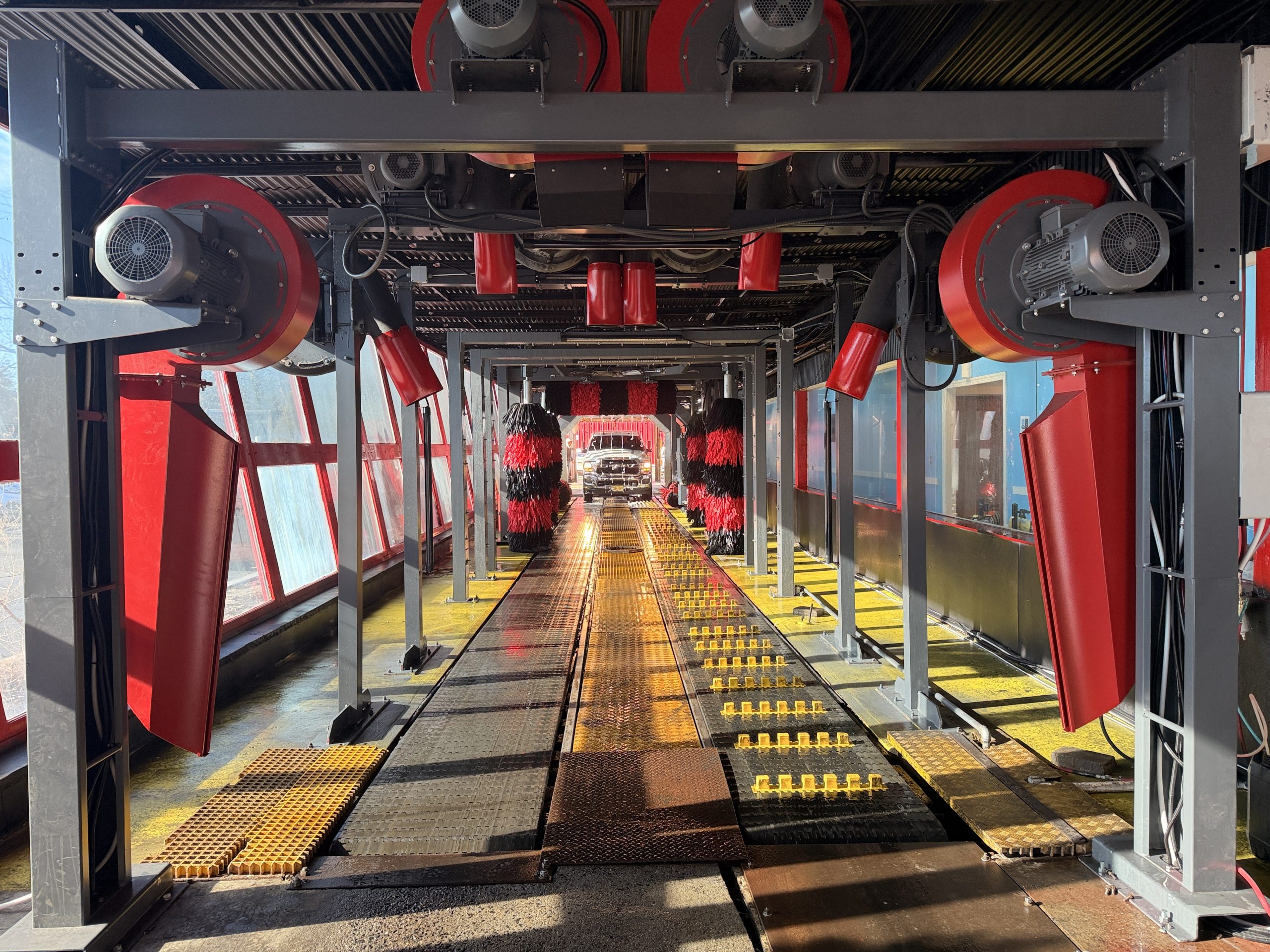
Keeping people safe around automatic wash equipment comes down to one habit: nobody puts a hand, a hose or a loose sleeve near a brush or conveyor while it is powered, and everyone knows where the customer stops and the machine begins. The rest is detail, but the detail matters, because the hazards are real and well documented. US regulators have cited car washes for exactly these failures, including a fatality. This guide walks through the hazard categories, what the rules require, and the site rules that hold up when the queue is backed up and the crew is in a hurry.
The hazards that actually hurt people
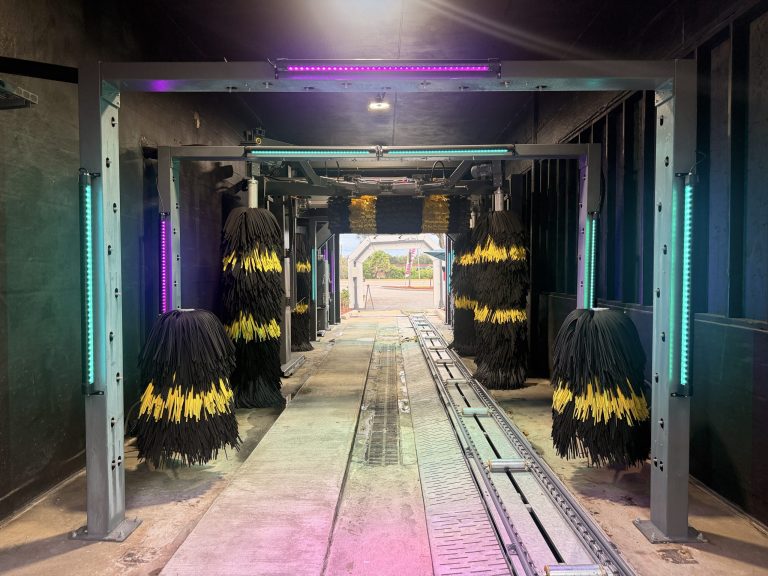
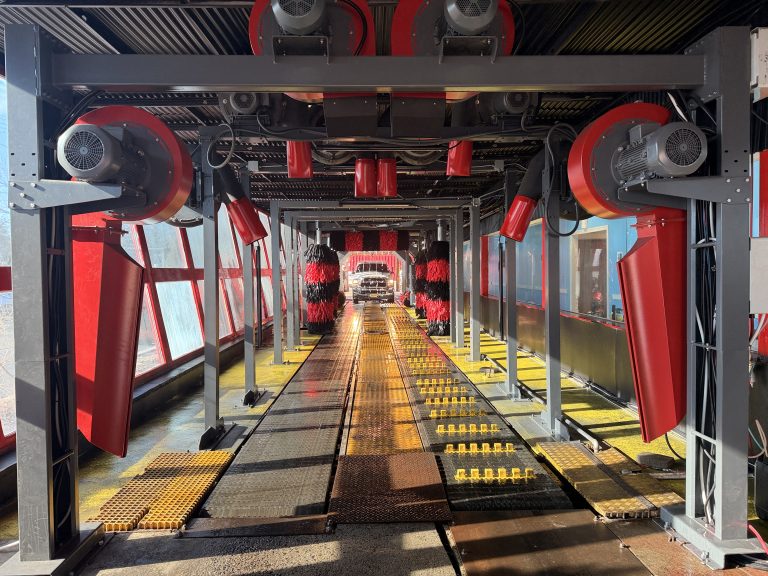
Automatic wash equipment concentrates a few specific dangers in a small space. Brushes and conveyors have rotating parts and ingoing nip points, the places where a moving surface draws something in. OSHA describes the purpose of machine guarding as protecting operators and other workers from exactly these hazards, the ingoing nip points, rotating parts, flying chips and sparks that come with powered machinery. A gantry or a tunnel line is a machine, and it is covered by the same thinking.
The danger that recurs in car wash records is contact with a rotating brush while the machine runs. In one OSHA accident report, a supervisor was cleaning the inside of a tunnel with a hose while the equipment was running; the hose became entangled in a rotating side brush and struck and killed him. The report notes staff routinely washed the tunnel interior with the machinery on because the water pressure was higher that way. That is the shape of the problem: a shortcut that works a hundred times and kills on the hundred and first.
Stopping the machine before anyone reaches in
The single most important rule on a wash site is that equipment is stopped and its power locked out before anyone services, cleans or clears it. This is lockout/tagout, covered by OSHA’s control of hazardous energy standard. OSHA’s conveyor guidance puts it plainly: conveyors must be stopped and their power sources locked out and tagged out during maintenance, repair and servicing, with power supplied only to the servicing operation itself when testing genuinely requires it.
This is not just a maintenance-day procedure. It applies to the small jobs too: pulling a stuck mat, clearing a wheel guide, wiping a sensor. The temptation is always to do the quick thing with the machine live. A written procedure for every machine, with physical locks and trained staff, removes that choice. It pairs directly with how the control system behaves, so it is worth understanding what PLC control means for a wash owner and how the machine reports and holds a fault, and with building the discipline into a maintenance schedule that keeps a wash open.
Regulators treat failures here seriously. A Department of Labor investigation of a New Jersey car wash found the operator willfully exposed workers to hazardous energy by failing to lock out equipment before maintenance, with proposed penalties well into six figures. The lesson is not the fine. It is that a predictable, avoidable procedure gap is what inspectors find.
Electrical and chemical hazards around a wet site
A wash site mixes water, electricity and chemistry, which is why electrical safety cannot be an afterthought. In one Ohio case, OSHA found a company had ignored reports of employees suffering electrical shocks for more than 14 months, resulting in multiple violations and substantial proposed penalties. Shocks reported by staff are a signal to stop and investigate, not a nuisance to absorb.
Chemistry is the other standing risk. Wheel cleaners and detergents include aggressive products, and the industry’s own resources flag hydrofluoric acid injury as a known hazard. Every chemical on site needs a hazard communication program with safety data sheets accessible to the people who handle the drums. The practical version of this is simple: staff know what they are decanting, what it does to skin and eyes, and where the wash station is.
Slips, falls and the water you cannot see
Wet floors around tunnel exits, dryer zones and reclaim pits are the most common day-to-day hazard, and they overlap with environmental compliance. OSHA’s formal alliance with the International Carwash Association focuses on exactly this ground, working to reduce exposure to slips, trips and falls, hazard communication and vehicle operation safety. Treat exit lanes and pit covers as standing risk areas: slope the drainage, use non-slip surfacing, and keep the signage current.
Many sites run water reclamation, which treats wash and rinse water for reuse. The EPA notes that commercial vehicle washes have widely adopted water reclamation technology, partly to meet discharge limits and manage sewer fees. Reclaim pits and their covers are both a compliance feature and a fall hazard, so they belong on the safety walk, not just the plumbing diagram.
Keeping customers out of the machine’s path
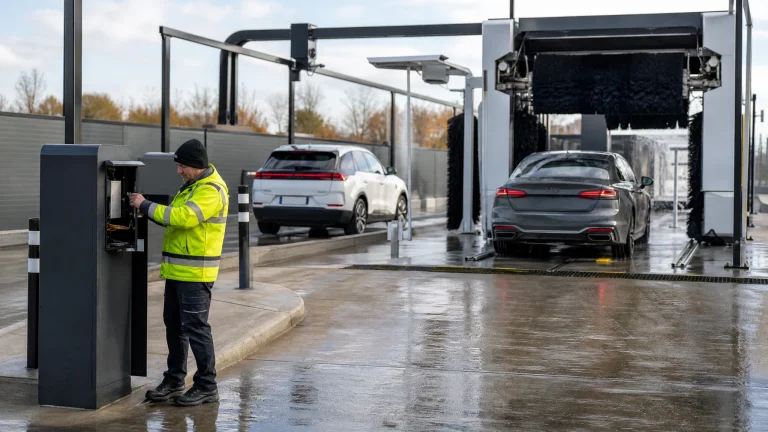
Customers are not trained and will not behave like staff. The site has to do the thinking for them. Keep a clearly marked waiting area and walkway physically outside the envelope of brush and conveyor travel, so a customer stepping out of a vehicle cannot wander into moving equipment. Give drivers simple, separate instructions for their part: hands off the wheel, correct gear, foot off the brake where that applies. Those instructions are different from staff safety procedures and should be trained and signed separately.
Layout and flow are part of safety, not just throughput. A site that backs up tends to produce impatient drivers and rushed staff, which is where shortcuts creep in. Getting the approach right, covered in designing the queue for peak hours without chaos, keeps people moving in predictable lines rather than improvising around the machine.
The people doing the work
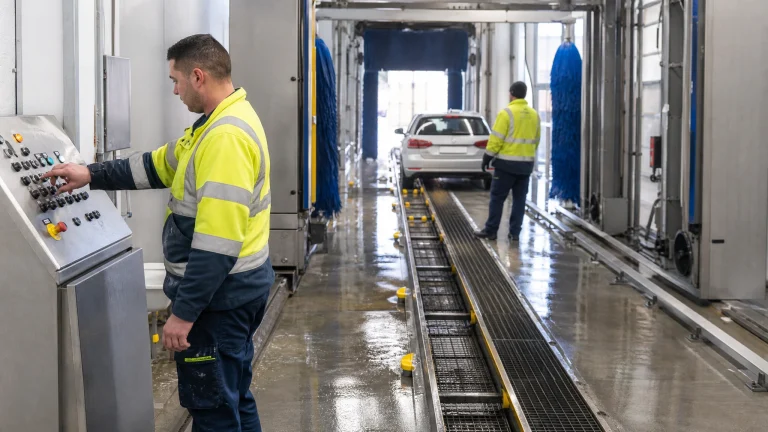
Safety lives or dies with the crew. Vehicle cleaning is a large occupation: the Bureau of Labor Statistics recorded 365,290 cleaners of vehicles and equipment nationally, with a mean wage of $16.95 per hour as of May 2023. That is a workforce that turns over and often includes new or non-English-speaking staff, which is precisely why the ICA alliance emphasises accessible training. Procedures that only live in a manager’s head do not survive a busy Saturday. It helps to be clear about who actually works at an automated car wash and which roles own which checks.
A workable set of site rules
- No hands, hoses or loose clothing near moving brushes or conveyors, ever. Stop and lock out first.
- A written lockout/tagout procedure for every machine, used for small jobs as well as major repairs.
- Physically separated customer walkway and waiting area, clear of brush and conveyor travel.
- Investigate any reported electrical shock immediately; do not run the site through it.
- Safety data sheets on site and staff trained on the chemicals they handle.
- Non-slip surfaces, drainage slope and signage at exits, dryer zones and reclaim pits.
- Separate, simple instructions for drivers, trained apart from staff procedures.
The same discipline scales up. Heavy-vehicle and rail wash lines have larger gantries, undercarriage brushes and chassis washers, but the hazards are the ones OSHA has already cited at passenger car sites: entanglement and stored energy. Bigger machines simply mean bigger locks and clearer zones.
Where this fits for a new site
Safety is easiest to get right when it is designed in rather than bolted on. Europe Makine builds turnkey washes where guarding, control behaviour, crew training and site layout are set up together before handover, so the people running the wash understand the machine and the rules from the first day. Whether a site is turnkey or self-built, the standard is the same: a wash that stays open is one where the shortcuts have been designed out.