Before you sign a turnkey agreement, get every promise out of the brochure and into the contract. A good turnkey deal is an itemised scope with milestones you can inspect, clear ownership of permitting risk, performance figures you can hold the developer to, and a written plan for the day after handover. The questions below are the ones that protect your capital. They work against any car wash developer, so use them to compare proposals on the same terms rather than on sales talk.
This is a practical turnkey due diligence checklist. For the broader picture of what a package should contain, read what a turnkey car wash actually includes, and treat the companion questions piece as the wider version of this list.
Is it genuinely turnkey, or a regulated offer?
Start with the legal shape of the deal. If a developer promises to find you customers, guarantee referral volume or buy back your output, the agreement may meet the US definition of a business opportunity. Under the FTC’s Business Opportunity Rule, the seller must give you a one-page disclosure document at least seven days before you sign anything or pay anything, and this covers offers where the seller represents it will provide locations, accounts or customers, or buy back goods or services you provide (FTC Business Opportunity Rule). If instead the deal licenses a brand with ongoing control and assistance, the Franchise Rule applies: the disclosure document covers 23 items and must reach you at least 14 days before you sign or pay (FTC Franchise Rule compliance guide).
Ask: does this agreement meet the legal definition of a franchise or a business opportunity, and if so, where is my disclosure document?
Who owns the permits and the discharge approval?
Permitting is where turnkey schedules slip. Confirm who pulls permits and in whose name, and whether the developer has checked sewer capacity before quoting a date. More than 99 percent of professional car washes discharge to a sanitary sewer and a publicly owned treatment works, and it is that treatment works, usually through a local ordinance, that sets your discharge limits (ICA effluent characteristics study). High-volume sites draw extra scrutiny: the EPA defines a Significant Industrial User in part as one discharging an average of 25,000 gallons per day or more of process wastewater (EPA pretreatment roles).
Ask: who holds permitting risk, and has local sewer capacity been confirmed in writing before the schedule was set?
Will the water and throughput figures go in the contract?
Make the developer commit performance numbers for your specific package, not a generic range. Water use varies widely. Without reclamation, conveyor friction washing can use about 65.8 gallons of fresh water per vehicle, while a reclamation system can cut that to as low as 7.8 gallons per vehicle (EPA WaterSense vehicle washing). Reclaim can reduce fresh water use by 50 to 83 percent, which changes your running costs for the life of the site. Treat throughput claims the same way, and read the utilities survey before you accept any figure, because power and water availability cap what the machines can actually deliver.
Ask: will you put gallons per vehicle, reclaim percentage and vehicles per hour for my package into the contract, with remedies if the commissioned site falls short?
What does the installer hand over on safety?
Automatic wash equipment carries real machine hazards. OSHA guidance calls for effective machine guarding and a hazardous energy control programme, so that anyone servicing the equipment follows lockout/tagout procedures when they bypass a guard or reach into a danger zone (OSHA lockout/tagout guidance). A serious developer documents guards, emergency stops and every energy isolation point before handover, not after an incident.
Ask: will you hand over a written, machine-specific lockout/tagout procedure and a documented guard and e-stop list as part of commissioning?
What does the training actually cover?
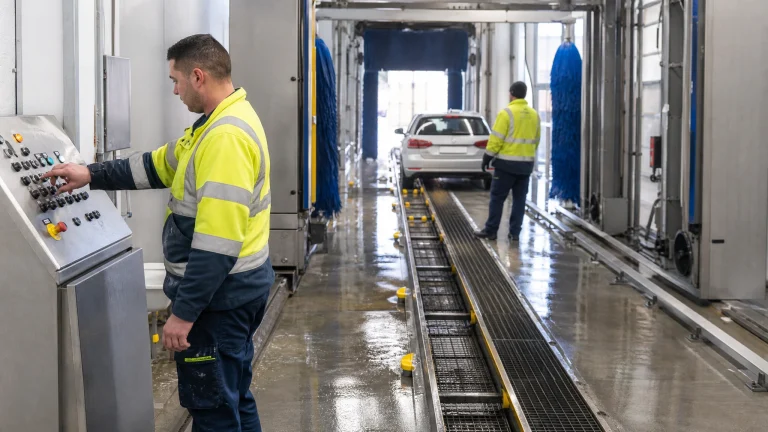
Staffing is a cost you can model and training is a quality you have to verify. The May 2023 national mean wage for cleaners of vehicles and equipment was $16.95 an hour, useful for a labour line in your pro forma (BLS occupational wage data). On safety training, OSHA and the International Carwash Association run an alliance that provides the industry with guidance on hazards such as slips, trips and falls, hazard communication and vehicle operation (OSHA and ICA alliance). Ask whether the included training reaches that level or stops at the point-of-sale screen.
Ask: does the training cover safe operation and hazard awareness, or only the till and the wash menu?
Does the payment schedule fit your financing?
If you are borrowing, the contract and the loan have to move together. The SBA 504 programme provides long-term, fixed-rate financing for major fixed assets through a Certified Development Company, typically with the borrower contributing at least 10 percent equity and the CDC portion covering up to 40 percent of project cost (SBA 504 loan programme). A milestone-based turnkey schedule, broken into civil works, utilities, equipment, labour and first-year consumables, maps cleanly onto a lender’s draw schedule. A single large deposit does not.
Ask: can the payment milestones match an SBA draw schedule, with the itemised documentation a lender expects?
Extra questions for heavy-vehicle and fleet projects
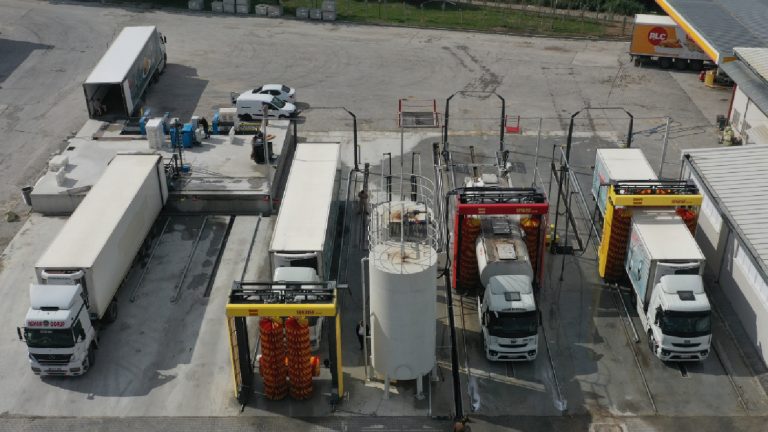
If the site serves trucks or buses, confirm the wash is designed for the weights you run. A commercial motor vehicle under the federal rules includes vehicles rated at 10,001 lbs or more (FMCSA applicability guidance), and carriers must systematically inspect, repair and maintain every vehicle under their control (FMCSA inspection and maintenance). The wash should support that duty, not get in its way.
How is support handled after handover?
Most buyers are small operators without in-house engineering. The ICA has estimated roughly 17,500 conveyor washes and 29,000 in-bay automatics in the United States, with most companies running only one or two sites (ICA industry information). That raises the stakes on after-sale support. Get response times, parts availability and remote diagnostics in writing, and separate the warranty from the service relationship. The detail is worth its own conversation: see what to ask about warranty and service.
Ask: what is the written response time, where are spare parts held, and who answers the phone at 7am on a Saturday?
Where Europe Makine fits
Europe Makine builds turnkey car washes on its own machines and runs one, Ali’s Car Wash in Ocala, Florida, so the questions above are the ones it answers in its own contracts: documented scope, calibrated installation, a trained crew and a running operation at handover. Use the checklist on any developer you talk to, Europe Makine included. The point is that you sign knowing exactly what you are buying and who is accountable for each part of it.