What a truck wash brush has to do
A truck wash brush is the part of a friction wash that physically touches the vehicle. On a tall truck, three things decide whether it cleans well without causing trouble: what the filaments are made of, how the brush rotates, and how well it keeps contact with a large, uneven surface. Truck-specific published figures for bristle material, rotation speed, contact pressure or brush height are hard to find, so this article quotes none. It explains the principles and the questions worth putting to a supplier before you commit to any truck wash equipment.
Friction and touch-free: where brushes fit
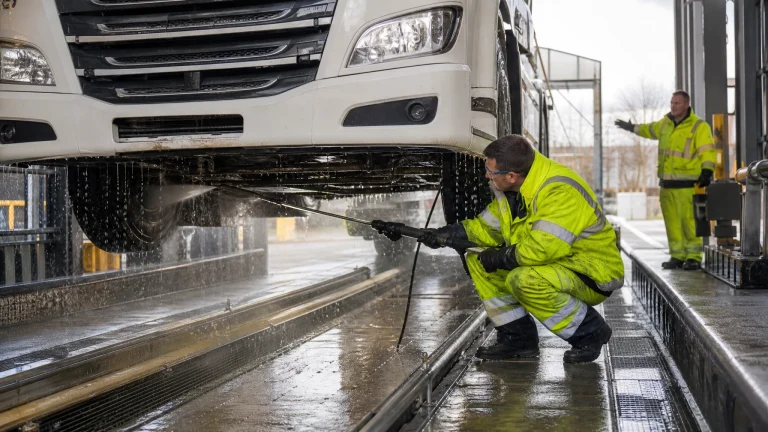
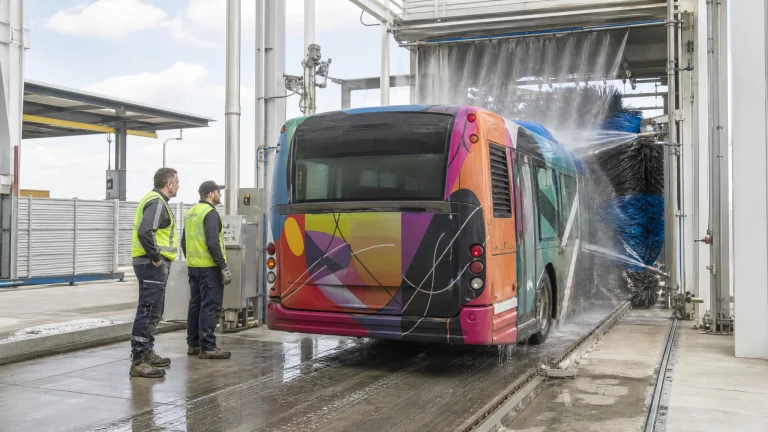
The US Environmental Protection Agency draws a clear line between the two main approaches. In its WaterSense at Work guidance on vehicle washes, friction washing means the equipment touches the vehicle. That equipment can be a cloth curtain, a mitter or a brush. Touch-free washing relies on high-pressure nozzles instead.
The same guidance notes that wash equipment of this kind is also used at larger facilities that clean heavy-duty trucks and buses. A second WaterSense section on vehicle washing repeats the friction and frictionless split for conveyor washes. So a rotating truck wash brush is best understood as a larger-scale version of the friction approach you already know from car washing.
These are guidance documents, not equipment specifications. They tell you the categories, not how a particular brush should be built for a trailer.
Material and filament: why they change contact
The most useful published discussion of brush media comes from car wash, not truck wash. The International Carwash Association article Anatomy of the foaming brush is about self-serve foaming brushes, so treat it as general background rather than truck guidance. Even so, its principles carry across.
The article quotes Dan Pecora of Erie Manufacturing. He says nylon, synthetic fill, cloth fill, gentle foam and hog’s hair each have advantages in certain situations. Two of his points matter most here:
- Shorter, larger-diameter filaments press harder on the vehicle. Longer, finer filaments press more gently.
- Nylon, cloth and synthetic fill tend to hold grit. Gentle foam is less prone to accumulate it.
Grit trapped in a brush can damage paint, which is why keeping brushes clean matters. Our own reasoning, not the source’s, is that a truck arriving from a quarry, a building site or a long gravel road is likely to carry more abrasive dirt than most cars. That makes the question of how a brush holds and releases grit more important, not less.
A truck is also not one surface. A cab may be painted. A trailer may have curtain sides, a roller shutter, decals, bare aluminium or a tanker shell. Ask a supplier which filament type suits the surfaces your fleet actually runs, rather than assuming one brush suits everything.
Rotation: reaching tall sides without overloading them
A rotating truck wash brush sweeps its filaments across the surface as it turns. Speed and direction of rotation affect how much dirt is lifted and how much load the surface takes. There is no sourced figure to give you here, and any number offered without a vehicle type and brush design behind it should be treated with caution.
What you can reason about is geometry. Trailer sides are tall and mostly flat, so a vertical brush has to be long, and a long brush does not press evenly along its whole length unless the machine lets it follow the surface. Then the profile changes: the gap between cab and trailer, mirrors, steps, roof fittings and air horns. Whichever way a machine reaches the top of a vehicle, the useful questions are what it does at those changes of profile and how it avoids snagging.
Contact: even pressure beats hard pressure
The ICA source points to a useful idea: you can tune contact through the filaments, not only through force. Short, thick filaments press harder. Long, fine filaments press more gently. If a brush is too light, road film stays on the vehicle. If it is too firm, you risk marking surfaces, wearing fittings and shortening the life of the brush itself.
For tall vehicles the aim is consistent contact from the lower panels to the upper edge, not maximum pressure at one point. When you watch a truck go through a wash, look at the top third of the trailer and at the cab area. Those are usually where uneven contact shows first.
Guarding, inspection and replacement
A rotating brush is a rotating machine part, and that brings workplace safety obligations. The OSHA standard 29 CFR 1910.212, general requirements for all machines, requires one or more methods of machine guarding to protect operators and other employees from hazards. Those hazards include ingoing nip points and rotating parts.
This is a general machinery standard. It does not name truck wash brushes, so do not read it as a rule written for them. How it applies to a given installation is a question for the equipment supplier and your own safety adviser.
Brushes also wear. The ICA podcast episode Brushes, Cloth or Car Wash Media with Ted Yamin of Gallop Brush covers the benefits of different brush and cloth materials and how to tell when a brush needs replacing. It gives no figures, so set your own routine with your supplier. As a practical starting point, our suggestion is a regular look at each brush for:
- filaments that look matted, glazed or visibly shorter than they were
- grit or debris embedded near the base of the filaments
- uneven wear along the length of the brush
- damage to guards, mounts or drive components
Wash the brushes as part of routine maintenance, because clean media is the simplest protection against grit damage.
Questions to ask before you buy truck wash equipment
Instead of comparing brush catalogues, put these questions to every supplier:
- Which filament material is used, and why for the vehicle types we wash?
- How does the brush follow the side of a trailer, and what happens at the cab-to-trailer gap?
- How is contact set and adjusted, and who does that during commissioning?
- What guarding is fitted, and how does it support our obligations under general machinery rules?
- How do we tell when a brush needs cleaning or replacing, and what does replacement involve?
- Is a touch-free or a friction approach the better fit for our fleet’s mix of surfaces and dirt?
A supplier who can answer these in plain terms, with reference to your vehicles, is giving you more than a specification sheet.
Where Europe Makine fits
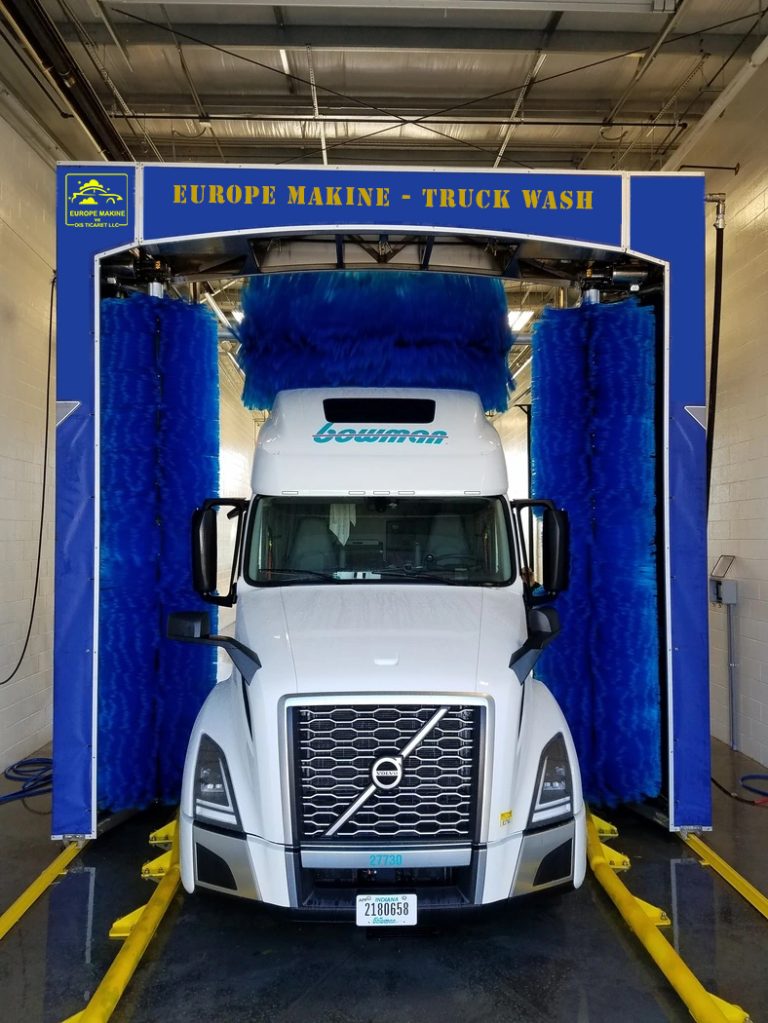
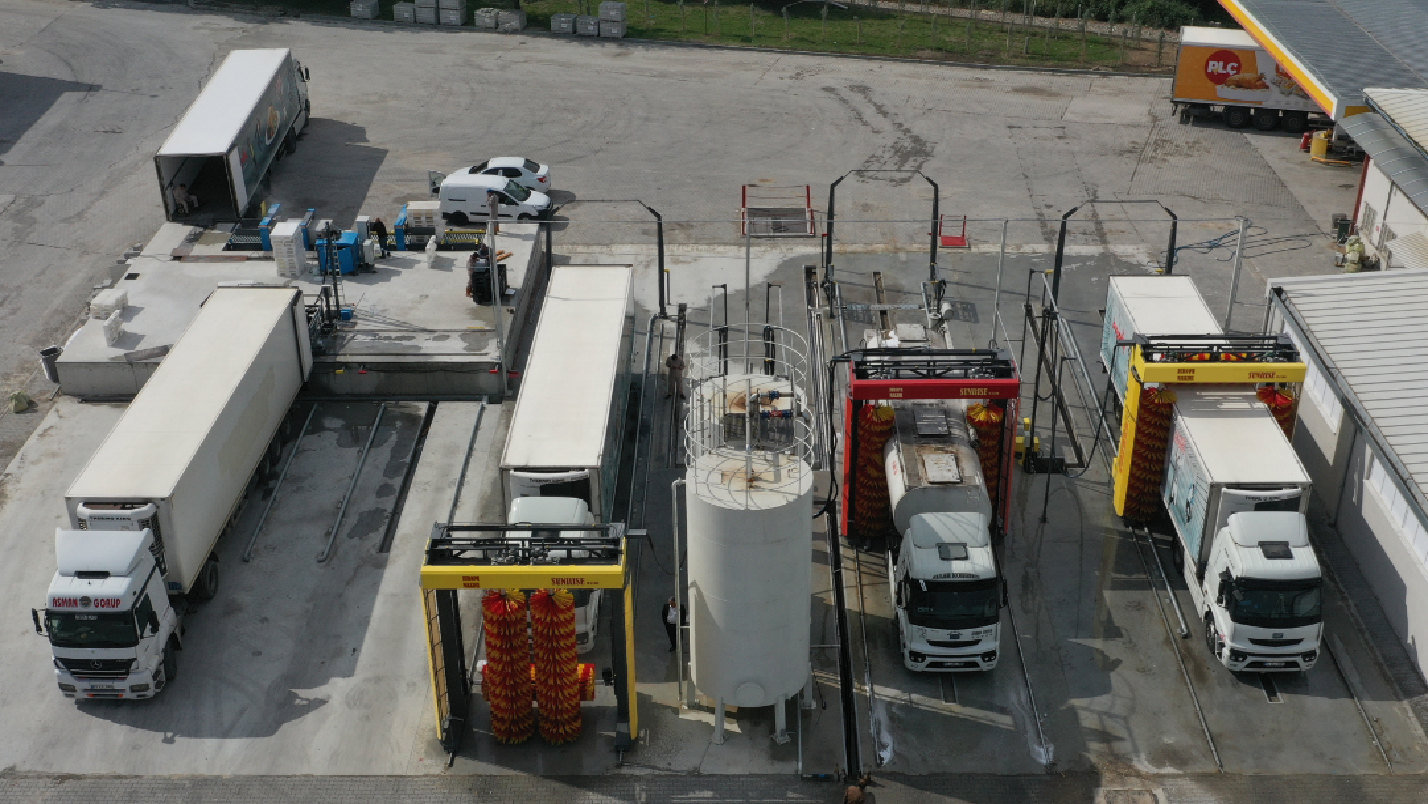
Europe Makine manufactures five wash systems: the Acrobat 2X touchless rollover, the Ephesus three-brush rollover, the Cirrus 5N five-brush rollover, a conveyor tunnel system, and the SUNRISE W4000/W4700 heavy vehicle wash. The SUNRISE is the one relevant to trucks and other tall vehicles. This article does not give its brush count, material, rotation or height, because those details are not published here, so ask for them directly and test them against the questions above.
For operators who want more than a machine, Europe Makine also builds turnkey car washes, covering the site, permits, installation and calibration, crew hiring and training, and handover of a running operation. The company has a US base in Boca Raton, Florida.