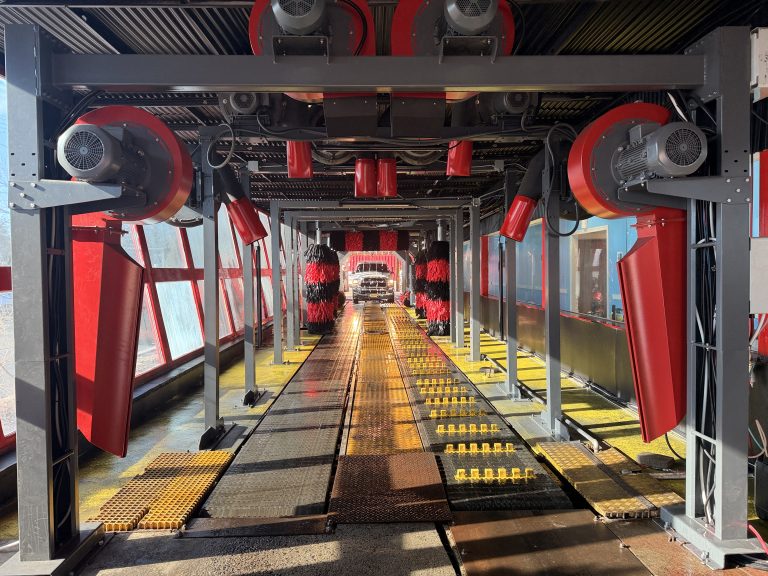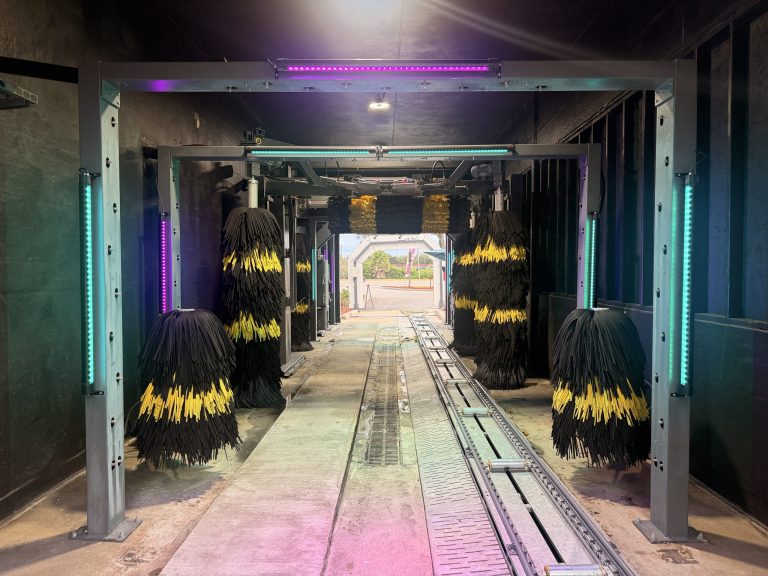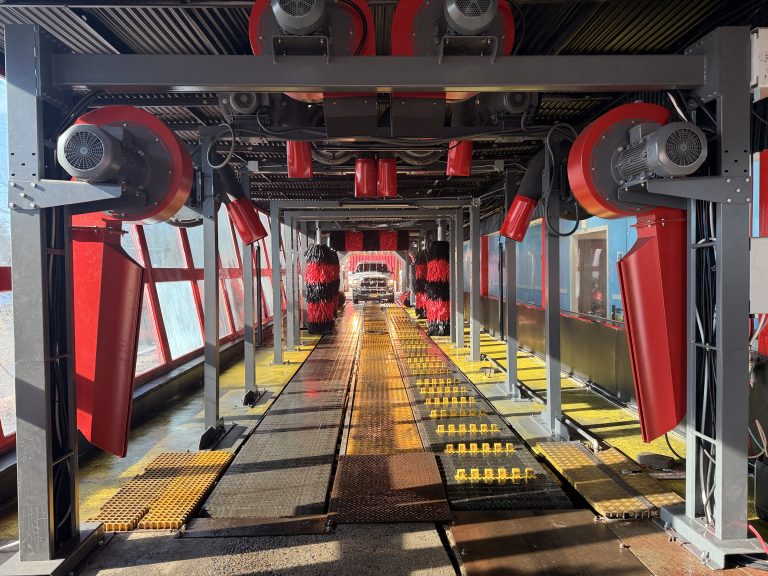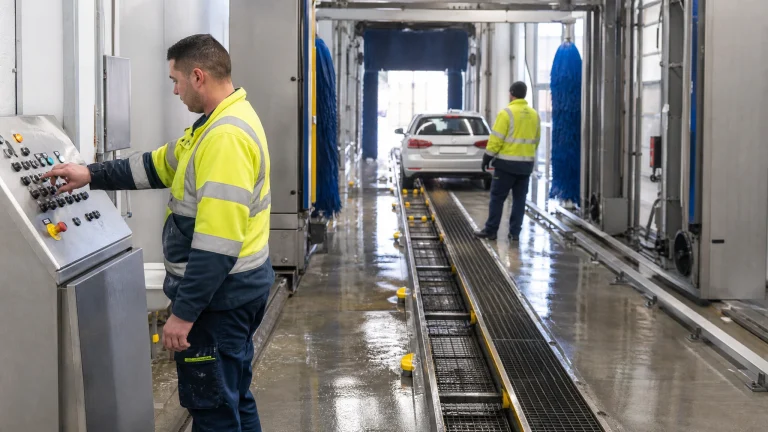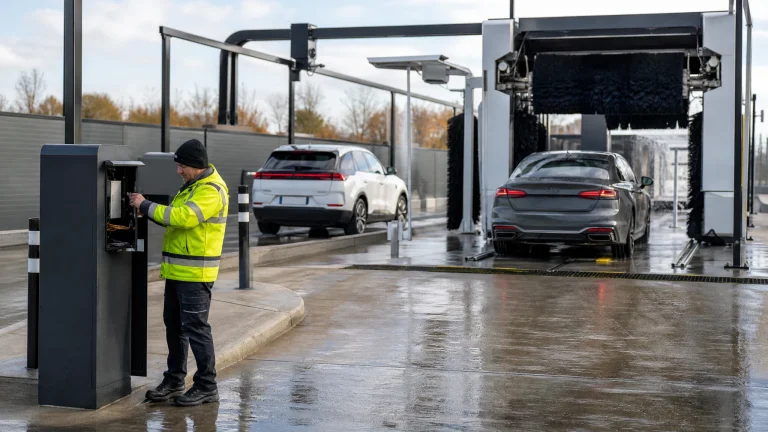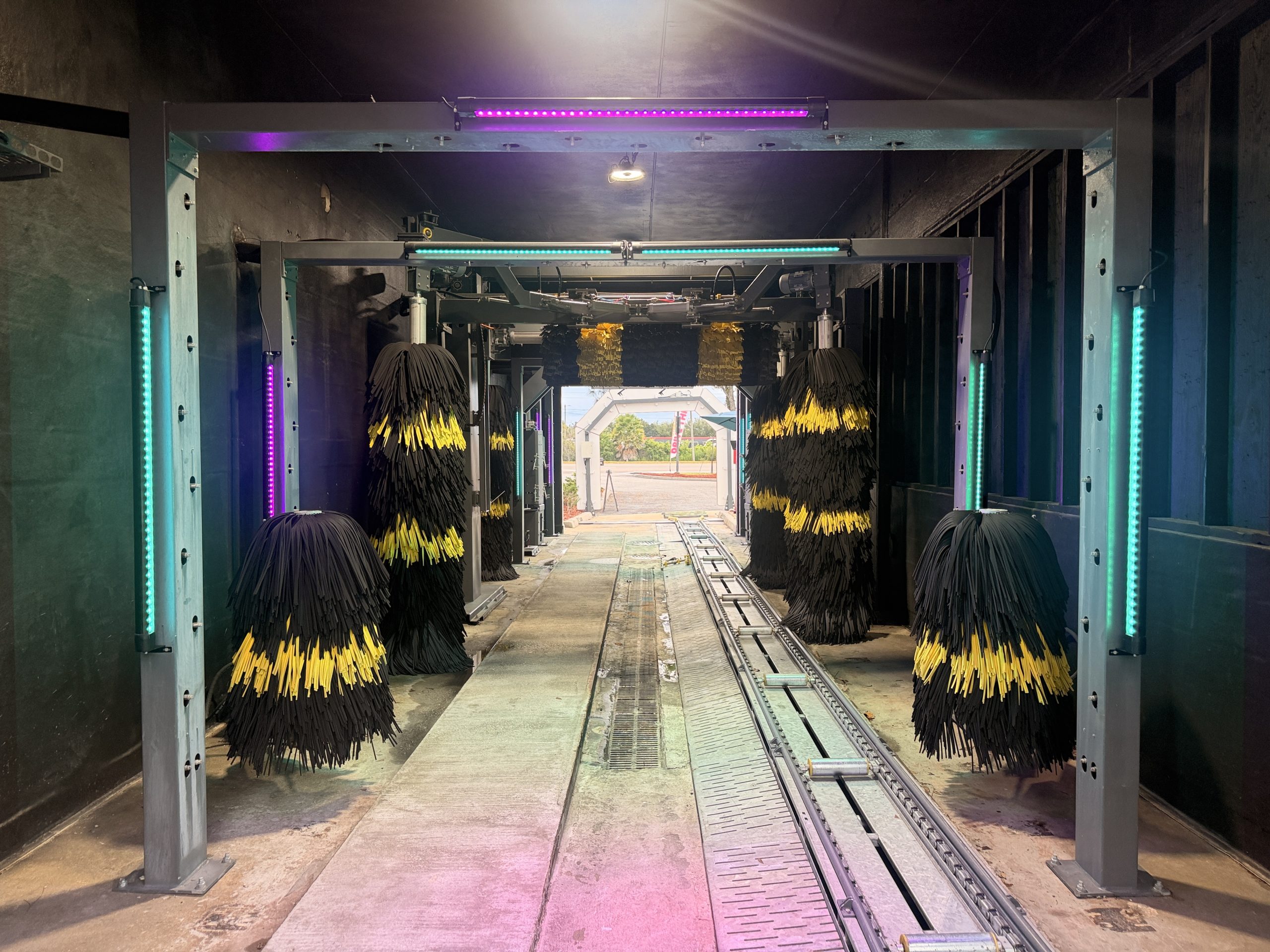
If you are weighing a car wash investment, the real choice is not between two machines. It is between buying the tools and buying the outcome. On the equipment route you buy the systems and then build everything around them: the site, the drainage, the permits, the crew. On the turnkey route you buy a wash that already works, or a package that a single supplier designs, builds, equips and hands over running. The equipment route usually costs less to start and gives you full control, but you carry the build risk and the wait. The turnkey route costs more up front and hands you revenue sooner, with the compliance and commissioning already done. Which one is right depends on how much project risk you want to hold yourself.
What each path actually is
On the equipment route you buy your car wash equipment as a set of components. A rollover or a conveyor tunnel, vacuums, a water reclaim unit, chemical dosing, payment and point of sale. Then you find and lease or buy the land, run the civil works and drainage, connect utilities, secure planning and discharge consents, hire and train staff, and commission the whole thing yourself or through several contractors. You are the general contractor and the integrator.
On the turnkey route you buy a finished operation, or you commission one supplier to deliver it. The site is chosen, the machines are installed and calibrated, the permits are in place, the crew is trained, and in the strongest version the wash is already trading on the day you take it on. If you want the detailed breakdown of what that includes, we set it out in what a turnkey car wash actually includes.
Upfront cost: itemised versus bundled
The equipment route lets you see and negotiate every line. You can phase the spend, starting with one bay or one rollover and adding capacity as revenue grows. That control is real, and so is the hidden cost of integration: matching equipment to the site, closing warranty gaps between suppliers, and paying for the groundworks and connections that never appear on a machine quote.
A turnkey price is bundled. It typically folds in site works, drainage, utility connections, signage and the labour to get the doors open. You lose some line by line transparency, but you also lose the risk of discovering a cost you did not price. Ask any supplier to break the bundle down before you sign, so you know what you are paying for.
Time to open: a stacked timeline versus a compressed one
This is where the two paths diverge most. On the equipment route the tasks stack: site search, then planning consent if a change of use or new structure is involved, then groundworks and drainage, then utilities, then delivery and install, then hiring and training, and only then trading. Any one of those can slip, and consent and discharge approvals are common places for delay.
On the turnkey route the timeline compresses to a transaction plus a short transition. When the site is already trading, income can start on or near completion day. If day one revenue matters to your model, that gap is the whole argument.
Regulatory risk is where the asymmetry bites
A car wash is a discharger, and that carries obligations most first time buyers underestimate. Where wash water goes to the public sewer, it commonly falls under a pretreatment programme, and a significant discharger can need an industrial user permit before it can legally connect and operate, as the EPA’s industrial user permitting guidance explains. Vehicle washing also sits within federal effluent guidelines for transportation equipment cleaning, summarised by the EPA here. Water reuse and reclaim, which affect both your running cost and your consent, are covered in the EPA’s WaterSense guidance for vehicle washes.
On the equipment route, securing those consents is your own critical path task and your own risk. On the turnkey route they should already be in place, transferable and verifiable. That does not mean you skip checking. It means you inherit a status you can inspect rather than a process you have to run. Confirm the exact discharge consent, planning history and permit conditions against the relevant authority before you buy either way.
Operational and equipment risk
Buying equipment yourself gives you the say over specification: throughput, water reclaim, dosing, payment systems. That is genuinely valuable if you have a clear target for the wash and the judgement to match machine to site. The flip side is that you alone carry commissioning risk. A mis specified machine, an integration failure or a warranty gap between suppliers is your problem to solve.
Getting the specification right starts with the site, not the catalogue. Our guide to reading a site before choosing a machine walks through the constraints that decide what will actually fit, and rollover or tunnel covers the format decision behind it. When you compare capacity claims, read them properly: the difference between wash only and wash with drying can halve a headline number, which is the point of what throughput figures actually mean.
On the turnkey route you inherit whatever specification the original build chose. That may suit you, or it may cap your growth. So the due diligence shifts to condition and history: maintenance logs, service contracts, the state of the reclaim system, and how the throughput matches the demand you expect.
Financing and valuation are different conversations
Buying machines is often financed as asset finance against the equipment itself. Buying a running wash is financed as a business purchase, which can include goodwill, trading history and an existing customer base. That changes the lending discussion and the questions a lender will ask. Neither is inherently cheaper to fund. They are just different products, so line up the finance that matches the path before you commit.
Exit and scalability
A build you own outright can be scaled in stages: add a bay, add a tunnel, extend as revenue allows. A turnkey purchase gives you an immediate baseline, but the growth ceiling is fixed by the space, the permitted throughput and the customer base the previous build created. Match that to your horizon. If you plan to expand aggressively, a phased build may give you more room. If you want a stable operating asset from day one, the fixed ceiling is a feature, not a limit.
Read the market before you read the quotes
Whichever path you take, understand the current climate. The International Carwash Association’s Q1 2026 CAR WASH Pulse reports stable demand alongside growing price sensitivity and market saturation. That matters for both routes. On a build, it affects the site you choose and the capacity you install. On a purchase, it affects the price you should pay for existing goodwill.
An honest verdict
There is no single best answer, only a trade between speed, effort and risk. The equipment route suits investors with project management capacity and a longer horizon who want lower bundled cost and full control over specification. The turnkey route suits investors who want revenue close to day one, lower execution risk and compliance that is already settled, and who are willing to pay for that certainty.
For context on where we sit: Europe Makine both manufactures wash systems and builds complete turnkey washes in the US, securing the site, clearing permits, installing and calibrating the machines, and training the crew before handover. Our own turnkey wash, Ali’s Car Wash in Ocala, Florida, runs on our machines and is open to the public. That means we can support either path, and we would rather you choose the one that fits your patience and your capital than the one that sells the most equipment.