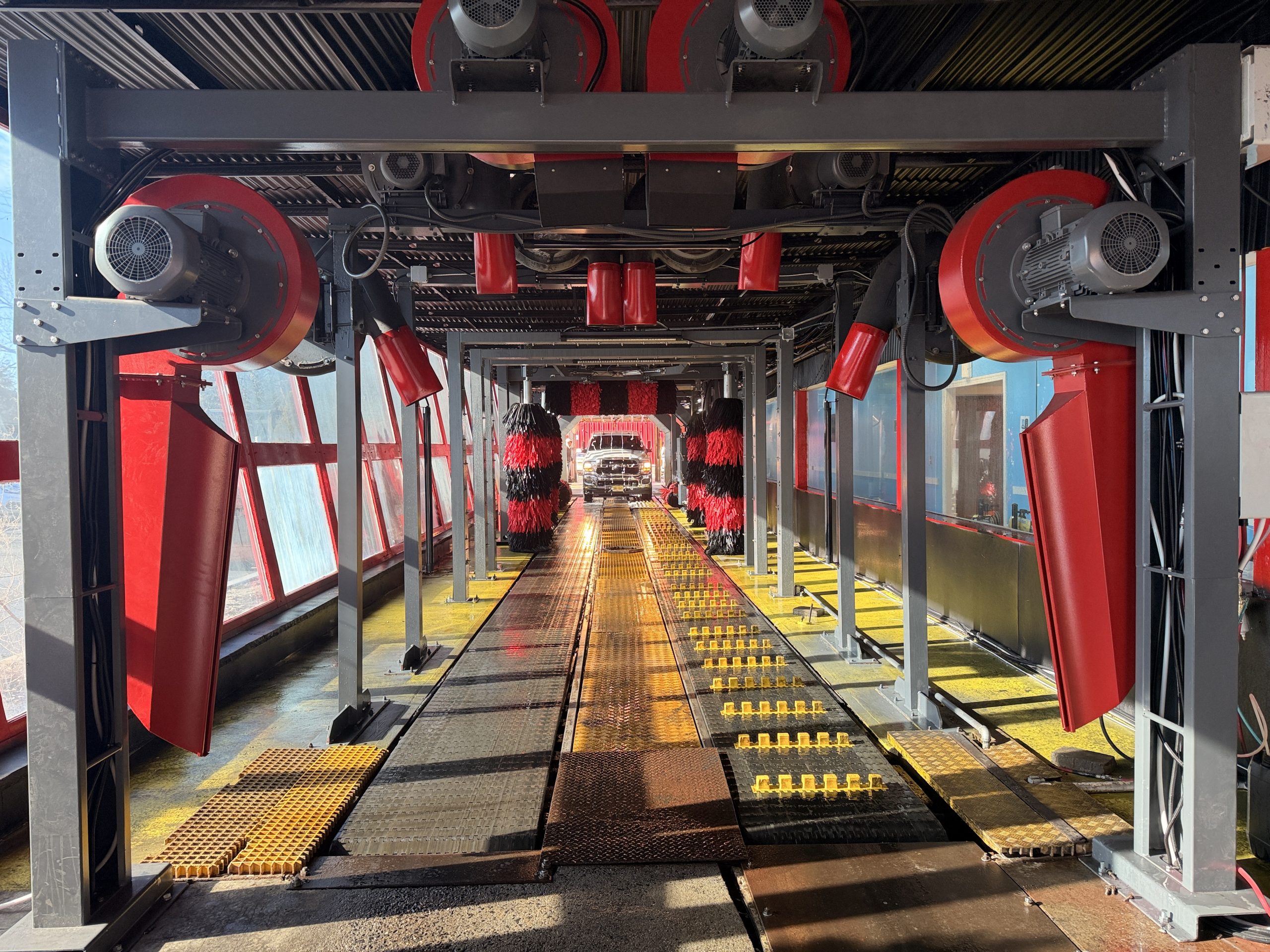
The first months of a new car wash are decided by three things: whether the crew settles into consistent habits, whether early customers come back, and whether the machine gets the daily attention it needs to stay open. The equipment is the least of your worries if it was installed and calibrated properly. What breaks a young wash is not a dramatic failure. It is small inconsistencies that compound: a bay that opens late, a drying pass that leaves streaks, a chemistry dilution nobody checked. Get the habits right in month one and the site starts to feel like a business rather than a project.
The crew is the variable, not the machine
A well-built wash runs the same way every cycle. People do not, at least not at first. In the opening weeks your crew is learning the sequence of a normal day: staging cars, loading them straight onto the conveyor or into the bay, watching the wash run, checking the finish, handling the awkward vehicles that do not fit the routine. None of that is difficult, but it has to become automatic, because a hesitant crew slows the whole site and a slow site loses the queue.
Spend the first months building routine rather than chasing volume. A short opening checklist, a closing checklist, and a clear rule for who watches the wash while it runs will do more for you than any promotion. If you are still deciding how many people you actually need and what they do, it is worth understanding who really works at an automated car wash before you over-hire or under-staff. Industry training resources such as the International Carwash Association’s LEAD programme can help a new crew reach a baseline faster than learning purely on the floor.
Repeat custom is built in the first weeks
A new wash lives or dies on people coming back, and that decision is made on their first visit. If the car comes out genuinely clean, the wheels are done, and it drives away dry rather than spotted, they return. If the finish is inconsistent, no discount will hold them. So the early months are about protecting quality, not maximising throughput. A slightly slower wash that finishes properly earns more repeat custom than a fast one that sends cars out streaked.
This is also when a membership programme starts to matter. Converting first-time visitors into monthly members turns unpredictable early traffic into revenue you can forecast, which steadies the site through its quietest opening weeks. It is worth understanding how wash memberships change the business before you set prices, because the plan you launch with is hard to unwind later.
Maintenance discipline decides your uptime
The single habit that most separates a wash that stays open from one that limps is daily maintenance done on schedule. In the first months this feels optional because everything is new and nothing has failed yet. That is exactly the trap. Brushes, nozzles, dryers and chemistry pumps degrade gradually, and the damage shows up in wash quality long before it shows up as a breakdown. A nozzle that is half blocked still sprays; it just sprays badly, and the customer notices before you do.
Set the routine from day one: check spray patterns, inspect brush wear, confirm chemistry dilution, clear debris from the conveyor or bay, and log it. A wash that is checked every morning almost never surprises you. A maintenance schedule that keeps a wash open is the cheapest insurance you will buy, and the early months are when the habit either forms or does not.
Throughput will climb as the crew settles
Do not judge the machine by your opening-week numbers. Early throughput is limited by the crew loading and staging cars, not by the equipment. As an example, the Cirrus 5N five-brush rollover is built to average 24 to 32 vehicles per hour wash-only, and a conveyor tunnel washes and dries 30 to 60 vehicles per hour, according to Europe Makine’s published throughput figures. You will not see those rates in week one, and you should not try to. Rushing a green crew to hit rated capacity is how cars get loaded crooked and finishes get missed. The numbers arrive on their own once staging becomes second nature. If you want to understand why rated figures and real-world figures differ, read what throughput figures actually mean.
Chemistry and drying are where quality quietly slips
Two things go wrong first in a young wash, and both are invisible until a customer complains. The first is chemistry: detergents dosed too weak leave cars dirty, dosed too strong they waste money and can streak. Dilution should be checked and logged, not assumed. The second is drying. A wash that cleans well but dries poorly still sends cars out spotted, and spotting is the complaint that stops people coming back. Watch the last pass of every busy period and correct it early, because a drying problem left for a month becomes a reputation problem.
Where Europe Makine fits
Europe Makine builds turnkey car washes, which means it secures the site, clears permits, installs and calibrates the machines, and hires and trains the crew before handing over a running operation. The point of that model is to shorten exactly the difficult first months this article describes: the crew starts trained rather than learning from scratch, and the machine is calibrated to the site rather than to a spec sheet. Ali’s Car Wash in Ocala, Florida was built with that same process and is open to the public, so the early operating period is something the company has run through itself rather than only advised on. If you are still weighing the ownership route, it is worth reading what a turnkey car wash actually includes before you commit.
The first months rarely look like the launch an owner imagines. They are quiet, repetitive work: open properly, wash cars well, check the machine, bring people back. Do those four things consistently and the site compounds in your favour. Skip the small habits and the same site slowly gets harder to run. The difference is not luck or location. It is discipline in the weeks when nobody is watching yet.