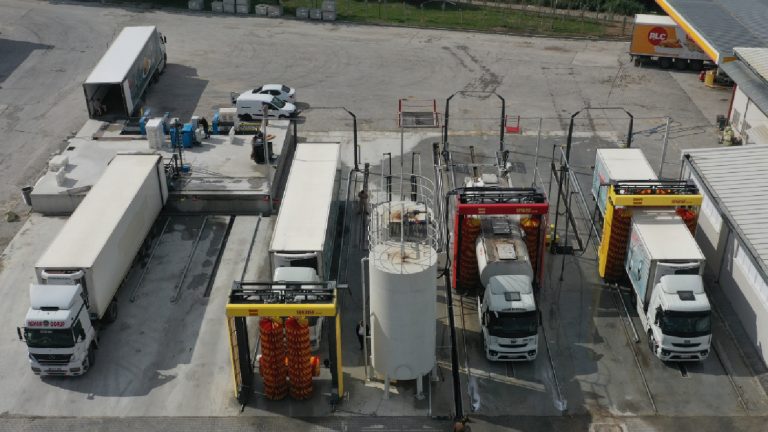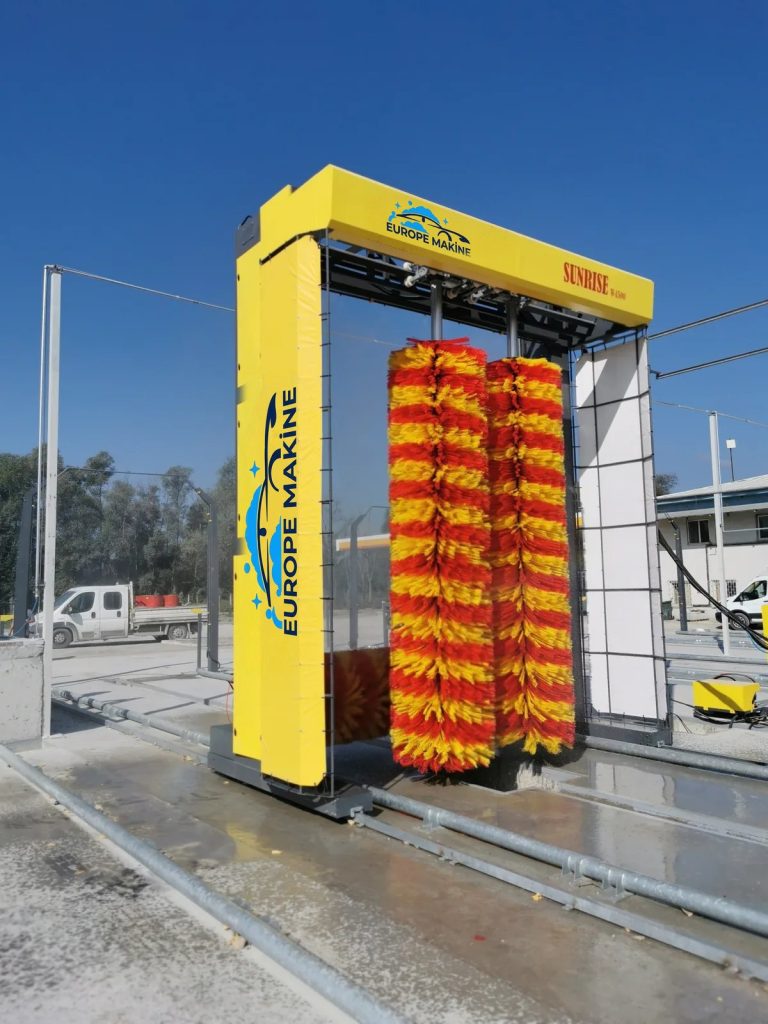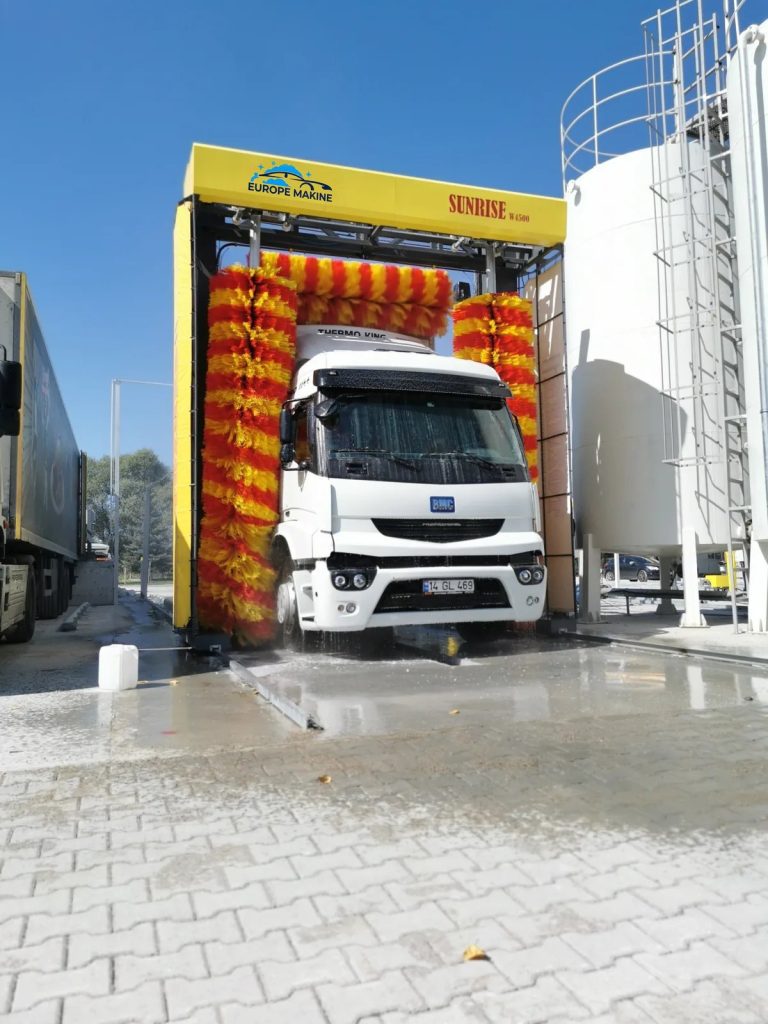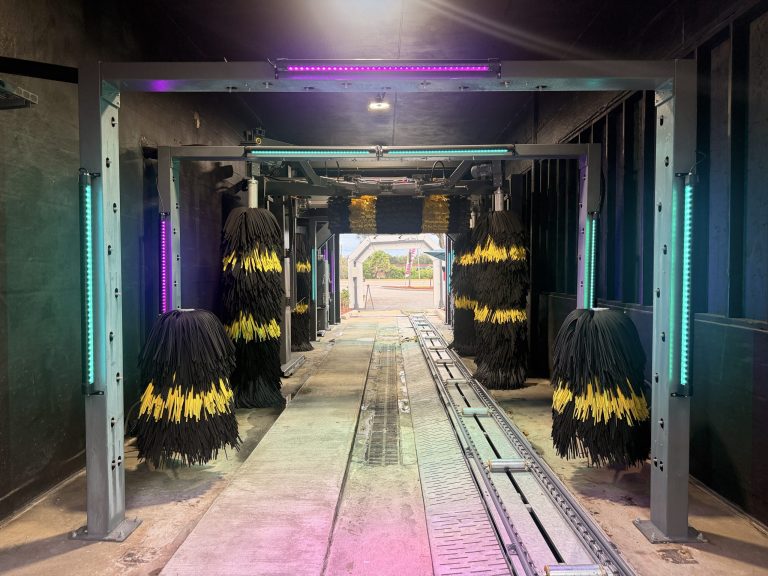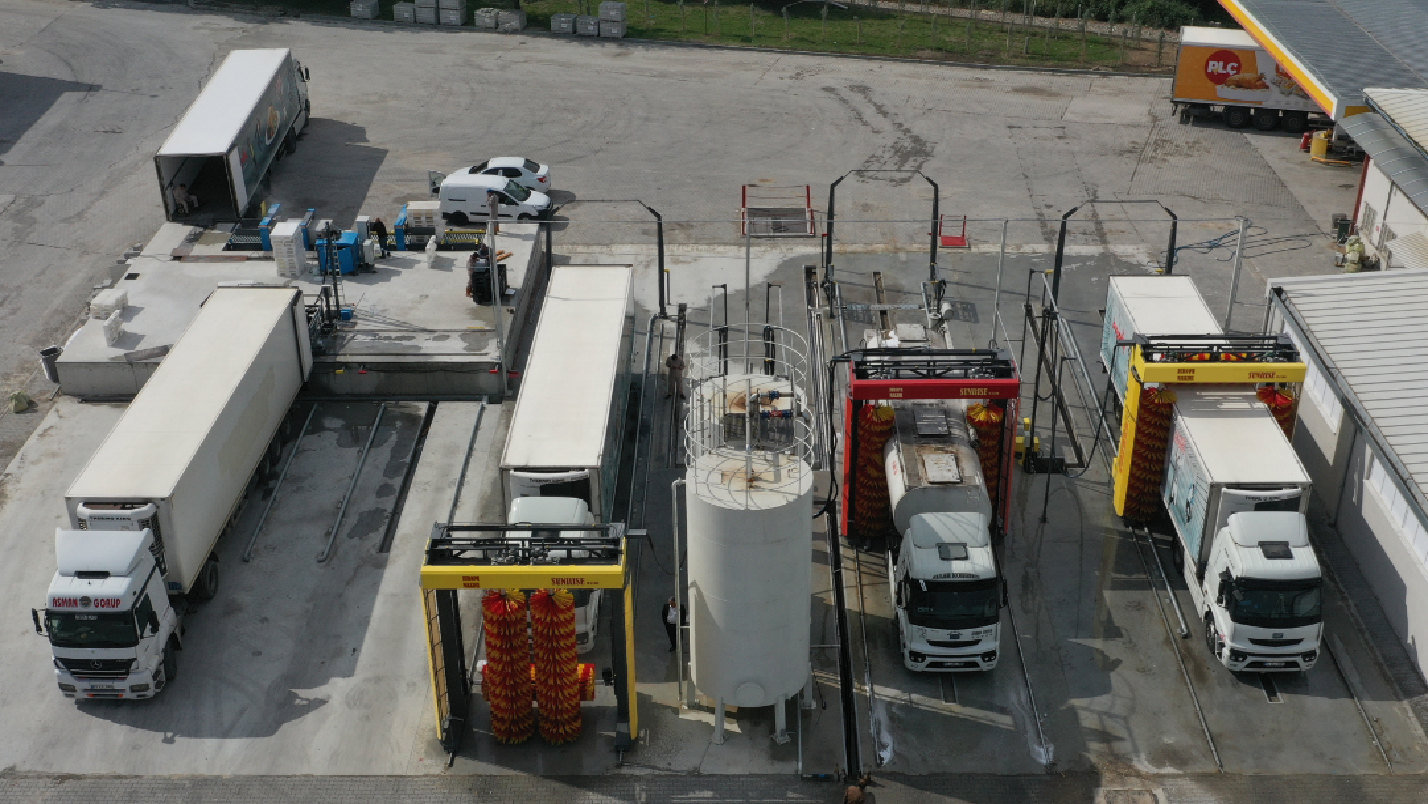
A heavy duty truck wash is an automatic bay built for large vehicles such as dump trucks, concrete mixers and refuse trucks. It cleans them in a repeatable pass inside a contained area, so the wash water is collected and handled instead of running across a yard. If you run a fleet, the useful questions are not about brushes and nozzles. They are about where the water goes, how much of it you can reuse, who maintains the system and what your local authority expects.
This article walks through those questions in order. It covers what makes a large truck wash different from a car wash, why the wash water needs controlling, how reclamation fits, what to think about in the bay itself, and where the evidence runs out. Truck-specific public guidance is thin, so where a point rests on general vehicle-wash material from the US Environmental Protection Agency (EPA), the text says so.
What a heavy duty truck wash actually is
The term covers a few different things, and it helps to separate them.
- Manual washing with a hose or pressure washer, usually on a slab or in a yard.
- A wash bay with manual equipment, where staff still do the work but the water is drained and collected.
- An automatic heavy vehicle wash, where a machine moves along or around the vehicle and does the washing in a set sequence.
When people search for a large truck wash, they are usually weighing the third option against the first two. The appeal of an automatic bay is consistency and containment. Every truck gets the same treatment, the work takes less labour, and the whole process happens in one place that can be designed for water collection from the start.
A large truck wash is not a car wash with taller doors. The vehicles are bigger, the dirt is different, the water is dirtier and the people using the bay are often drivers on a schedule rather than customers choosing a wash package. The machine, the drainage and the water treatment all need to be thought through for that.
Why dump trucks, mixers and refuse trucks are a special case
These three vehicle types are grouped together because they work in dirty conditions and tend to come back to the depot carrying whatever they met on the job. We have no published figures on how much soil, residue or grease each one carries, so the points below are general observations, not measurements.
- Dump trucks work with loose material such as soil, aggregate and spoil. Expect grit on the body, the wheel arches and the chassis.
- Concrete mixers are exposed to cementitious residue around the drum, chute and discharge area. Any rules on mixer washout are separate from general vehicle washing, and we have not verified them here. Check them locally.
- Refuse trucks pick up waste residues and liquids around the body and hopper area, and they spend long days in contact with the kerbside. We have not verified any specific federal guidance on cleaning them, so you should ask your safety adviser what applies to your crews.
What the three have in common is that the water coming off them is not clean rinse water. Grit settles, oil floats, and both end up somewhere. That is the real design problem in a heavy duty truck wash: the water, not the vehicle.
Why wash water needs to be controlled
EPA material on municipal fleets makes the point plainly. In its stormwater guidance on municipal vehicle and equipment washing, EPA says that vehicle wash water can contain contaminants from vehicle fluid leaks, from vehicle wear and from the cleaning process itself. EPA treats controlling these non-stormwater sources as part of good housekeeping in a stormwater programme.
That guidance is aimed at municipal fleets, but the principle carries over to any operator washing heavy vehicles. A hose-down on bare ground sends everything the truck was carrying, plus the detergent you added, wherever the slope takes it. A bay with a collected drain keeps that water in one place where it can be dealt with.
EPA makes a related point in its guidance on vehicle maintenance and washing. It notes that stormwater impacts from vehicle washing can come from residents, from fleet management activities and from charity fundraisers that discharge polluted wash water. It also says commercial car wash facilities limit those impacts and are a safer choice than washing at home. The comparison there is with informal washing, and it concerns car washes, not truck bays. The direction of the argument is still useful: a purpose-built, contained facility is the better answer than washing wherever it is convenient.
Manual washing versus an automatic bay
The case for an automatic bay is practical rather than dramatic. It comes down to a few things you can check against your own operation.
Consistency
A person with a pressure washer will clean a truck differently at six in the morning and at six in the evening, and differently from the colleague next to them. A machine follows the same sequence each time. For a fleet, that makes results easier to predict and easier to inspect.
Labour and time
Washing a large vehicle by hand takes a person off other work. An automatic bay moves that effort onto the machine, so staff can supervise, inspect or move vehicles instead. We have no verified time or throughput figures for heavy vehicle washing, so any claim of time saved should be tested against your own timings before you rely on it.
Containment by design
This is the strongest argument. When you build a bay, you decide where the water drains, what it passes through and what happens to it afterwards. Informal washing leaves those decisions to chance.
Repeatable maintenance
A fixed machine in a fixed bay can be serviced on a schedule. A collection of hoses and washers around a yard tends to be looked after only when it fails.
None of this makes an automatic bay right for every depot. A small fleet with a few trucks a week may find a well-drained manual bay is enough. The case for automation grows with the number of vehicles, the need for consistent results and the pressure to keep wash water under control.
Water reclamation: what it does and what it does not do
Reclamation treats earlier wash and rinse water so that it can be used again. EPA’s WaterSense at Work guidance on vehicle washes, prepared with the International Carwash Association, says many commercial vehicle washes use it. It names three reasons: wastewater discharge limits set by regulators, lower sewer discharge fees and a wish to conserve fresh water.
The same document explains that the level of treatment depends on where the water is going to be reused.
- Separating out grit, oil and grease is enough to reuse the water in the rocker panel and undercarriage stage.
- Other wash steps need further treatment, such as oxidation, filtration, membrane filtration or deionisation.
That split is relevant to heavy trucks. The lower, dirtier stages of a truck wash are where reused water is most acceptable, and grit, oil and grease are exactly what a heavy vehicle brings in. A system that removes them well gives you a practical first tier of reuse.
A caution on the water-saving figures
The EPA document cites International Carwash Association data showing that reclamation can reduce fresh water use by 50% to as much as 83%. Those figures come from studies of car wash facilities, not truck washes. They show that reclamation can make a large difference to fresh water demand, but you should not assume a truck bay will land in the same range. The source itself says manufacturers should be able to estimate savings for their own equipment, so ask for an estimate that is specific to the machine and the vehicles you wash.
Upkeep is part of the deal
EPA’s guidance on vehicle washing is clear that reclaim systems need extra maintenance, such as cleaning filters. It also says cleaning products must be compatible with the system. In practice that means the chemical you choose for the truck affects the water treatment behind it, and someone has to own that relationship. Before you buy, ask who cleans the filters, how often, and what happens if a different detergent is used.
The same document notes that reclaim systems can be retrofitted to existing conveyor or in-bay systems. If you already have a bay, that is worth knowing, because it means the decision does not have to be all or nothing.
Incentives may exist, but vary by place
The EPA material also says some water agencies give rebates for reclaim systems or allow flexibility during drought. It names programmes in San Antonio, Denver and the State of Georgia as examples. Whether anything comparable applies to you depends on your own water supplier, so it is worth a phone call before you design the system.
Designing the bay around the water
Most of the decisions that make a truck wash work are made before the machine arrives. A few points are worth settling early.
Where the water drains
The bay floor should send all wash water to a collection point, not past it. EPA’s vehicle washing guidance suggests a five-second dwell time before the vehicle leaves the bay so that runoff is collected. It is a simple idea: a truck leaving the moment the last nozzle stops will carry water out with it, and that water drains wherever the truck happens to be. A short pause in the bay lets more of it fall where you can catch it.
Grit and oil separation
Because trucks bring in grit, oil and grease, the first stage of any water system needs to deal with them. Whether the water is reclaimed or sent to a sewer, removing solids and oil early protects everything downstream, including pumps, filters and your discharge position.
Reuse where it makes sense
As the EPA material describes, lightly treated water is suitable for the lower stages, while other steps need cleaner water. Planning this split on paper, with your machine supplier, avoids buying more treatment than the job needs or less than it demands.
Chemical choice
If you reclaim water, detergents must suit the treatment system. Settle the chemical approach before commissioning, not after the first filter clogs.
Room for the vehicles
Truck length, height, body shape and turning space all matter, and they vary widely between a short dump truck and a long mixer. We have no verified bay dimensions or truck class limits to quote, so take your own measurements of your largest vehicle and give them to the supplier at the start.
Permits, discharge and local rules
This is the area where it is easiest to assume too much, so be careful. We found no federal rule specific to washing dump, mixer or refuse trucks, and no verified requirement on vehicle cleanliness from transport regulators. That does not mean there are no rules. It means they sit at state and local level, and they differ.
On stormwater, EPA explains in its page on stormwater discharges from industrial activities that it has authorised many states to run the permitting programme, so most industrial facilities get permit coverage through their state. In the few areas where EPA is the permitting authority, coverage is under its 2021 Multi-Sector General Permit. The practical reading is this: ask your state environmental agency whether your depot, and any wash activity on it, falls under a permit.
On sewer discharge, limits and pretreatment requirements vary by utility. We found no single federal source to quote, so confirm with your local utility what may go down the drain, what must be pretreated and what fees apply. EPA’s vehicle wash material notes that discharge limits and sewer fees are two of the reasons operators choose reclamation, which is a useful reason to ask the question early.
None of this is advice for your particular site. Check your state agency, your local utility and your local planning office, and keep a written record of what each tells you.
Maintenance and safety around a large machine
An automatic bay is a machine with moving parts, pumps and stored energy, and it needs regular servicing. OSHA’s standard on the control of hazardous energy (lockout/tagout) covers servicing and maintenance of machines where unexpected energisation, start-up or release of stored energy could injure employees. The standard does not name truck washes in particular, so the sensible approach is to read it as general guidance: whoever services your equipment, in-house or contracted, should have a clear procedure for isolating it before work starts.
Beyond that, plan for ordinary upkeep:
- Clean the reclaim filters on the schedule the system requires.
- Remove settled grit and skimmed oil from the separation stage before it carries over.
- Inspect drains and the bay floor, since a blocked drain defeats the containment you built.
- Keep a note of which detergent is in use, so a change does not surprise the water system.
A bay that stays open is mostly a bay that is looked after in small ways, regularly. A simple log of these jobs is worth more than a thick manual nobody reads.
Questions to ask before you specify a truck wash
Use this list in conversations with any supplier, including us.
- Which of my vehicle types has the machine been designed for, and what are the limits on size?
- Where does the water go at each stage, and what treatment does it receive?
- What fresh water saving can you estimate for this equipment on heavy vehicles, and on what basis?
- Who maintains the filters and the separation stage, and how often?
- Which detergents are compatible with the reclaim system?
- Can the water system be added later to an existing bay?
- What do my state agency and local utility require, and who is responsible for making sure it is in place before the bay opens?
A supplier who answers these in specifics is more useful than one who answers in adjectives.
Where Europe Makine fits
Europe Makine manufactures five wash systems, and the one relevant here is the SUNRISE W4000/W4700 heavy vehicle wash. We have no published specifications, cycle times or throughput figures for it that we can responsibly quote here, so check those directly with the company for your own vehicles. The throughput figures Europe Makine has published apply to other machines, not to the heavy vehicle wash.
What the company can describe is the wider context. It has more than 30 years of manufacturing experience and a 1,500 square metre production facility. It also builds turnkey car washes: it secures the site, clears permits, installs and calibrates the machines, hires and trains the crew, and hands over a running operation. Its US base is in Boca Raton, Florida, and machines ship with door-to-door delivery, free installation and a six-month warranty. The machines are imported, not made in the USA. One example of the turnkey approach is Ali’s Car Wash in Ocala, Florida, which runs on Europe Makine machines and is open to the public.
Summary: treat the water first, the machine second
A heavy duty truck wash succeeds or fails on water handling and upkeep. Dump trucks, mixers and refuse trucks all bring in dirt that ends up in the wash water, and EPA material shows that vehicle wash water can carry contaminants from fluid leaks, wear and the cleaning process. A contained bay with grit and oil separation, a sensible reuse plan and a maintenance routine deals with that. An automatic machine then adds consistency and saves labour.
Before you commit, confirm the local rules with your state agency and your utility, get savings estimates for your own equipment and vehicles instead of borrowing car wash figures, and decide who looks after the system once it is running. Those steps matter more than any feature on a data sheet.