Are car washes profitable? They can be, and the industry body describes operating margins as strong, but no verified source gives a typical margin that you can rely on for your own site. Return on a tunnel depends on recurring revenue, throughput and uptime, labour model, water and utility cost, and how well you compete locally. This article explains each of those, and what the latest industry reports say about conditions today.
We have deliberately left out a headline profit percentage, a payback period and a build cost. The sources we trust do not publish them in a form that holds up, and a figure borrowed from a forum or a sales brochure would mislead you more than it helps.
The short answer: yes, but it depends on the operation
The question "is car wash profitable business" has a fair answer in two parts. First, the sector is large and growing, and investors keep building. Second, a wash is a high-volume, equipment-heavy business with fixed costs, so the gap between a site that does well and one that struggles is mostly about execution and local conditions.
The International Carwash Association (ICA) industry information page (accessed 2026-11-06) says subscription plans and "strong operating margins" have drawn substantial new investment, with new store construction estimated to exceed 500 units a year. That is the only margin wording in the sources we checked, and it is qualitative. It tells you why capital is entering the sector. It does not tell you what a given tunnel will earn.
What the demand picture looks like
Profit starts with people choosing to have their cars washed by a professional. According to the same ICA page, the share of US drivers who most often wash at a professional car wash rose from about 48% in 1994 to nearly 80% today. Retail car wash sales are estimated at about $15B in North America.
That is a healthy base for a business to draw on. It also means you are entering a market that other people have already noticed.
Who runs the washes
The ICA reports that most US retail locations are owned by small to medium independents. About 200 companies run ten or more stores, covering over 6,000 locations, and about 3,000 companies run one or two stores. A 2020 ICA-commissioned third-party study estimated about 17,500 conveyor, 29,000 in-bay automatic and 16,250 self-service washes in the US. The US Census Bureau estimated 17,584 car washes with paid employees in 2020.
For you, this matters in two ways. A single-site owner is not an outlier, so the business is accessible to independents. And a conveyor is only one of several formats, so you are competing for the same driver with in-bay automatics and self-service bays as well as other tunnels.
Why running a car wash in the USA is not automatically a safe bet
If you are asking whether running a carwash is a profitable business in the USA, the best recent evidence is the ICA's own survey work, and it has turned more cautious.
In the CAR WASH Pulse for Q4 2026, dated 28 October 2026, the share of operators who expect positive conditions six months out fell to 42%, from 54%. Operators named the overall economy as their top challenge, followed by fuel and input costs, then market saturation and competition.
A year earlier, the Q4 2025 Pulse described consumers as resilient, with membership renewal intent staying very high, and expected growth to slow in 2026 in a measured way. It called memberships the industry's primary stabiliser.
Read together, these say the sector is still sound, but operators are less sure than they were. That is a reasonable backdrop for planning: assume a competitive market and test your plan against a slower year.
What the quarterly data shows about revenue mix
A software provider's quarterly industry reports, published on carwash.org and covering more than 3,000 locations, give a sharper picture. These are figures from a software platform vendor, not a government source, so treat them as one useful view rather than the whole market.
In its Q3 2026 report, dated 21 October 2026:
- Same-store retail revenue fell 9.6% year over year.
- Membership revenue grew 9.8%.
- Memberships were about 71% of same-store revenue, up from 66% a year earlier.
- Total same-store sales grew 3.2%, the slowest rate in five quarters.
In its Q2 2026 report, dated 22 July 2026, total same-store sales grew 5.4%, and sites open at least two years grew 2.7%. Total monthly churn reached 7.9%, which the report describes as a new high.
The pattern is plain. Pay-per-wash revenue is shrinking, and membership revenue is carrying the growth. A wash that depends on single retail purchases is exposed. A wash with a strong, well-managed membership base is better placed, though rising churn shows that members still leave.
What decides the return on a tunnel
The industry data tells you about the market. The return on your own tunnel comes down to a small number of operational factors. None of them is exotic, and all of them are within an owner's influence.
1. Recurring revenue
Memberships do three things for a tunnel. They give you revenue you can forecast, they reduce volatility from weather, and they build loyalty. That is the argument made in the ICA magazine piece The Winning Car Wash Playbook, which reports the view of an industry consultant. It is one expert's opinion rather than a study, but it matches what the quarterly data shows about membership share.
The same piece also warns that "the margin for operational sloppiness is thinner than it used to be." A membership model rewards consistency. If the wash is down, dirty or slow, members notice, and a churn rate that is already at a high level will not help you.
Questions to ask about any membership plan:
- What does a member pay per month compared with what a single wash costs, and does the plan still make sense at your site's cost per vehicle?
- How many cars can the tunnel realistically handle at peak, with the members you hope to sign?
- What is your plan for cancellations, which the data suggests are a real and growing issue?
2. Throughput and uptime
A conveyor tunnel earns by moving vehicles through at a steady pace, and loses money whenever the line stops or backs up. Throughput and downtime are two sides of the same issue. The consultant in the ICA playbook names equipment upgrades that raise throughput and cut downtime as one of four return levers, alongside stronger membership programmes, automation to reduce labour dependency, and a better customer experience.
Rated throughput is a design figure, not a promise. Real throughput depends on how the queue is managed, how quickly drivers are guided onto the conveyor, how the drying stage keeps up, and how often the line is interrupted.
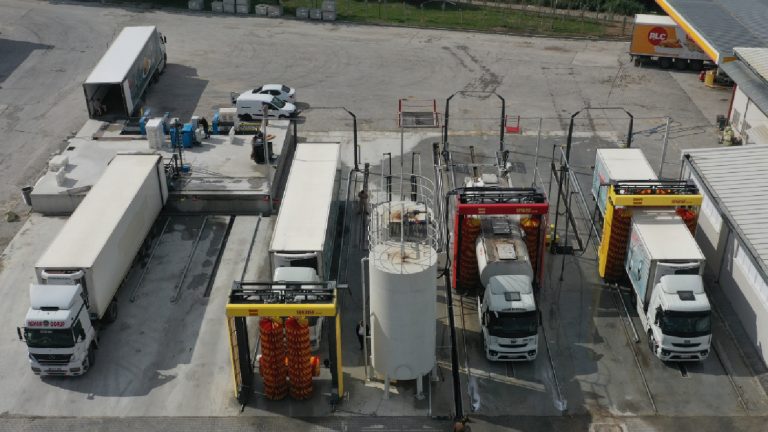
For reference, Europe Makine's published figures are 30 to 60 vehicles per hour washed and dried for its conveyor tunnel system. For its Cirrus 5N five-brush rollover, the published figures are 24 to 32 vehicles per hour wash-only, and about 14 with drying. For the Acrobat 2X touchless rollover, they are 3 to 5 vehicles per minute of operation time. Treat these as a way to compare formats and to see how drying affects a rollover's capacity. They are not revenue forecasts, and your site will not match a brochure exactly.
On uptime, a few practical questions are worth asking any supplier before you commit:
- Which parts wear most quickly, and how long does it take to replace them?
- Who services the machine locally, and how quickly can they attend?
- What happens to the line if one module fails, and can the tunnel keep running in a reduced mode?
3. Labour model
Labour is usually one of the larger controllable costs in a tunnel. The ICA playbook names automation to reduce labour dependency as a return lever, which fits the operators' concern about input costs reported in the Pulse survey.
We have not quoted current wage figures because the up-to-date federal data was not available for this article. You should look up the current local wage data for your area when you build your own plan, rather than relying on a national average or a figure from a few years ago.
The practical point is that labour is not just a cost line. A tunnel that relies on lots of manual prep, or that needs experienced staff to avoid damaging vehicles, is harder to run and harder to staff. A simpler flow, with automation where it genuinely replaces a task, reduces the number of things that can go wrong on a busy Saturday.
4. Water and utility cost
Water, power and chemicals are ongoing costs, and the amount of fresh water you use per vehicle matters. The EPA WaterSense at Work guidance on vehicle washes cites a 2002 study in which conveyor washes averaged 34 gallons of fresh water per vehicle, and a 2018 study that found about 30. It notes that reclaimed water use in those washes was significant.
The EPA's companion section on vehicle washing says conveyor facilities are good candidates for reclamation systems. It also notes the high capital cost of replacing a vehicle wash system, which is a reminder that decisions about water recovery are best made at the design stage rather than added later.
Local rules and utility rates vary a good deal. We have not covered current federal or local wastewater and permitting rules here, so check with your local authority and utility early. Water treatment, discharge permissions and sewer charges can all affect the economics of a site.
5. Competitive position
Return also depends on what is around you. The ICA article What the Modern Flex Wash Says About the Future of Car Washing says that in express-heavy markets, operators compete heavily on price, and speed alone may not be enough to stand out. The tunnel still has to produce a clean, dry exterior.
This is a useful discipline. If your wash is no faster than the one down the road, the difference between you will be quality, consistency and how the site feels to use. A tunnel that leaves cars dripping or streaked will struggle to hold members, whatever its rated speed.
The Q4 2026 Pulse lists market saturation and competition among the top operator challenges. Before you build, count the existing washes in your catchment, note which formats they use, and think about what the market lacks rather than what it already has.
A note on self-service and other formats
A tunnel is not the only format with a case behind it. The ICA magazine preview The Surge of Self-Serve Car Washes describes self-serve as having attractive margins and a low acquisition cost, though the page is undated and qualitative. Different formats suit different sites, budgets and levels of involvement from the owner. A conveyor tunnel suits a high-traffic site where volume and memberships are the plan. It is a poor fit where traffic is thin.
How to judge a profit claim
You will meet confident numbers, from brokers, equipment sellers, social media and sometimes well-meaning owners. A few habits help you test them.
- Ask what is included. Is the margin before or after labour, rent or loan payments, water, maintenance and marketing?
- Ask about the site. A figure from a busy corner on a main road tells you little about a quieter one.
- Ask about the year. The industry data above shows that conditions have shifted within the last year. A figure from a stronger period may not hold.
- Ask about the revenue mix. A site where most revenue is from members will behave differently from one that relies on retail washes.
- Ask for the downtime record. A rated speed means little if the line is often stopped.
If a source cannot say what is behind its numbers, treat the numbers as a sales aid, not evidence.
Planning the return rather than assuming it
A sensible plan for a tunnel does not start from a target margin. It starts from the things you can measure, and works forward.
- Traffic and catchment. How many drivers pass the site, and how many other washes serve them?
- Format and capacity. What can the tunnel realistically process in a peak hour, including drying and queue management?
- Revenue mix. What share do you expect from members, and what do you assume about cancellations?
- Fixed and variable costs. What do labour, utilities, chemicals, maintenance and finance cost at a quiet month, not just a busy one?
- Stress test. If volume is lower than planned for a year, does the business survive?
This is a method, not a calculation, and the inputs need to come from your own site and your local costs. A lender or an accountant who knows small businesses in your area can help you turn it into a proper forecast.
Where Europe Makine fits
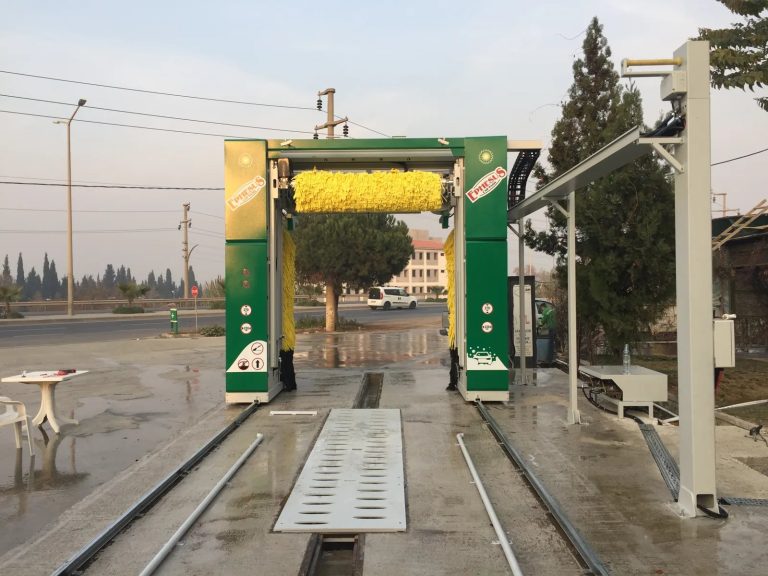
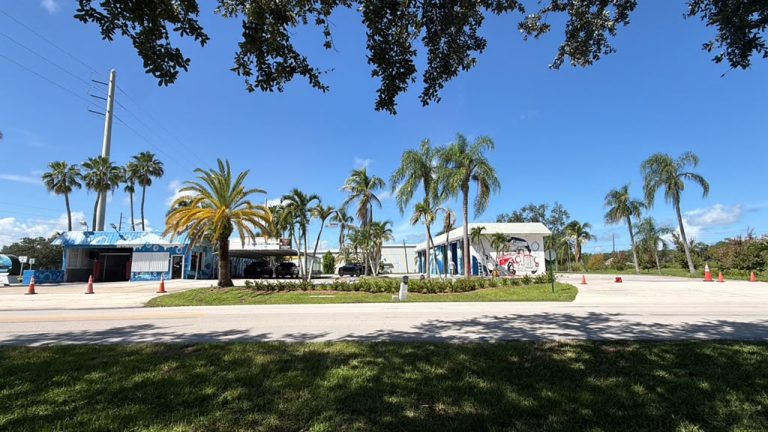
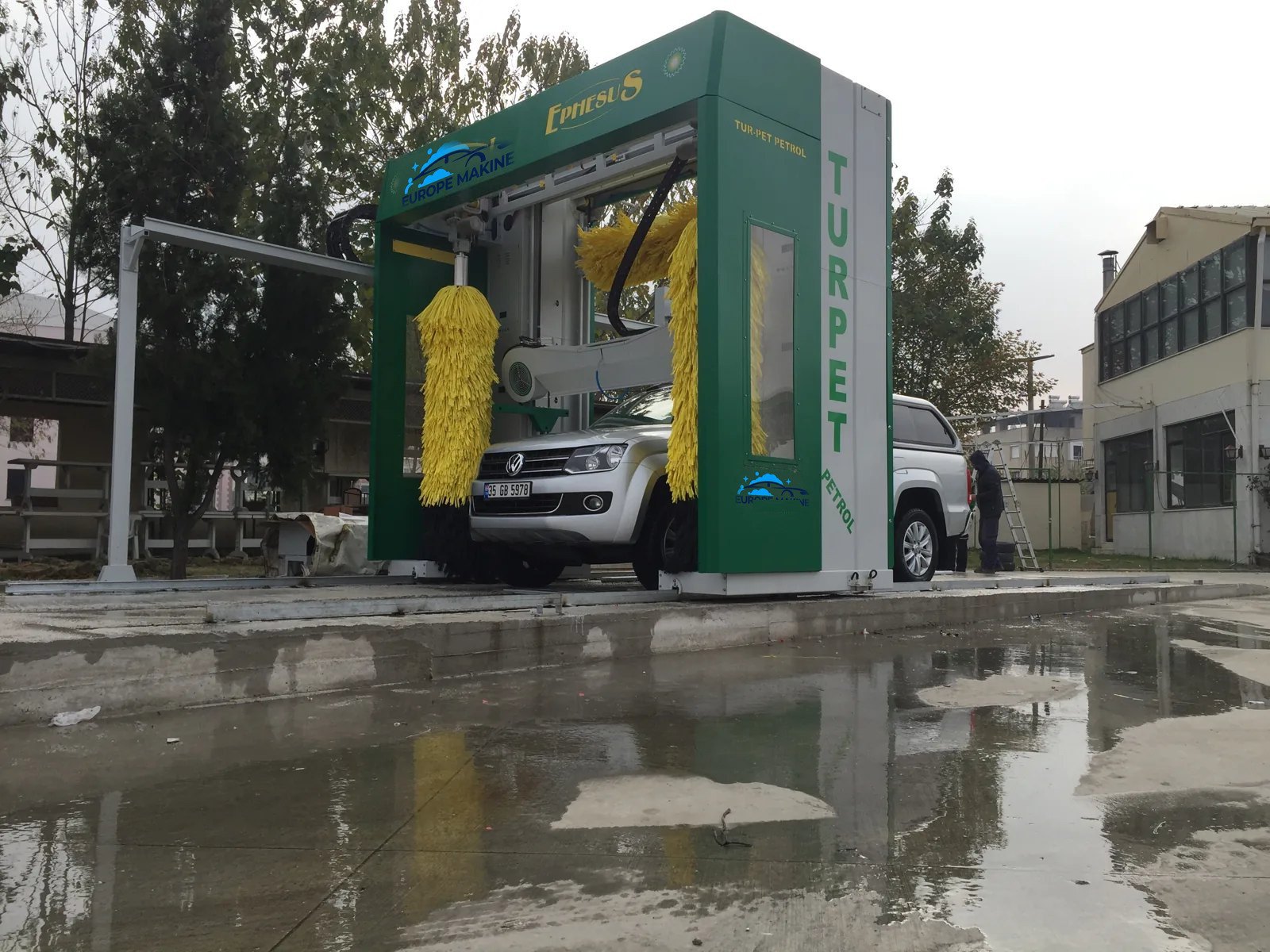
Europe Makine manufactures wash systems, with more than 30 years of manufacturing experience and a 1,500 square metre production facility. The range includes the Acrobat 2X touchless rollover, the Ephesus three-brush rollover, the Cirrus 5N five-brush rollover, a conveyor tunnel system and the SUNRISE W4000/W4700 heavy vehicle wash. The company also builds turnkey car washes: it secures the site, clears permits, installs and calibrates the machines, hires and trains the crew, and hands over a running operation. It has a US base in Boca Raton, Florida, and Ali's Car Wash in Ocala, Florida runs on its machines, was built through the turnkey process and is open to the public.
None of that settles whether a particular site will be profitable. That depends on the factors above, and on a close look at the location. It is a reason to ask any builder the same hard questions about throughput, uptime, labour and water, and to expect specific answers.
The bottom line
Car washes can be a good business. Demand has grown for decades, investors are still building, and the industry describes margins as strong. But the current surveys show operators becoming more cautious, retail revenue falling and memberships carrying growth. The return on a tunnel is earned through recurring revenue, a line that keeps moving, a sensible labour model, controlled water and utility cost, and a wash that cleans well enough to stand apart from its neighbours.