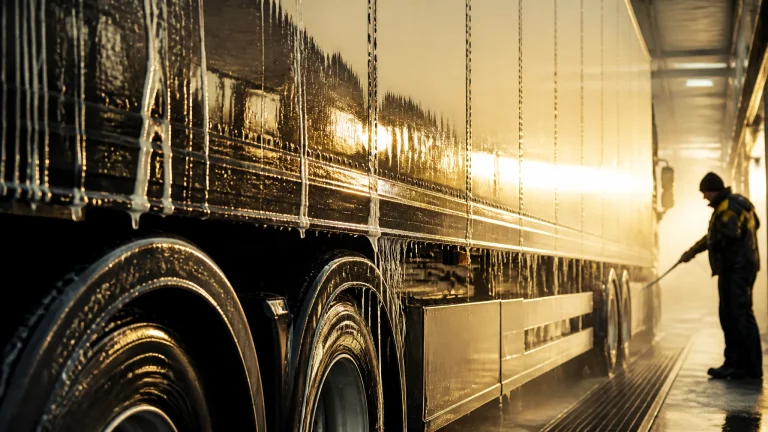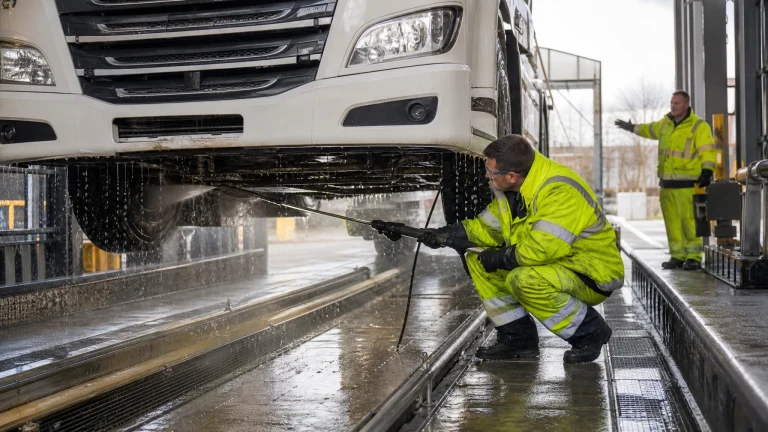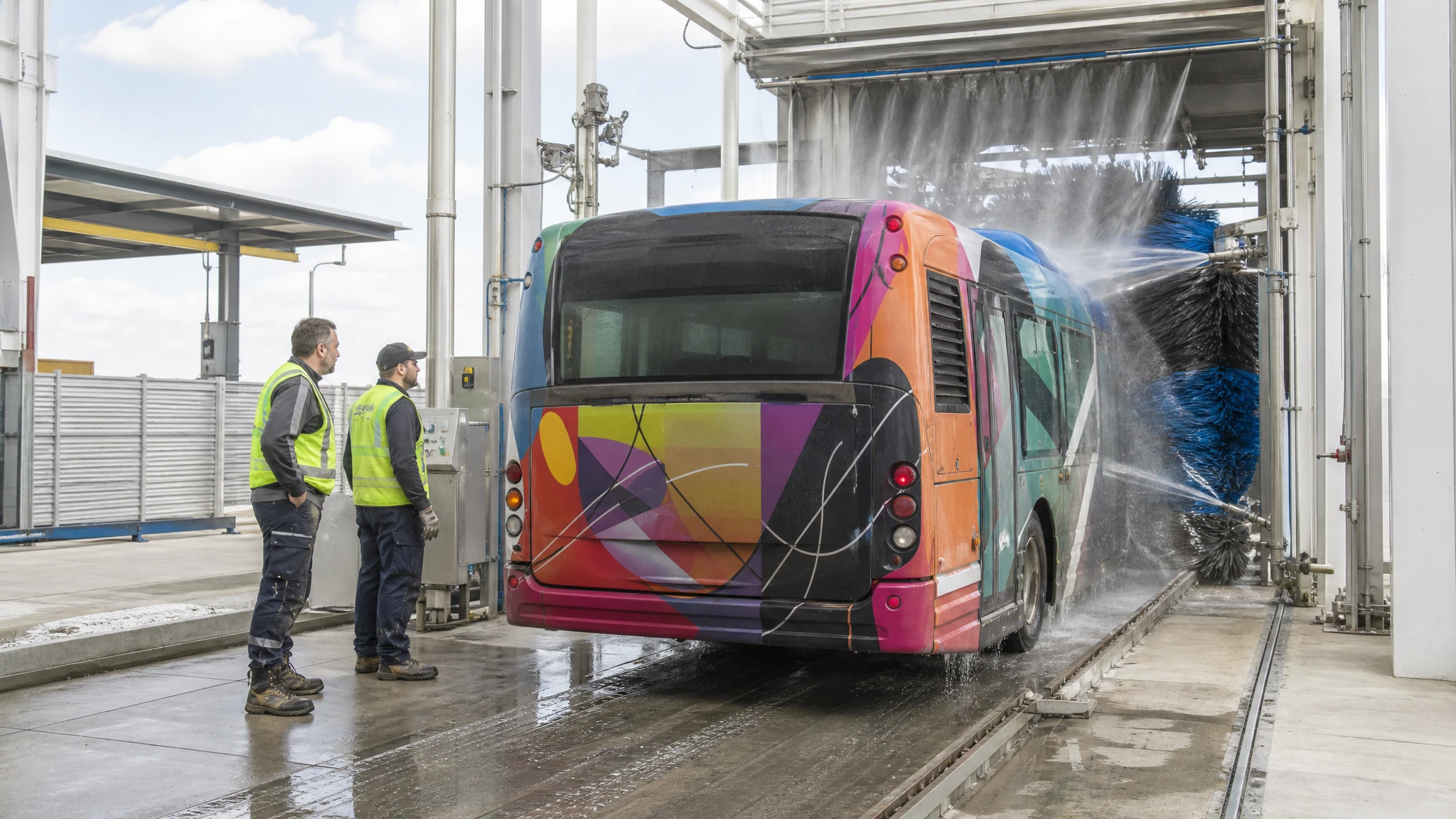
If you run a wrapped or liveried fleet, the honest answer to “brushes or touchless?” is that neither method is automatically safe, and neither is automatically dangerous. What keeps graphics intact is not the label on the machine but how the wash is set up, how the wrap was installed, and how well the two are matched. Touchless removes the abrasion of contact media, but it does not remove risk. It moves the risk to a different place: hydraulic force at the exact edges, seams and panel gaps where a wrap can start to lift.
The car wash industry is large and varied. The International Carwash Association reports a presence in all fifty US states and more than two dozen countries, and US Census figures it cites put the country at 17,584 car washes with paid employees, spread across conveyor tunnels, in-bay rollovers and self-service bays. Fleet operators sit inside that market with a specific problem the retail market does not have: expensive graphics that have to survive a daily wash for years.
What each method actually does to a wrap
The two wash types are defined by mechanism, not by gentleness. Friction washing uses moving media, described by the EPA as brushes, curtains and similar cloth media. Frictionless, or touch-free, washing relies instead on high-pressure nozzles to lift soil.
That distinction matters for a wrap. A contact system carries an abrasion risk: stiff, worn or gritty media dragging across a graphic can dull the film and, at a lifted edge, catch and peel it. A touchless system carries a pressure risk: a jet held too close, or aimed straight into an overlap, a mirror mount or a door shut, can work under the film and start the lift itself. Wrap installers apply overlaps and edge-seals precisely at those points, which is where any wash is most likely to find a weakness.
The practical conclusion is that the wash method is a smaller variable than most people assume. A well-set touchless arch and a soft, low-density foam or cloth system can both be run wrap-safe. A neglected version of either can damage graphics. This is the same trade covered in more depth in our piece on touchless or brushes and what each one trades.
Match the wash to the film, not the film to the wash
There is no US government standard that publishes a safe pressure, standoff distance or brush type for a given wrap. The right authority is the film manufacturer. Before you set tunnel chemistry, nozzle pressure or media type, get the written care instructions for the specific laminate on your fleet. Those documents cover cure time, edge-sealing and solvent compatibility, and they are the only defensible basis for your wash settings.
Alongside that, a short list of depot habits protects graphics more reliably than any single machine choice:
- Inspect wrap edges, seams, mirror housings and door shuts for any lifting before a newly wrapped vehicle goes through an automated cycle. A fresh wrap that is still curing is the most vulnerable it will ever be.
- If you use a contact system, favour soft, low-density foam or microfibre-cloth media over stiff nylon brushes.
- Set nozzle standoff distance and pressure against the wash equipment manufacturer’s specification sheet, and re-verify after any nozzle or pump service.
- Keep a documented pre-wash walk-around log where mixed painted and wrapped vehicles share a wash.
Water and reclaim economics for high-volume depots
For a bus or lorry depot washing many vehicles a day, water use is a real cost line, and it does not fall the way people expect. Without reclamation, the EPA reports conveyor washing using around 65.8 gallons of fresh water per vehicle for friction washing and 85.3 gallons per vehicle for frictionless washing. Field studies cited by the EPA also found that brush and cloth media, known as mitters, curtains or brushes, use less water on average than spray-only equipment.
The reason is that cloth media hold detergent from the previous cycle and need less re-wetting, which is why the EPA recommends including a friction component in every cycle, especially where water is not reused. For a depot manager, this means the wrap-safety question and the running-cost question can pull in different directions: an all-touchless approach removes contact risk but tends to use more fresh water, which raises the case for a reclaim system. Reclaim sizing and wash chemistry are worth planning together, as our note on what the detergents actually do explains.
Compliance does not change because it is a wrap
Whichever method you choose, a liveried vehicle is still a commercial vehicle for discharge purposes. Wash water can carry nutrients, metals and hydrocarbons, both from the vehicle and from the detergent itself, into storm drains if it is not contained, which is the core concern in EPA stormwater guidance. Municipal fleets, from public works trucks to school buses, are washed under the same framework, and the EPA notes that facilities discharging wash water to sanitary sewers generally need oil or water separators or some form of filtration. A wash rack, containment and the right discharge permit are part of the job regardless of whether your graphics are painted or wrapped. This is one of the things a fleet should nail down early, covered in what a fleet should specify in a wash arrangement.
Tankers and rail: a related but separate rulebook
If your liveried fleet includes tankers or rail tank cars, keep two things apart. The painted or wrapped exterior falls under the general stormwater and washing guidance above. Cleaning the inside of the tank is a different matter: the EPA’s Transportation Equipment Cleaning guidelines organise that work into subcategories covering tank trucks and intermodal containers, rail tank cars, tank barges and ocean tankers, and food-grade tanks. Heavy vehicles carry these extra layers, which is part of why heavy vehicles need their own wash system rather than a scaled-up car wash.
Safety around the equipment, not just the graphics
High-pressure touchless systems add pumps, heaters and electrical panels near wet floors, which is a genuine consideration for depot engineers. OSHA classifies car washes under SIC 7542 and, through its alliance with the ICA, focuses on slips, trips and falls, hazard communication and vehicle operation safety. The stakes are real: a 2023 OSHA inspection at one operator found rusted electrical boxes with live wires and improperly grounded outlets near wash-water areas. When you weigh wash methods, weigh the wet-and-electrical footprint they add to the depot, not only how they treat a decal.
Where Europe Makine fits
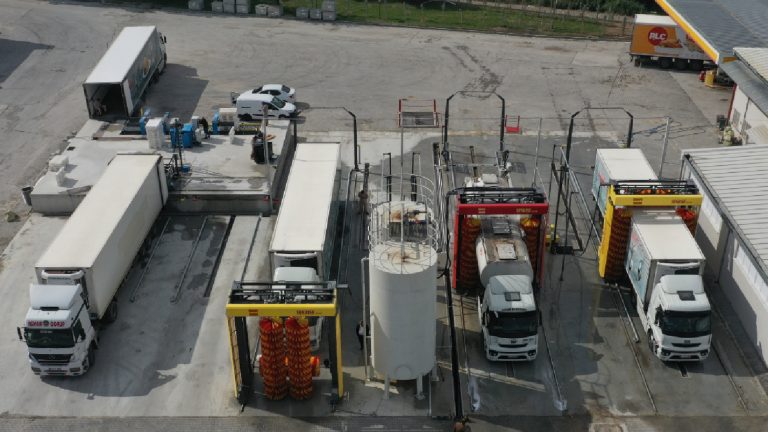
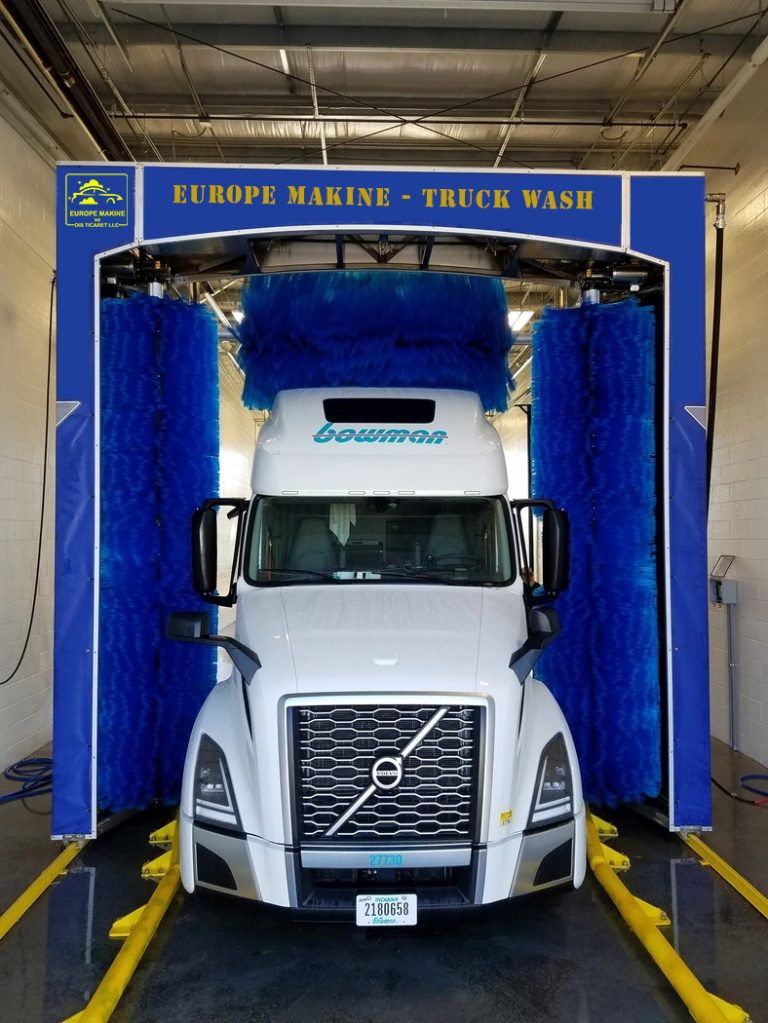
Europe Makine builds both approaches, including the Acrobat 2X touchless rollover and soft-media brush rollovers, so the choice for a wrapped fleet is not a sales question but an engineering one: match the machine, the media and the pressure to the film your vehicles carry, then set it against the manufacturer’s specification and keep it there with a maintenance routine. For a mixed liveried fleet, that discipline protects the graphics far more than the method on the label ever will.