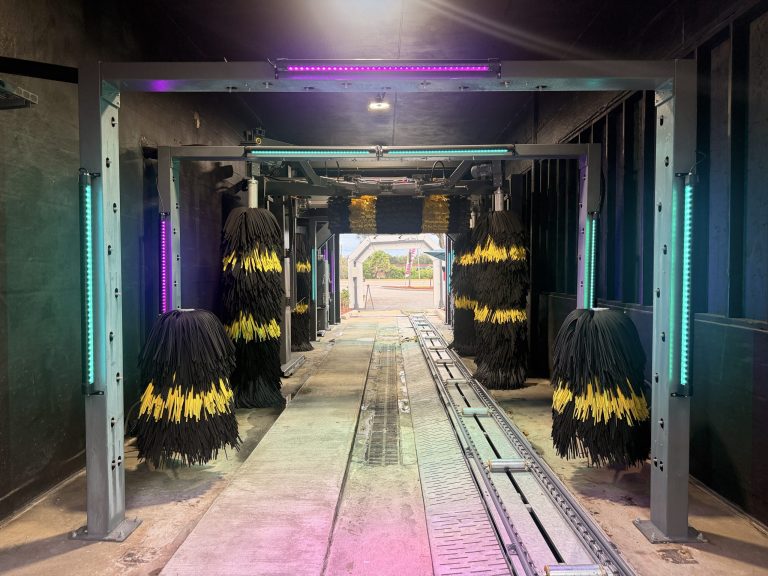
Before you buy a wash machine, ask three plain questions: what the warranty actually covers, how fast a technician and a part can reach you, and what happens to that support once the warranty period ends. A machine that washes beautifully on the demo day is worth very little if a failed pump takes three weeks to replace. The specification sells the sale. The after-sales terms decide whether the wash stays open.
Most sales conversations dwell on throughput, chemistry and finish quality. Warranty and service tend to arrive as a line at the end, in reassuring but vague language. That is the part worth slowing down on, because it is the part you live with for years. Below is what to press on before you sign.
“Warranty” is not one thing, so make the vendor break it apart
A single warranty period rarely covers every part of a wash the same way. In practice there are three buckets, and you want each spelled out separately.
- Structural and mechanical: the frame, gantry, rails, drive motors and gearboxes. These are the expensive items and usually carry the longest cover.
- Electrical and controls: the PLC, sensors, drives and wiring. This is where diagnosis time matters most, because a controls fault can stop the whole machine while the mechanical parts are perfectly healthy. If you want to understand why this bucket is worth scrutinising, see what PLC control means for a wash owner.
- Consumables and wear parts: brushes, seals, nozzles, belts. These are rarely covered for long, and they should not be. What you want here is not warranty cover but honest guidance on replacement intervals and price.
Ask one specific question that separates a careful manufacturer from a casual one: where does the water reclaim system sit? Reclaim is the feature buyers ask about most, but the EPA is clear that it carries an ongoing maintenance burden, noting that water reclamation systems require additional maintenance to clean filters and other system components. So ask plainly: are the reclaim pumps, filters and sensors covered under the mechanical warranty, or treated as consumables you maintain yourself? There is no wrong answer, but there is a wrong situation, which is finding out after a filter housing fails.
Ask for the warranty document, not the summary
Request the actual warranty text before you buy, not the sales paragraph. Read the exclusions carefully. Common ones include damage from poor incoming water quality, use of incompatible chemicals, and operator error. These are reasonable, but they define the boundary of your cover, and you want to know that boundary before a claim, not during one. If a vendor is slow to hand over the document, treat that as information in itself.
Parts availability, not just parts cost
Price lists are easy to get. Lead times are the number that actually governs your downtime. Ask for the average lead time on the common wear parts, and ask where those parts sit physically. A part stocked domestically in the US arrives in days. The same part shipped from overseas can take weeks, and a machine waiting on a part is a machine earning nothing.
This matters more for manufacturers with international supply chains, which is most of the market. It is a fair and specific question: for the parts most likely to fail in the first three years, what is on a shelf in the US, and what has to be flown in?
Get the service response commitment in writing
“Prompt service” is not a commitment. Ask for a contractual response structure: how many hours to a phone or remote diagnosis, and how many hours or days to a technician on site. Then ask a follow-up that tells you whether the promise is real: how many service technicians does the vendor have covering your state or region, not just the national total. A large national number spread thin is worth less than a smaller number based near you.
Ask, too, whether the machine supports remote monitoring. Telematics that let a manufacturer see a fault before dispatching a technician can turn a two-visit repair into one, because the right part travels with the first truck.
Ask who the technicians are, and how they work safely
Service quality is a people question. Ask whether service technicians are factory trained on your specific line, because a wash machine is not a generic pump. This intersects with safety in a way many buyers overlook. The car wash industry works with the OSHA through a formal alliance run by the International Carwash Association, which points operators toward guidance on hazards including the control of hazardous energy, or lockout/tagout. Any technician working inside a wash gantry should follow those procedures. A manufacturer whose service crew treats lockout/tagout as routine is a manufacturer whose crew is trained. It is a fair thing to ask about.
Heavy-vehicle and rail buyers: ask about compliance by design
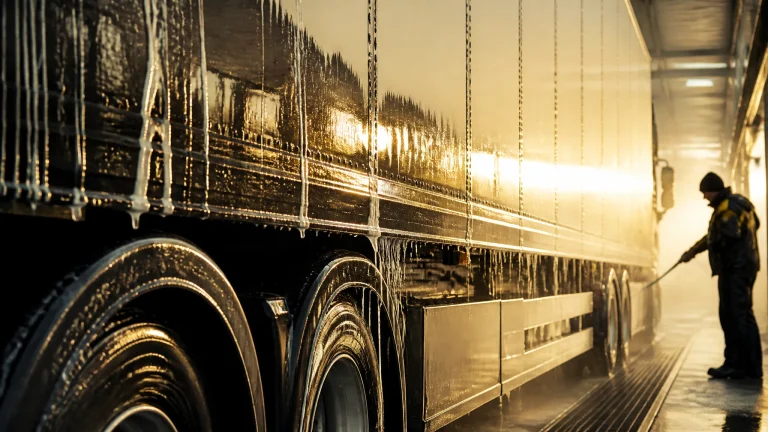
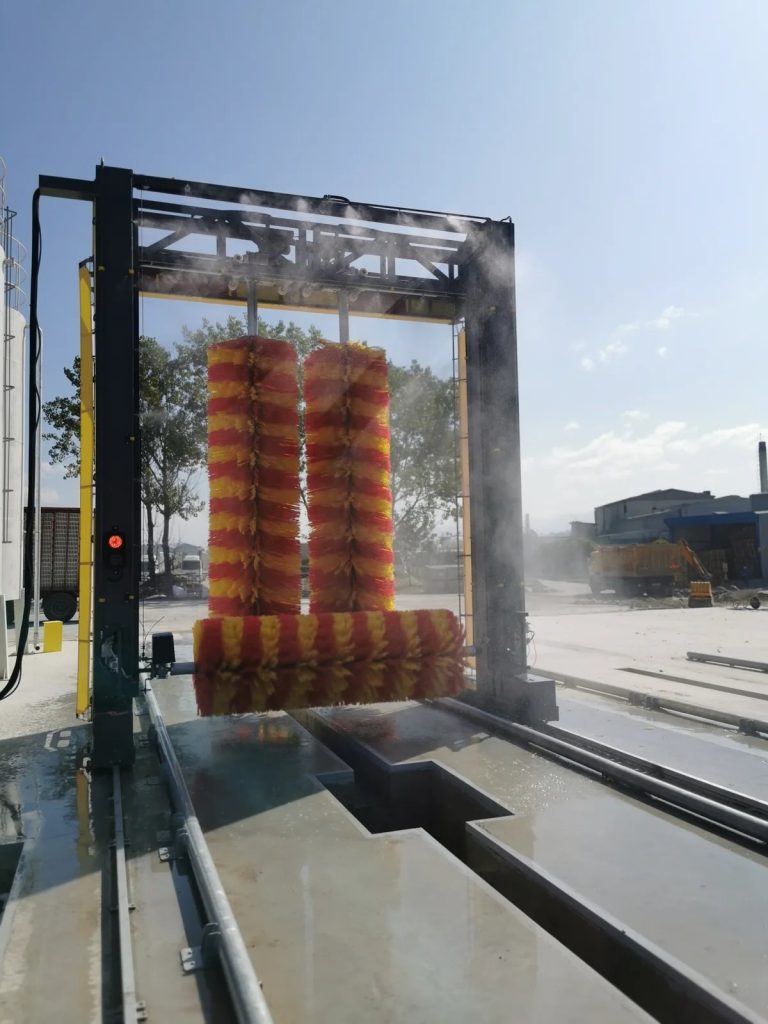
If you are buying to wash tankers, tank trucks or rail cars, there is a specific federal program that should shape the conversation. The EPA’s Transportation Equipment Cleaning effluent guidelines, at 40 CFR Part 442, cover interior cleaning of tank containers on trucks, rail cars, barges and ships, with different treatment for facilities discharging below a defined annual threshold. Ask whether the wash and reclaim system was engineered with your site’s discharge limits in mind, and ask what happens if a permit inspection later flags a deficiency in that design. This is a warranty question dressed as a compliance question, and the good answer is a specific one. For the wider picture on this, see why heavy vehicles need their own wash system.
Mind the gap between warranty length and loan length
If you are financing through an SBA programme, the timelines rarely match. SBA 7(a) loans run to a maximum of $5 million, and 504 loans are built for long-lived machinery with a useful life of at least ten years. Your warranty will almost certainly be shorter than your repayment schedule. So ask what service coverage looks like in years three through ten, when you are still paying for the machine but the standard warranty has expired. Ask whether extended-warranty or preventive-maintenance contracts exist, and what they add: scheduled inspections, remote diagnostics, a priority place in the service queue.
Know what a service call really costs
Weigh in-house maintenance against vendor dispatch honestly. Skilled maintenance labour is not cheap. The US Bureau of Labor Statistics puts the median annual wage for industrial machinery mechanics and millwrights at $64,100 in May 2025, with millwright apprenticeships running up to four years. A manufacturer that responds fast and correctly can be a genuine cost offset against carrying that skill in-house. Pair this thinking with a realistic servicing plan, which we cover in a maintenance schedule that keeps a wash open.
Ask for references, and ask them the right thing
Request references from existing US operators running comparable machines that are three or more years old. New owners are happy by definition. What you want is the post-warranty experience: did parts arrive, did technicians turn up, did the vendor still answer the phone once the sale was old news. That single conversation tells you more than any brochure.
Where Europe Makine fits
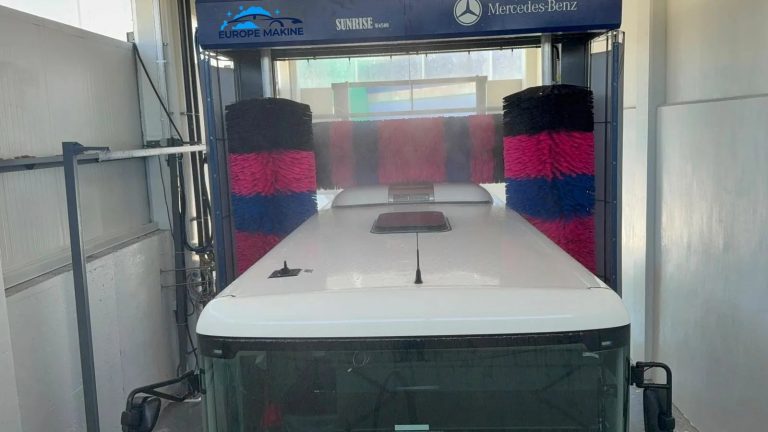
Europe Makine builds five wash systems in its own facility and ships in the US from a base in Greenacres, Florida, with door to door delivery, free installation and a 12-month warranty on its machines. Its own turnkey wash, Ali’s Car Wash in Ocala, runs on those machines and is open to the public, which means the after-sales terms are ones the company lives with itself. If you are weighing whether to buy equipment alone or hand the whole operation to a builder, read buying machines versus buying a turnkey car wash. And if you want the mirror image of this checklist, the same due diligence a dealer runs before agreeing to carry a line appears in what to look for before carrying an equipment line.
Whatever you buy, the principle holds. The machine is only half the purchase. The other half is the promise that someone will keep it running, and that promise is only worth what you can get in writing.