A spot-free rinse system gives the vehicle a final rinse with purified water, so that what is left on the paint and glass as it dries does not leave marks. In the US, the standard way to make that water is reverse osmosis (RO) or deionisation (DI). EPA’s vehicle wash guidance lists RO, or RO followed by DI, in the “Final Rinse” row of its water-treatment table (EPA WaterSense at Work, section 5.4 Vehicle Washes).
This article explains how car wash water purification works in general terms, what happens to the water that RO rejects, and which questions are worth asking before you specify a system. The evidence here is mostly qualitative. We have left out figures for dissolved solids, cost and payback because we could not source them.
What the final rinse is for
Mains water carries dissolved minerals. When a droplet dries on a vehicle, the water leaves but the minerals stay, and they show up as spots. A rinse with purified water leaves far less behind, so the vehicle can leave the bay or tunnel without a hand towel.
That is the whole job of the spot-free rinse. It does not clean the vehicle. It is the last step after soap, brushes or high-pressure water have done the cleaning, and it only works if the rest of the wash has done its part.
How reverse osmosis works
EPA describes the principle in its water purification guidance. Membrane processes use a semi-permeable membrane to separate purified water from contaminants. In order of the smallest particles they remove, the four types are microfiltration, ultrafiltration, nanofiltration and reverse osmosis. RO sits at the fine end of that range.
In RO, pressure forces water through the membrane. What comes through is purified, low-solute water. Most of the dissolved material cannot pass and is left on the feed side of the membrane.
One caution on sources: that EPA section, 7.2 Water Purification, is written for laboratory and medical facilities, not car washes. It is a reliable description of the mechanism, but it is not car wash design advice.
Two streams: permeate and reject water
An RO unit does not produce one stream of water. It produces two. EPA’s page on point-of-use reverse osmosis systems describes the result as treated water, called permeate, and reject water, called concentrate or brine.
The permeate is what you use for the spot-free rinse. The reject water carries away the contaminants the membrane held back. That page is about residential under-sink units, so we use it only for those definitions. Its reject-water ratios apply to small domestic systems and should not be read across to a commercial wash.
Reject water should be reused, not sent straight down the drain
The practical point for an operator is what happens to the reject stream. EPA’s best-practice guidance is that, where RO supplies spot-free rinse water or feeds a reclaim system, the reject water should be captured and reused during wash cycles.
The same advice appears in several EPA editions: the November 2023 vehicle washes section, the May 2023 vehicle washing section and an archived 2017 page covering in-bay systems. These documents draw on material from the International Carwash Association.
Reject water is no good for the final rinse, but it can still do useful work earlier in the cycle. Whether it can in your wash depends on how the water system is plumbed, so this is a design question to settle early.
Recovery rate and why sizing matters
Recovery rate is the ratio of purified water (permeate) to feed water. EPA’s guidance says a higher recovery rate means a more efficient system. A unit with a low recovery rate sends more of the incoming water to reject.
EPA also warns that an oversized system can waste water and energy and can degrade water quality because of long idle periods. That matters for a car wash, where demand comes in bursts: a busy Saturday, a quiet Tuesday morning, then overnight with nothing at all. A unit sized for the busiest imaginable hour may spend most of its life idle.
We have no sourced sizing rules for car washes, so we will not give a number. The sensible approach is to match the unit to the rinse demand of the wash you are actually building, and to discuss idle behaviour with the supplier.
Where deionisation fits
EPA’s table lists RO or DI for the final rinse, sometimes with the two together. Both aim at the same result, which is low-mineral rinse water. How the two differ in detail, including running costs, upkeep and membrane or resin life, is beyond what we could verify from official sources. A supplier should explain, in writing and for your water supply, which method they propose and why.
Wash type and water use
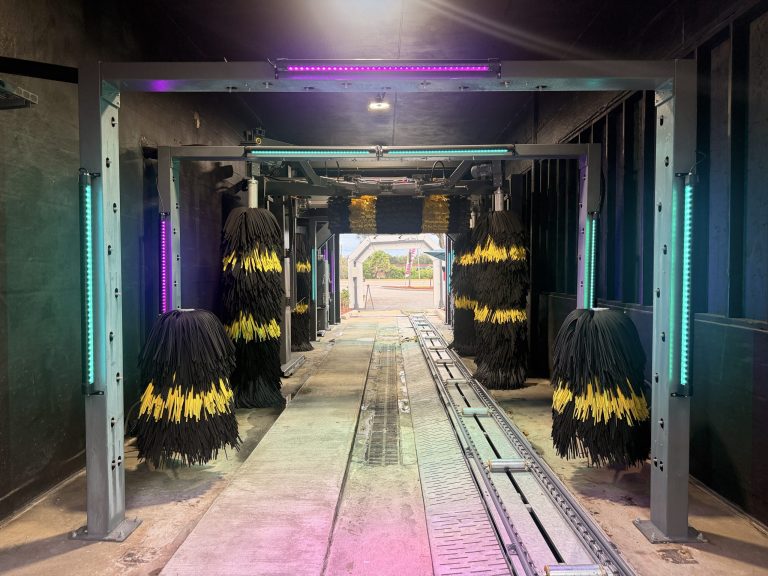
The spot-free rinse is only one part of a wash’s water picture. EPA’s guidance notes that friction conveyor washes use less water per vehicle than frictionless, or touch-free, ones. It suggests adding friction components to frictionless conveyor and in-bay systems.
That does not make touchless washes a poor choice. Many sites want a touchless wash for good reasons, and the guidance is a general observation about water use, not a verdict on any one machine. If you are weighing touchless against brush-based equipment, water use is one factor among several, alongside the type of customer, the site and the pace of the queue.
You may see freshwater-per-vehicle benchmarks quoted in this area. EPA’s own documents disagree with each other on the current figure, so we have not quoted one.
A word on discharge
Purified rinse water is only part of what leaves a wash. An International Carwash Association study of 30 car washes sampled in 2000 and 2001 found that 99% of professional washes discharged to publicly owned treatment works, with low pollutant levels in the effluent. It is old, and it is trade-body research, so treat it as background rather than a current benchmark.
EPA’s 1999 study of injection wells at car washes says effluent should be discharged to sewer systems or holding tanks where possible. It too is a historical document. Discharge requirements vary by location, so check with your local sewer authority and environmental regulator before you finalise any drainage or reclaim design.
Questions to ask before you choose a system
- What is the recovery rate? Ask for it in writing, for your feed water, not for a laboratory test.
- What happens to the reject water? Ask whether it can be captured and reused in the wash cycle, as EPA’s guidance recommends.
- How is the unit sized? Ask what demand it was sized for and how it behaves when the wash is idle.
- RO, DI or both? Ask which is proposed, and what you will need to maintain or replace over time.
- What does your local authority require? Ask about drainage and discharge before you commit to a layout.
Where Europe Makine fits
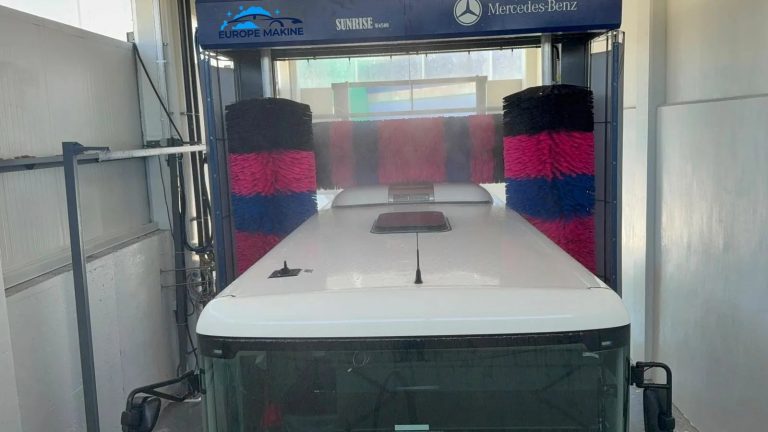
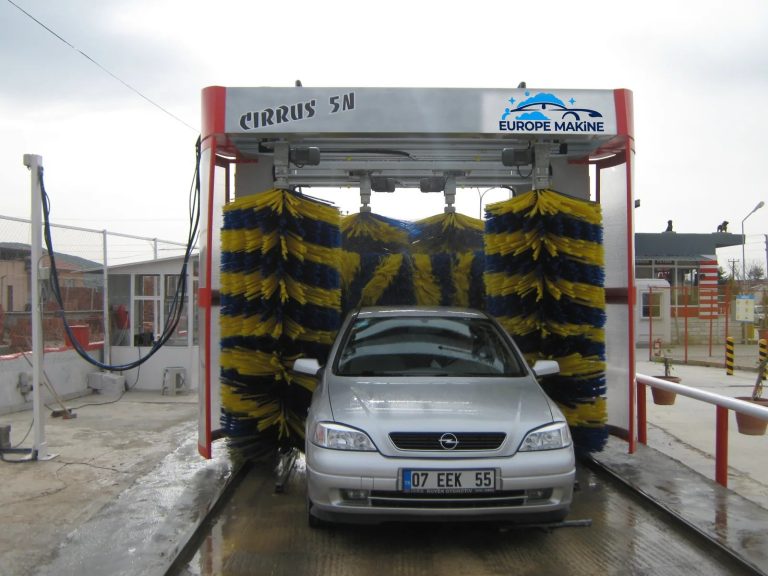
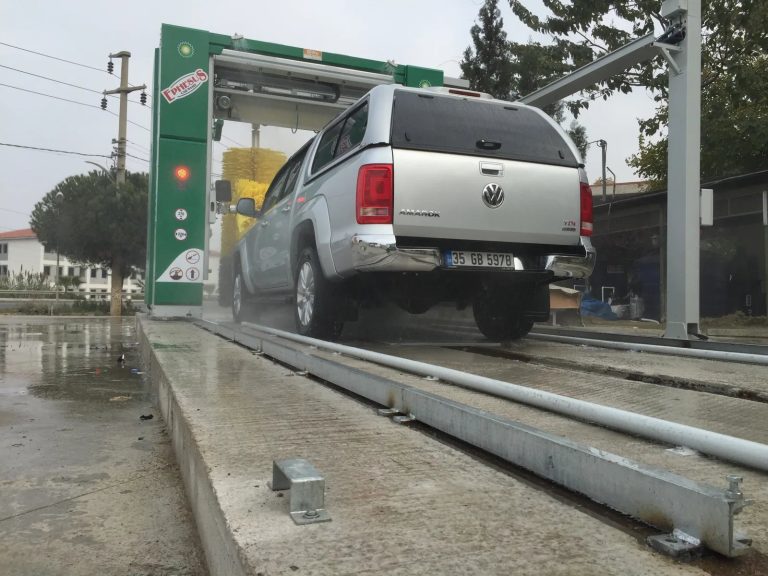
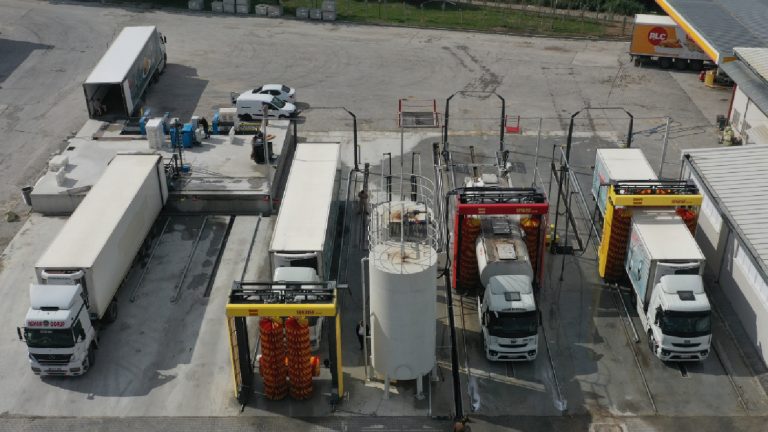
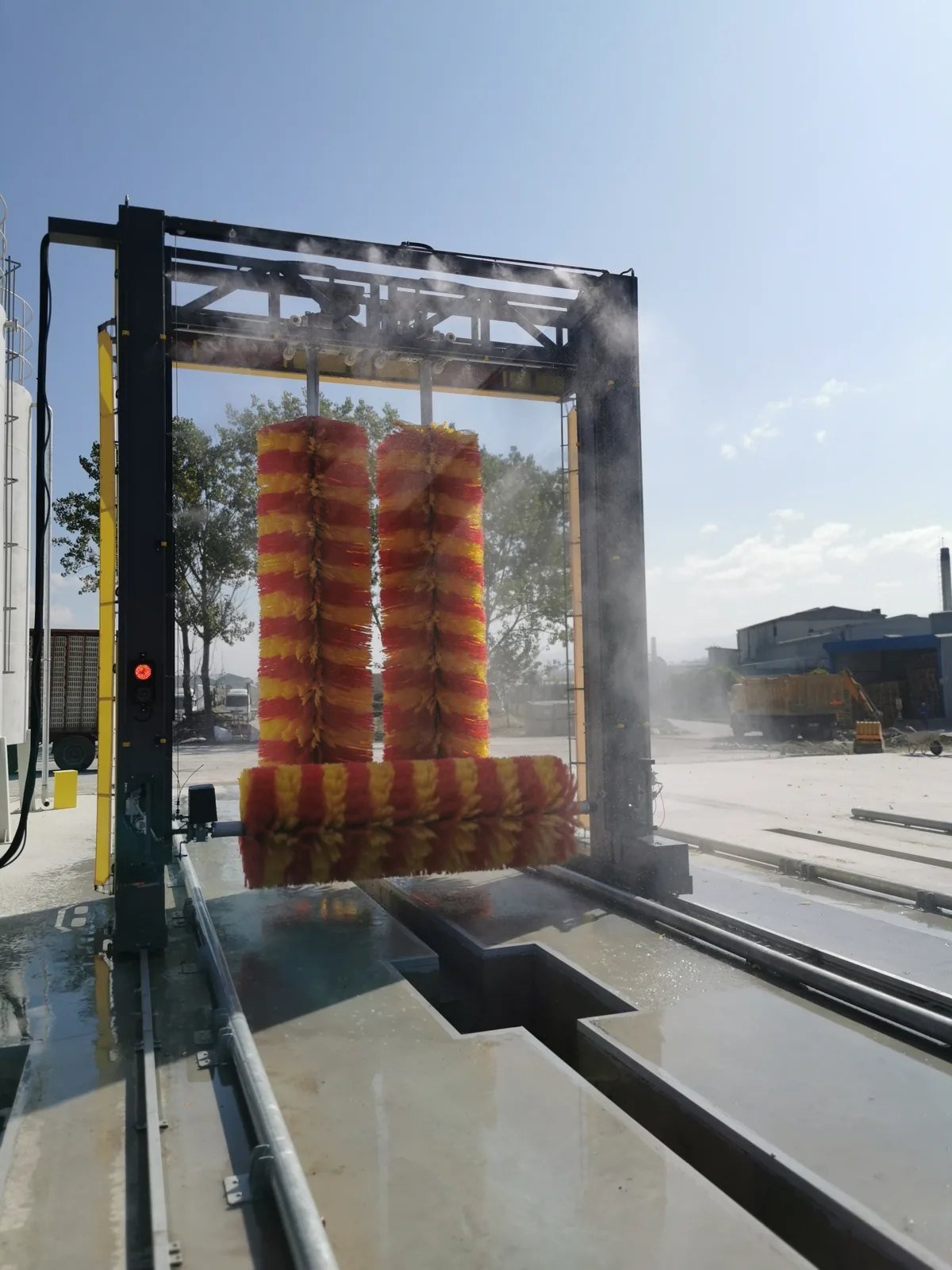
Europe Makine manufactures car wash systems, including the touchless Acrobat 2X, the three-brush Ephesus, the five-brush Cirrus 5N, a conveyor tunnel and the SUNRISE W4000/W4700 heavy vehicle wash. It also builds turnkey car washes, from securing the site and clearing permits to installing the machines, training the crew and handing over a running operation. We make no claims here about water-treatment products. For the specification of the rinse water arrangements on any machine or project, ask the team directly.