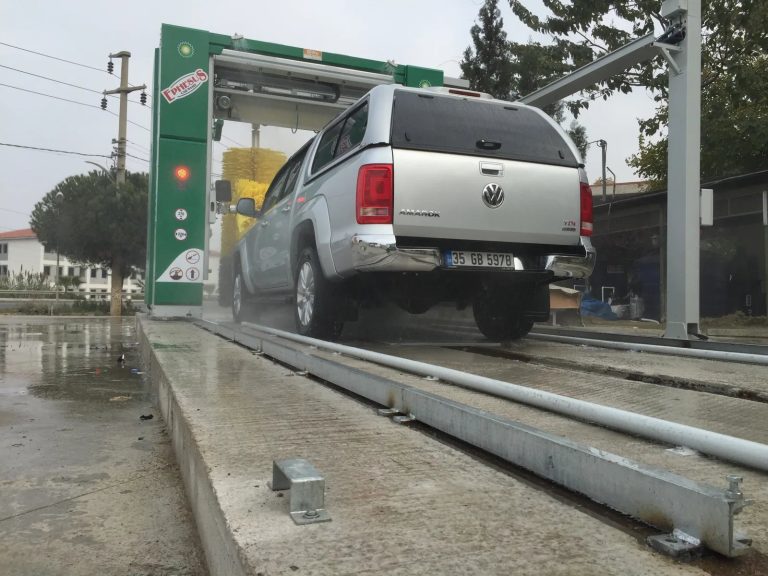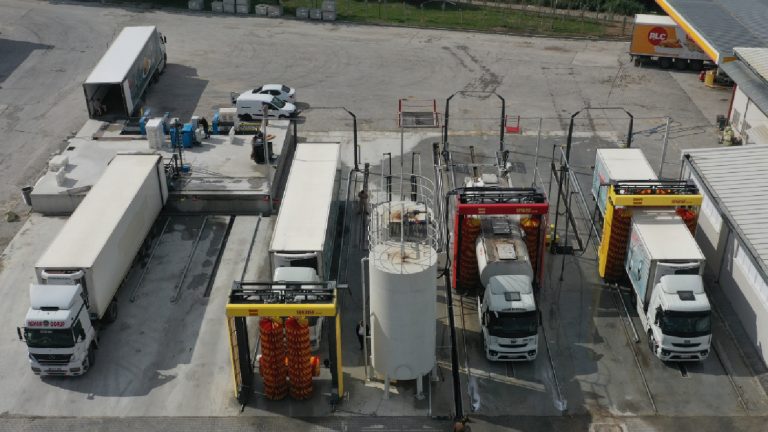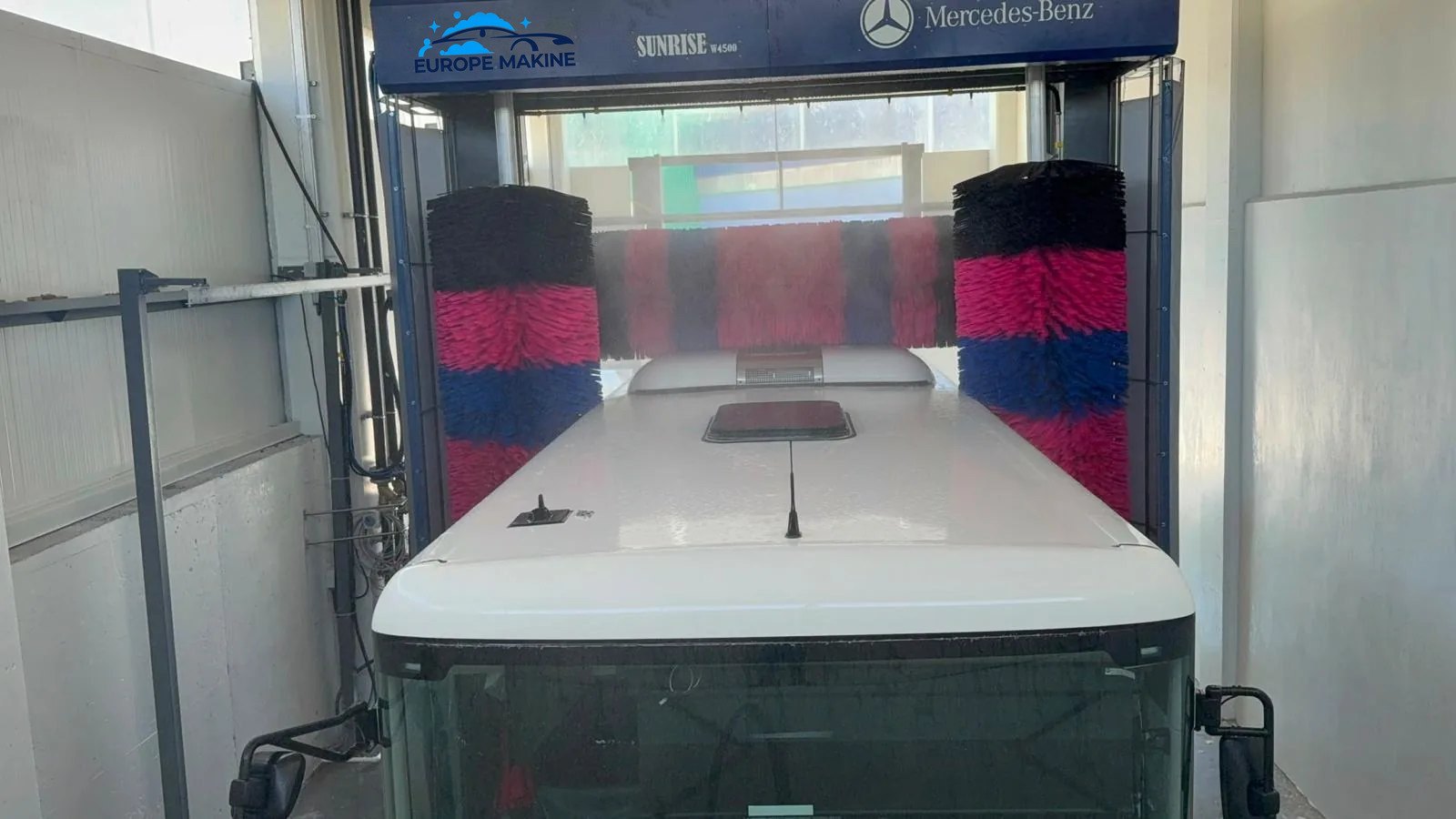
Industrial wash bay systems for in-house fleets are built from four parts: a contained wash area that collects every litre of water, treatment or reclaim equipment for that water, the washing equipment itself, and a floor and chemical routine that keeps the crew safe. Get the first two right and the rest is a matter of choosing how vehicles move through the bay. Get them wrong and the bay can become a liability before it becomes a convenience.
This article walks through those parts in the order you should decide them. It is written for depot managers and fleet owners, and it deliberately stops short of prices, payback periods and sizing figures, because the sources we can responsibly point to do not supply them.
A fleet wash bay is a water-handling problem first
It is tempting to start with the machine. Start with the water instead, because the water decides what you are allowed to build.
EPA’s fact sheet on municipal vehicle and equipment washing says wash water can carry sediment, detergents, oils, grease and heavy metals. The document is written for municipalities with fleets such as public works trucks, fire trucks, ambulances and school buses, and it notes that larger municipal fleets might run their own washing facilities. It is not a rule for private fleets. But a private depot washing similar vehicles will reasonably face the same contaminants, and that is an inference you should make for yourself rather than attribute to EPA.
The same fact sheet gives a clear direction: contain, treat or reuse the wash water. In practice that means:
- Washing on an impermeable surface such as concrete or asphalt.
- Using an area designed to collect and hold wash water before it is discharged to the sanitary sewer.
- Marking the area clearly so vehicles are washed there and not elsewhere on the yard.
EPA’s shorter Vehicle Maintenance and Washing fact sheet makes a related point. It says most stormwater impacts from car washing come from residents, fleet management activities and charity fundraisers, and that commercial car washes often recycle their water or must treat it before release to the sanitary sewer. Washing on the open yard is the habit a proper bay replaces.
Treatment: what the sewer will accept
If the bay discharges to the sanitary sewer, treatment is usually part of the deal. EPA’s municipal fact sheet says treatment systems, which regulations often require for sewer discharge, generally include oil/water separators or some type of filtration.
What the limits actually are depends on where you are. Research from the International Carwash Association (ICA) on water effluent and solid waste in professional car washes says no federal discharge limits have been issued specifically for commercial car washes, that states or local sewer districts may set limits, and that oil and grease separators are often required for pretreatment. It also says more than 99 percent of professional car washes discharge to a sanitary sewer and a publicly owned treatment works. We cannot confirm the publication date of that paper, so treat it as industry research that explains the pattern, not as a current rule.
The practical step is simple and often skipped: ask your local sewer district for its discharge limits before you specify a separator or a reclaim system. Equipment chosen first and checked afterwards is how depots end up paying twice.
Permits: confirm with your state, do not assume
Permit coverage is the area where it is easiest to rely on out-of-date information. EPA’s page on stormwater discharges from industrial activities says the 2021 Multi-Sector General Permit expired on 28 February 2026 and that EPA did not reissue a new permit before then. The page is headed “Administrative Continuance of the 2021 MSGP”. It also says most industrial facilities need NPDES permit coverage through their state, because EPA has authorised many states to run the programme.
We would not describe the current terms as settled. If your depot is an industrial facility, or you are unsure whether it counts as one, confirm with your state environmental agency which permit covers the site and how wash water is treated under it. Do the same with your local authority, because sewer and planning rules are set locally.
Water reclaim: worth considering, with the right caveats
Reclaim treats wash and rinse water so it can be used again in the next wash. EPA’s WaterSense at Work section on vehicle washes says many commercial vehicle washes use it, and gives three reasons: wastewater discharge limits, lower sewer fees that are often based on metered water use, and the owner’s wish to conserve water. The municipal fact sheet adds that facilities that reuse wash water can eliminate pretreatment costs and discharges, and that recycling matters most in dry areas or during drought.
The same WaterSense document says ICA studies show facilities can cut fresh water use from 50 percent to as high as 83 percent with a reclamation system. Read that carefully. Those figures come from studies of professional car washes, not heavy-vehicle bays, so do not expect the same result for a fleet depot. Your own result will depend on how the bay is used.
WaterSense says reclaim design should take account of:
- the type and concentration of contaminants;
- daily water volume and flow rates;
- the chemicals used;
- the number of vehicles washed per day.
It adds that retrofits depend on whether extra piping and treatment equipment will fit. If you are converting an existing building, check the space and drainage layout before you commit to reclaim.
At a minimum, EPA’s WaterSense guidance on vehicle washing says reclaim systems should separate grit, oil and grease from wash water, and that reclaimed water used in later wash steps may need additional treatment. Its operating tips are modest and useful: inspect for leaks, calibrate vehicle-detection sensors so spray nozzles fire only as the vehicle reaches the arch, and keep pump pressures as low as the job allows.
Choosing how vehicles move through the bay
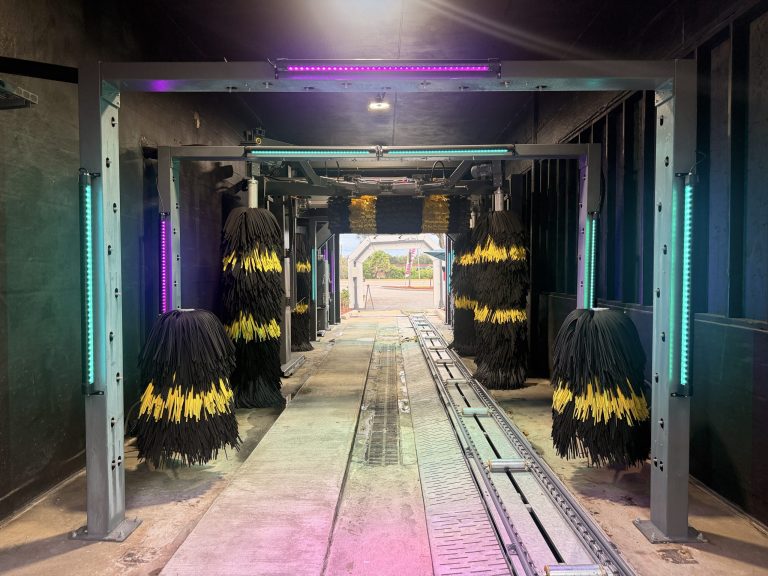
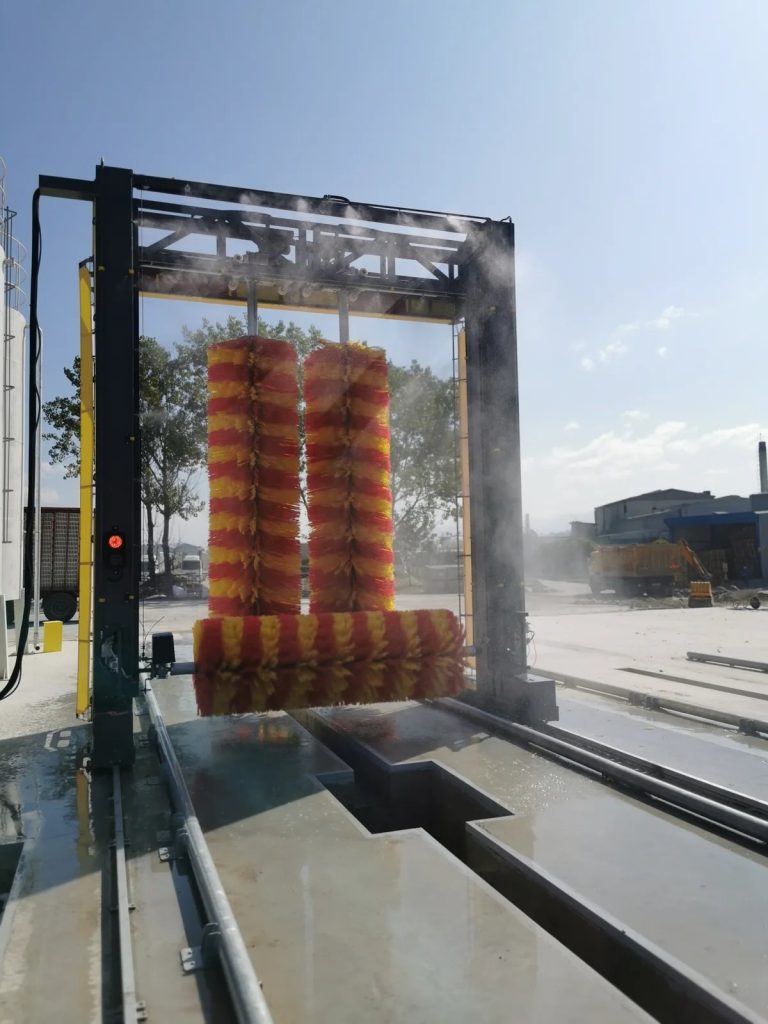
Once the water is settled, the equipment question becomes clearer. The choice is mainly about how your vehicles arrive and leave. A depot with a handful of large vehicles that return at the end of a shift has different needs from one that cycles many smaller vehicles through during the day. We have no verified throughput or cost figures for heavy-vehicle bays, so we will not offer any. What you can do is record your own vehicle mix, how long each wash currently takes and when the vehicles are actually available, then specify against that.
Also decide how clean is clean. Cosmetic washing, removing road film before inspection and clearing build-up from underbodies are different jobs. The answer affects chemical choice, the water you generate and the contaminants your treatment system has to handle.
Floors, drainage and the crew
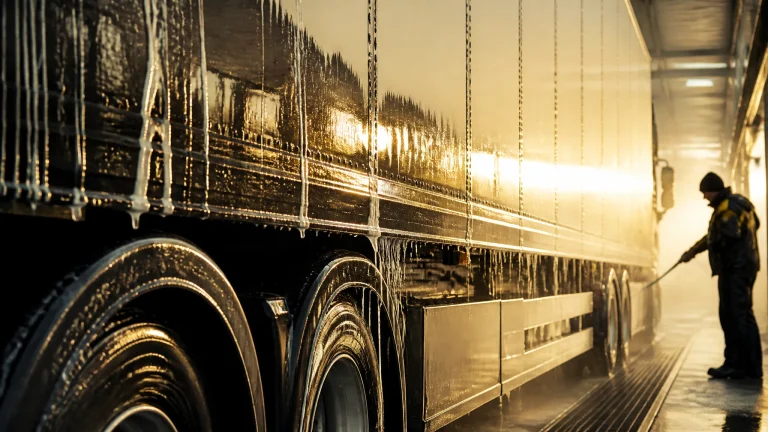
A wet bay is a slip hazard unless it is designed not to be. OSHA’s walking-working surfaces rule, 29 CFR 1910.22, says floors must be kept clean and, to the extent feasible, dry. Where wet processes are used, drainage must be maintained and dry standing places such as platforms and mats provided. Surfaces must also be free of hazards such as leaks and spills.
For a fleet bay, that translates into sloped or grated floors that carry water to the collection point, anti-slip standing areas for the operator, and a routine for dealing with leaks from hoses and fittings before they pool.
Chemicals: storage, labels and training
In-house crews often handle more chemicals than anyone realises. OSHA’s Protecting Workers Who Use Cleaning Chemicals says employers must keep Safety Data Sheets for hazardous cleaning products and make them readily accessible. Workers must be trained on safe use, storage and spill procedures, under the Hazard Communication standard, 29 CFR 1910.1200. The publication also warns that mixing bleach and ammonia products can cause severe lung damage or death.
So give chemicals a defined, labelled storage place near the bay, keep the data sheets where the crew can reach them, and keep the number of products small. Fewer products means fewer chances for a dangerous mix, and a simpler wash water profile for your treatment system.
Questions to settle before you specify
- Which state agency and sewer district cover the site, and what do they say about wash water?
- Will wash water go to the sewer through a separator, or be reclaimed, or both?
- Does the building have room for collection, treatment and any extra piping?
- What vehicles will you wash, how many and when?
- Where will chemicals be stored, and who is trained to use them?
Where Europe Makine fits
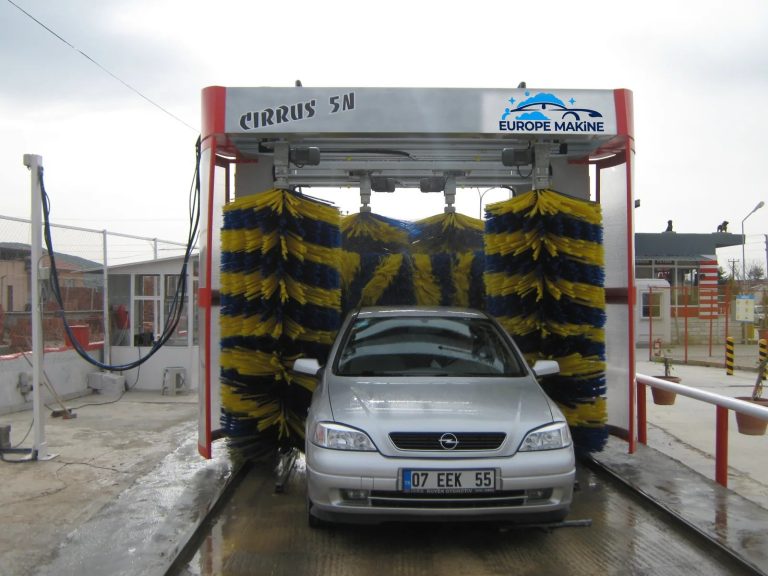
Europe Makine is a car wash equipment manufacturer with more than 30 years of manufacturing experience. Its range includes the SUNRISE W4000/W4700 heavy vehicle wash and a conveyor tunnel system, the two that bear on commercial vehicles. It also builds turnkey car washes, covering site selection, permit clearance, installation and calibration, crew hiring and training, and handover. That service is not a substitute for checking fleet-specific discharge rules with your own state and local authorities, which remain your responsibility.