If you run a depot fleet, the wash arrangement you want is one that keeps vehicles moving without becoming your problem to manage every morning. That means specifying five things in plain terms: the exact vehicle mix, the schedule and throughput you need, how vehicles get in and out, who is responsible when something is damaged, and how the wash meets US wastewater and safety rules. Get those named in writing and the day-to-day runs itself. Leave them vague and every busy morning becomes a negotiation.
This article is written for US fleets. Where it touches compliance, it refers to US federal guidance, so a manager in Ocala or anywhere else in the States can read it straight.
Start with the vehicle mix, not the price
The first thing to specify is what you are actually washing. A mixed fleet is rarely one shape. You might have panel vans, box trucks, refrigerated trailers, tractor units and the occasional pickup, and each has a different height, width and surface. A wash sized for cars will not touch the top of a box truck, and a heavy vehicle wash asked to do delicate work can be overkill for a van.
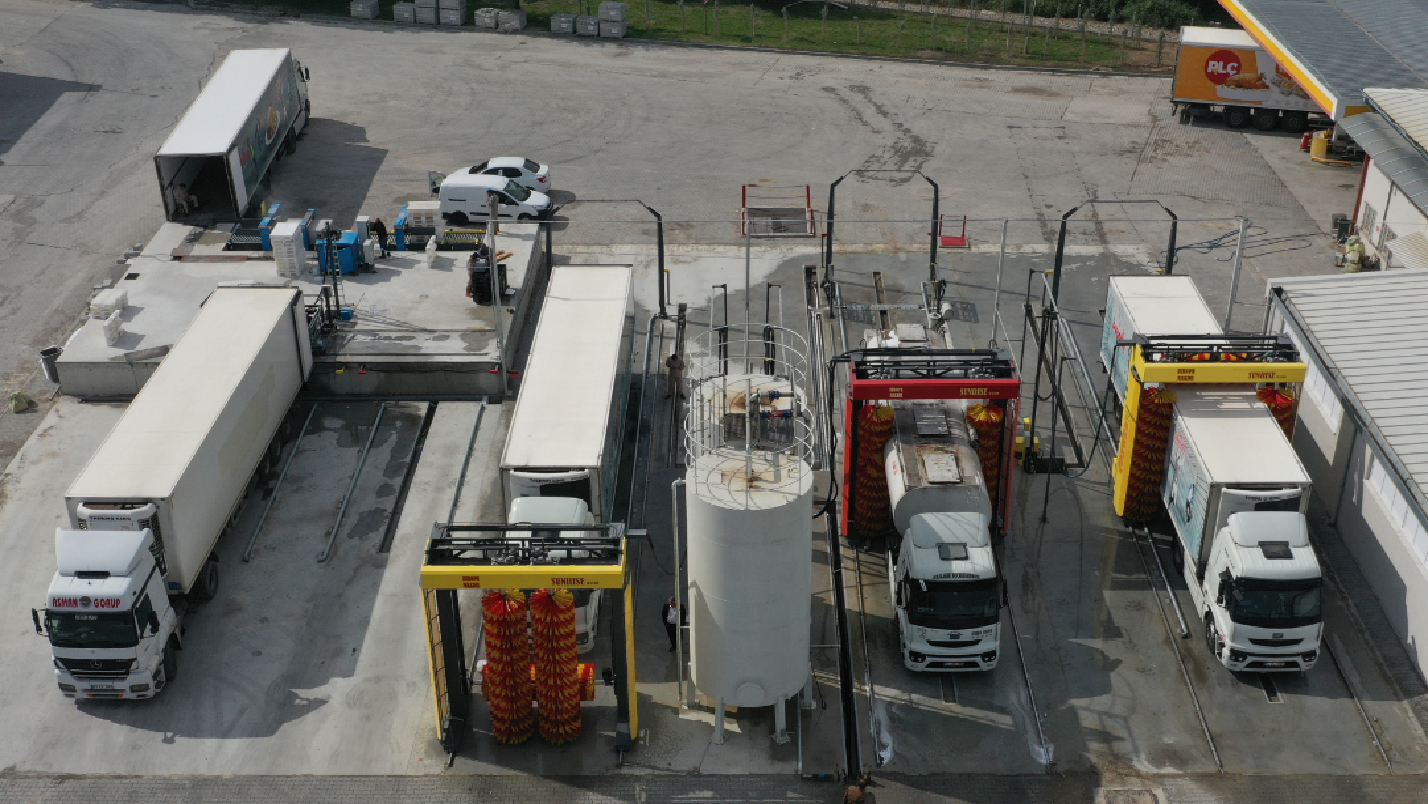
Name the tallest and widest vehicle in the fleet, the ones with mirrors, aerials, roof equipment or livery, and roughly how many of each you run. Heavy and tall vehicles genuinely need a system built for their envelope rather than a scaled-up car wash, for reasons of clearance, brush reach and water volume. We set out the engineering case for that separately in why heavy vehicles need their own wash system. If your fleet is genuinely mixed, say so, so the arrangement can handle the range instead of the average.
Specify the schedule against real throughput
A wash arrangement lives or dies on timing. Depot fleets tend to move in waves: everything leaves at once in the morning and returns in a cluster at night. If forty vehicles need washing in a ninety minute window, an average daily figure tells you nothing useful.
So specify the peak, not the total. State how many vehicles must pass through in your tightest window and let that drive the choice of system and staffing. Published throughput figures are easy to misread, because a wash-only rate and a wash-and-dry rate are different numbers. We explain how to read them honestly in what throughput figures actually mean. Tie the schedule to a rate you have seen demonstrated, and build in a margin for the days when everything comes back muddy at once.
Access and turnaround decide the real capacity
The best wash in the world is slow if a truck cannot line up to it. Specify the approach: how a vehicle enters, where it queues, how it exits, and whether it can do all that without blocking the yard or reversing across traffic. For long vehicles the turning circle and the run-off length matter as much as the machine itself.
If the wash sits on your own depot, the site survey should come before the equipment decision, not after. Slope, drainage, headroom and the queue path all shape what will actually fit and flow. We walk through that assessment in reading a site before choosing a machine. If you are using an off-site depot wash service, specify guaranteed slots so your vehicles are not queuing behind someone else’s fleet at shift change.
Name how damage is handled before it happens
This is the clause fleet managers most often leave loose, and the one that causes the most friction later. Mirrors, aerials, wraps, sensors and mounted equipment are the usual casualties, and a mixed fleet has plenty of protrusions. Specify a pre-wash condition check, a simple record of any pre-existing damage, and a clear route for reporting and resolving anything that happens during a wash.
Agree who inspects, when, and what evidence counts. A dated photo record on both sides removes almost all the argument. Also specify which vehicles or fittings must be excluded from automatic washing altogether, so a fragile roof array is never sent through a brush system by accident. When the handling of damage is written down, an honest disagreement stays small and gets settled the same day.
Build accountability into the arrangement
Beyond damage, a fleet arrangement should name the ordinary things that keep it reliable: expected wash quality, what happens when a machine is down, how quickly it gets fixed, and who covers the shortfall meanwhile. A wash that is out of service for a week is a fleet problem, not a supplier’s inconvenience, so specify response times for faults and a maintenance routine that prevents them.
If washing is your own on-site operation, the accountability sits with your team, which means the crew needs proper training and a maintenance schedule they actually follow. If it is a contracted service, ask for evidence of the same discipline. Either way, name a single point of contact on each side so problems have somewhere to go.
Do not overlook wastewater and worker safety
A fleet wash produces dirty water carrying oil, road grime, detergent and sediment, and where that water goes is regulated. US Environmental Protection Agency guidance is clear that vehicle wash water should not be allowed to run into storm drains, because storm drains often discharge untreated to local waterways; wash water should instead be contained and directed to the sanitary sewer or treated on site, as set out in the EPA best management practice for vehicle maintenance and washing. Depending on volume and location, a discharge may fall under the National Pollutant Discharge Elimination System, so confirm the permitting position before you commit to a site. Water reclaim systems, which recover and reuse a share of the wash water, are covered in EPA’s WaterSense guidance for vehicle washes and can cut both your consumption and your discharge.
Chemistry is part of the specification too. Some traditional wheel and brightener cleaners have relied on hydrofluoric acid, which the International Carwash Association’s review of hydrofluoric acid describes as a serious hazard to workers; specify safer alternatives and ask what your supplier actually uses. And because staff work around moving equipment and wet floors, follow recognised car wash safety practice, drawn together in the OSHA and International Carwash Association safety alliance.
Where Europe Makine fits
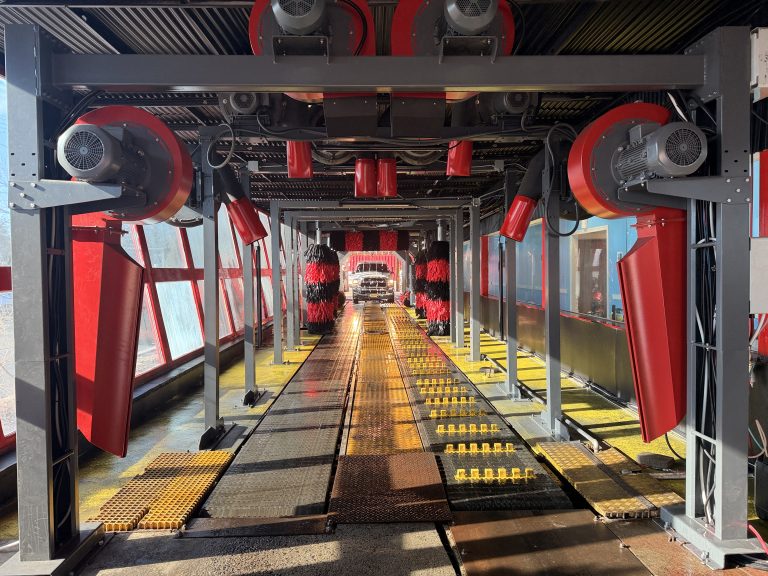
Europe Makine manufactures five wash systems, including the SUNRISE heavy vehicle wash for trucks and tall vehicles, and it builds complete turnkey washes for operators who would rather be handed a running operation than assemble one. Its own turnkey site, Ali’s Car Wash in Ocala, Florida, is open to the public and runs on its machines. For a depot fleet, that means one team can size the wash to your vehicle mix and peak schedule, sort the site, drainage and installation, and train the crew that will run it, so the vehicle mix, throughput, access and accountability are settled together rather than in pieces. If you are specifying a fleet washing arrangement now, tell us your fleet mix and peak wash window and ask for a quote, and we will size the system to it.