Car wash hurricane preparedness for a tunnel site comes down to three written procedures that your team has read before the season starts: how you shut the site down, how you deal with power and generators, and how you decide when it is safe to reopen. The storm itself is the short part. Most of the damage to a business is decided by what was done, and not done, in the days either side of it.
One caution first. We looked for a hurricane shutdown or reopening checklist written specifically for tunnel car washes from the industry association, OSHA or the EPA, and did not find one. What exists is general federal guidance for facilities and for workers in disaster recovery, plus some industry training. This article uses that guidance and does not present it as an industry standard. Anything that depends on your particular conveyor, controls or chemical system has to come from your equipment manuals and the people who installed the machines.
What a hurricane plan for a tunnel car wash actually has to cover
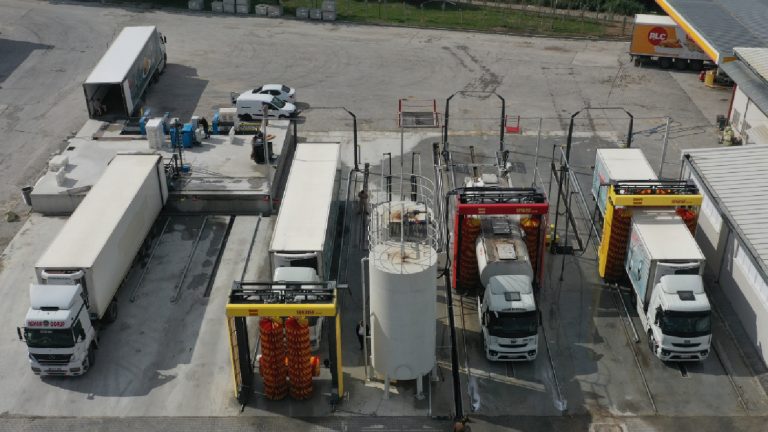
A tunnel is a long building full of moving equipment, water, chemicals and electrical gear, with a pay station and vacuum area outside. That mix is why a plan is worth writing down. Each part has its own risk, and the people on shift when a warning is issued may not be the people who know the site best.
A usable plan answers a short list of questions:
- Who decides to close, and when does that decision get made?
- Who does what during shutdown, and in what order?
- What happens to the chemicals on site?
- Who do you call if something spills or leaks?
- How do you handle power, including any generator?
- Who is allowed to go back into the building first, and what do they check?
- What has to be tested before a customer drives in?
None of these needs a long document. They need a clear owner, a clear order and a copy that is somewhere other than one person’s head.
Start before the season, not before the storm
The EPA’s hurricanes page says to prepare before hurricane season or when a hurricane is predicted, and that preparations should aim to minimise injury and property damage. Its news release advising facility operators on hazardous weather adds a point that matters for planning: hurricanes are predictable and usually give facilities time to prepare. You will rarely be improvising a plan in the dark. You will be working a plan you already have, against a clock you can see.
That is a good reason to do the dull work early. Write the shutdown procedure, check the contact list, test the generator if you own one, and walk your staff through it once while the weather is calm.
Use the training that already exists
The International Carwash Association runs an online course library called LEAD. Its Safety and Compliance section lists courses titled Preparing Your Site for a Hurricane and Creating an Emergency Action Plan, alongside courses on electrical safety, lockout and tagout procedures, chemical safety and safety data sheets. The library describes its courses as built for car wash operations and designed to be completed in under 20 minutes. You can browse them in the LEAD course library.
We have only seen the course titles, so we cannot tell you what the hurricane course teaches. But a short course that a manager and a shift lead can both finish in one sitting is a low-cost way to give a team a shared vocabulary before you ask them to follow a written procedure.
Shutdown: secure the site and the chemicals
The shutdown procedure is the document most specific to your site, and the one we can least write for you. The exact sequence for your conveyor, brushes, booms, pumps and chemical lines belongs in the manufacturer’s documentation and in what your installer taught you at handover. If you cannot find it, ask your supplier for it now. Do not work it out on the afternoon a warning is issued.
What the federal guidance does support is the shape of the exercise. The EPA’s news release, EPA Advises Facility Operators to Prepare for Hazardous Weather Events, from June 2020, advises facilities to:
- review procedures for shutting down processes and securing the facility, especially hazardous chemical storage;
- make sure employees know how to contact the National Response Center in the event of a spill or release;
- review local response contacts, including Local Emergency Planning Committees and State Emergency Response Centers.
That release was issued by an EPA regional office with Texas and Louisiana in mind, so treat it as general guidance and not a Florida-specific rule. It is still a sensible frame for a car wash.
Chemical storage
A tunnel holds a good deal of product: presoaks, detergents, waxes, drying agents and the tanks, drums and lines that feed them. The question for your shutdown plan is simple. If water reaches the chemical room, or wind damages the building, what could move, tip, leak or mix?
Your plan should name who checks that containers are closed, that drums and totes are secured and not left where floodwater could lift or knock them, and that the safety data sheets are somewhere you can reach them even if the office is not. The LEAD library lists a course on understanding safety data sheets, which is a reasonable place to start if your team has never been shown how to read one.
On release reporting, be careful about what you assume. The EPA’s hurricanes page says that during process shutdown, facility owners and operators are required to minimise chemical releases, and that reportable releases must be reported immediately once the facility has constructive knowledge of them. The page frames this around complex industrial processes. It does not say that it applies to car washes, and we have not verified whether any specific car wash product reaches a reporting threshold. The EPA release cites CERCLA, EPCRA and the National Oil and Hazardous Substances Pollution Contingency Plan as the basis for release-reporting obligations. If you hold large quantities of any product, ask a qualified environmental adviser or your local emergency planning contact whether the rules apply to you. Do not guess either way.
Contacts and roles
Put the National Response Center, your Local Emergency Planning Committee and your State Emergency Response Center on one page with current numbers, as the EPA advises. Add your insurer, your electrician, your equipment supplier and your utility. Then decide who makes each call. During a spill or a fire is a poor moment to discover that nobody has the number.
Give each person on shutdown a named job, not a general instruction to help. Two people who both assume the other has checked the chemical room is how a step gets missed.
Records before the storm
Take dated photographs of the tunnel, the equipment room, the pay stations, the electrical panels, the chemical storage and the exterior. Keep copies off site. If you later make an insurance claim or apply for assistance, you will want to show what the site looked like before the storm, and nobody remembers that accurately afterwards.
Power: the part that hurts people
Equipment can be repaired. Electrical and generator hazards are where staff and owners get seriously hurt, and the OSHA material on disaster recovery is consistent about them. The guidance below comes from OSHA publications aimed at disaster cleanup, not from a car wash standard, but it applies directly to a site with water, wiring and perhaps a generator.
If you run a generator
OSHA’s fact sheet Keeping Workers Safe during Disaster Cleanup and Recovery warns of carbon monoxide from generator exhaust and of fires from improper refuelling and fuel storage. Its protections are plain:
- Never run a portable generator indoors.
- Shut the generator down before refuelling it.
- Inspect electric cords to make sure they are in good condition.
OSHA’s flood alert, Keeping Workers Safe during Flood Cleanup, says to use gas and diesel generators outdoors to avoid carbon monoxide, which it describes as colourless, odourless and poisonous. In a tunnel wash that rule has a practical meaning. A long, partly enclosed building, an equipment room or a vacuum shelter is not a safe place to run an engine, even with the doors open. Decide in advance where the generator will sit, and keep the fuel stored away from it.
Also decide in advance what the generator is for. Powering a few lights and a pump to keep water out of an equipment room is a different task from running the wash. Many sites will not try to run the tunnel on a generator at all. Whichever you choose, the electrician who connects it should be a qualified one, and the connection should be planned before the storm, not improvised afterwards.
Downed lines and the grid
The same OSHA fact sheet tells workers to assume all power lines are live and to stay at least 10 feet from downed lines. The flood alert tells people to keep a safe distance from downed or damaged lines and says repairs must be done by trained electrical utility workers. OSHA’s hurricane eMatrix sheet on restoring electrical utilities says that this work requires specially trained and qualified technicians, and that anyone not trained for it should stay a safe distance from the equipment. The sheet also states that it is a guide and does not add to or reduce any OSHA requirement.
For a car wash, the sensible reading is this. If a line is down across the entrance, the pay station feed, a pole or the fence, nobody on your team touches it or moves it, and nobody drives a vehicle through the area. You report it to the utility and keep people away.
Flooded electrical equipment
OSHA’s flood response page says that if water has been near electrical circuits or equipment, you should turn off power at the main breaker or fuse on the service panel. It also says never to enter flooded areas or touch electrical equipment if the ground is wet. Both points matter in a wash, because the building has a lot of low-level electrical gear, motors and controls, and the floor is wet even on a normal day.
So the shutdown plan should include cutting power at the main before the storm arrives, if that is what your electrician advises, and the reopening plan should include a firm rule: nothing that floodwater reached is switched back on until qualified people have checked it. A wet motor or control cabinet that appears to work can still be unsafe, and wiring behind panels is not visible to a quick glance.
The LEAD library lists electrical safety and lockout and tagout courses. They are worth completing for any staff who will be near the equipment during shutdown or restart. We have not cited specific regulatory standards here because we did not verify them for this article. Check the current requirements for your site with OSHA or a safety professional.
Reopening: slow is safer
The pressure to reopen quickly is real, especially if the neighbouring roads are clear and customers are asking. Resist it until the site has been checked, in order.
Step one: assess the site before anyone works
OSHA’s news brief after Hurricane Helene, issued on 27 September 2024 for Florida, Georgia and Alabama, lists protections for recovery work. They include evaluating work areas for hazards, assessing the stability of structures and walking surfaces, using fall protection at heights, assuming all power lines are live, operating generators and ladders properly and wearing personal protective equipment.
For a tunnel site, that translates into a first walk-round with a limited aim: find hazards, not fix them. Look at the roof and canopy, the tunnel entrance and exit, any signs or structures that moved, the surfaces people will walk on, the condition of the equipment room and the chemical storage. Debris, standing water and damaged structures come before anything mechanical.
Step two: protect people from contamination
The flood alert says to wear protective clothing, goggles, gloves and boots to avoid chemical and biological contamination. Floodwater in a car wash can carry whatever was stored at ground level, along with whatever the storm brought in. Staff should not wade through it in ordinary work shoes.
The OSHA flood page also says that hazardous-material spill cleanup should be done only by workers with proper training, equipment and experience. If product has spilled or tanks have shifted, the job is not for whoever happens to be on site.
Step three: bring in qualified people for power and equipment
This is where the earlier rules apply. Keep the main breaker off. Keep staff away from downed lines. Have a qualified electrician inspect anything that water reached before power is restored. Then, and only then, follow your manufacturer’s procedure for restarting the wash equipment.
We have no approved source for a restart procedure for any particular tunnel, so we are not going to invent one. The point of the written plan is that this step is specific to your machines and should be taken from the people who built them.
Step four: test before taking customers
A practical way to reopen is in stages. Check safety first: the building, the electrics, the chemical room, the drains and the surfaces. Then run the equipment empty and watch it. Then wash a few of your own vehicles and inspect the results before you open the entrance to the public. A wash that reopens and then closes again for a fault is worse for your customers than one that opens a few hours later.
Water, drainage and local rules
We did not retrieve any Florida or local rules on post-storm wastewater or reclaim-system discharge, or on reopening permits, curfews and evacuation orders. If your site recycles water or has a particular drainage arrangement, check with your local authority and your wash supplier before you restart and discharge anything. Do not assume that the rules you follow in normal weather are suspended after a storm.
After the storm: money and paperwork
If the site is damaged, the financial side starts early. Start with your insurer, using the photographs you took before the storm. Then check whether any disaster assistance applies.
The US Small Business Administration offers a business physical disaster loan for businesses in a declared disaster area that have suffered damage. Its physical damage loans page says businesses of any size can apply, as can most private nonprofits. Loans go up to $2 million for disaster losses not fully covered by insurance, and can be used to repair or replace real property, machinery, equipment, fixtures, inventory and leasehold improvements. Funds cannot be used to upgrade or expand, except where building codes require it. The page also says that mitigation improvements can raise a loan by up to 20% above the verified real estate damage.
On terms, the page says the first payment is deferred for 12 months, with no interest accruing in that period, and that the interest rate will not exceed 4% for applicants unable to obtain credit elsewhere or 8% for those who can, with SBA deciding which applies. It says collateral is required to the extent possible on larger loans, and that SBA will not decline a loan for lack of collateral.
Two cautions. This depends on a declared disaster and on what insurance covers, so it is not something to count on in advance. And the page we read sits on SBA’s legacy site and is undated, so confirm the current terms and eligibility with SBA before you rely on any of it. SBA also has a general disaster assistance section covering other programmes.
OSHA’s flood alert adds that its On-Site Consultation Program offers no-cost, confidential services to small and medium-sized businesses. If you want an independent view of recovery hazards at your site, that is worth asking about.
A short checklist of what your plan should settle
This is not a template to fill in, only a list of questions that a finished plan should answer in writing:
- Who decides to close, and on what trigger?
- Who runs each part of shutdown, and where is the manufacturer’s sequence for your equipment kept?
- How are chemicals secured, and where are the safety data sheets?
- Who calls the National Response Center, local planning committee or state emergency contact if there is a release, and are the numbers current?
- Is power cut at the main, who does it, and who is qualified to restore it?
- If there is a generator, where does it run, who refuels it and how is the fuel stored?
- Who enters the site first, in what protective equipment, and what are they looking for?
- What must be inspected and tested before the first customer?
- Who deals with the insurer, and where are the pre-storm photographs?
Where Europe Makine fits
Europe Makine has more than 30 years of manufacturing experience, and its conveyor tunnel system is one of its five wash systems. It has a US base in Boca Raton, Florida. Ali’s Car Wash in Ocala, Florida runs on Europe Makine machines, was built through the company’s turnkey process and is open to the public. We make no claim about how any site has performed in a storm.
A turnkey build covers securing the site, clearing permits, installing and calibrating the machines, hiring and training the crew and handing over a running operation. For the purposes of this article, the useful part is the handover: an owner who has been taught how the machines work is better placed to write a shutdown and restart procedure that is specific to them. Whoever supplies your equipment, ask for that documentation, and ask for it before the season starts.