If you run a fleet yard, the choice between on site truck washing and sending trucks out comes down to three questions. Where can the wash water legally go? How much truck and driver time do you lose to off-site trips? Can the commercial wash bays near you physically take your vehicles?
Send out or wash in the yard
Sending trucks out removes the cost of building a wash and the liability of running one. That is the main attraction, and EPA says as much in its guidance for municipal fleets. The drawbacks are the time spent traveling and waiting, and the fact that many commercial bays are too small for large vehicles.
Washing on site gives you control over timing and bay size. It also makes you responsible for the wash water. In a freight yard, that responsibility is the heart of the decision, because wash water cannot simply run to the storm drain.
So work in this order:
- Find out where your wash water is allowed to go.
- Check whether outside bays can fit your trucks and trailers.
- Only then compare time, labor and capital.
If the first answer is "nowhere we can reach", on site washing may be a poor fit however convenient it looks. If it is "the sanitary sewer, with conditions we can meet", the case for washing in the yard becomes much stronger.
Start with the water
Most fleet managers begin by thinking about the machine. The better starting point is the drain. A truck wash is a stream of dirty water at a known location, and regulators treat it that way.
What EPA says about wash water at freight yards
EPA's industrial stormwater fact sheet for transportation facilities (Sector P, motor freight among them) lists vehicle washing and maintenance as an activity that can generate pollutants at these yards. It names oil, detergents, heavy metals, phosphorus, salts and suspended solids as the pollutants that come from washing or steam cleaning vehicles.
The same fact sheet sets out EPA's recommended practice. Collect the runoff from the cleaning area, then treat it or recycle it. Wash or rinse water can go to the sanitary sewer if the sewer authority allows it. Other routes named are a wastewater treatment facility, a land application site, or on-site recycling. The fact sheet says not to discharge wash water to a storm drain or to surface water.
It is older guidance that describes good practice, so confirm current requirements locally.
The permit position is in flux
Many yards hold coverage under EPA's Multi-Sector General Permit for industrial stormwater, or an equivalent state permit. Note what that permit does not cover. The 2021 MSGP fact sheet says the permit does not authorize discharge of vehicle and equipment wash water. That wastewater needs a separate NPDES permit, or must go to a sanitary sewer under applicable industrial pretreatment requirements, or be disposed of as applicable law allows. The permit text itself (Parts 1 to 7) repeats the point for unauthorized non-stormwater discharges, vehicle wash water included.
Do not stop at 2021, though. EPA's page on stormwater discharges from industrial activities says the 2021 permit expired on February 28, 2026 and that EPA did not reissue a new permit before then. A February 27, 2026 EPA enforcement memorandum gives a no-action assurance for new facilities that need coverage during the gap. Facilities that had already filed a notice of intent stay covered. The proposed 2026 fact sheet carries the same wash-water exclusion language, but it is only a proposal.
Wash-water rules depend on your state or local permitting authority and on your sewer authority. Ask them directly, and ask in writing if you can.
What sending trucks out involves
Off-site washing sounds like the low-effort answer, and sometimes it is.
The attraction: no build, no wash-water liability
EPA's guidance for municipal fleets (Stormwater BMP: Municipal Vehicle and Equipment Washing, November 2021) says that sending vehicles to commercial car washes removes the cost of building a wash facility and the liability of operating one. For a small fleet, or one with an occasional need, that is a real advantage. You do not build drainage, you do not manage a separator, and you do not answer to the sewer authority for what leaves your site.
That document is written for municipal fleets, but the trade-offs it describes are the same ones a yard manager faces.
The limits: bay size and lost time
The same guidance says the off-site option may only suit smaller vehicles, because many car washes lack bays large enough for buses, fire trucks and other large vehicles. A tractor and trailer is larger still. Before you plan around an outside wash, check the bay height, length and entry width with the operator, and ask whether they accept commercial vehicles at all.
It also lists lost time as a limitation of off-site washing: employee and equipment time spent traveling to and from approved wash locations, and waiting at them. For a fleet, this is not abstract. A truck that is away from the yard for a wash is a truck that is not loading, not on a route and not waiting for its next job. A driver or yard hand who accompanies it is also not doing something else.
You can calculate what that time costs from your own records: how far the nearest suitable bay is, how long the queue usually runs, and what an hour of that truck's time is worth to you.
What you give up in control
When you send trucks out, the wash schedule depends on someone else's opening hours and queue. You also have less say over how the truck is cleaned. If your trucks need underbody work, tank washing, or a particular finish before inspection or customer delivery, check that the outside operator can do it.
What on site truck washing involves
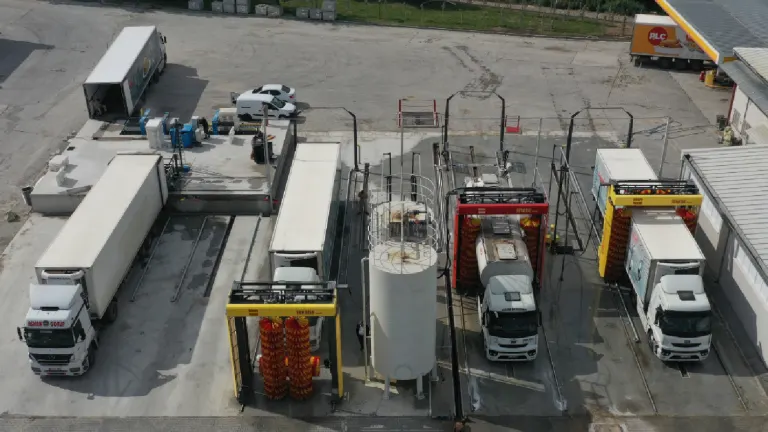
Washing in your own yard puts the schedule in your hands. In return, it puts several jobs on your desk.
Capture and drainage
The wash area has to be set up so the water is collected, not allowed to spread across the yard or run to a storm drain. That means a defined wash pad or bay, drainage that falls to a collection point, and a clear separation from stormwater routes. The EPA freight yard fact sheet describes this: collect runoff from the cleaning area, then treat or recycle it.
Where the collected water goes
Once you have captured the water, it needs a destination. EPA's options are the sanitary sewer (if the sewer authority allows it), a wastewater treatment facility, a land application site, or on-site recycling. For most yards the realistic choices are the sewer or recycling, or a mix of the two.
Here the municipal guidance makes a useful point. It says facilities that cannot recycle their wash water may face significant costs to pretreat it before discharge to the sanitary sewer. It also says on-site recycling limits discharge impacts and reduces water consumption. Recycling is not always required, but the sewer route can carry its own conditions and costs, so find out what they are before you design the wash.
Liability sits with you
If you operate the wash, you are responsible for what leaves it. That is the flip side of the point EPA makes about off-site washing. Good housekeeping, trained staff, and a clear record of where the water goes are part of the job, not extras.
Wet floors
A wet wash bay is also a slip hazard. OSHA's general guidance on slips, trips and falls restates the walking-working surfaces standard, which calls for floors to be kept clean and dry (29 CFR 1910.22(a)(2)). Where wet processes are unavoidable, it points to drainage and mats or platforms. The OSHA eTool page is general slip-hazard guidance; plan bay drainage and footing accordingly.
Where water reclaim fits
Reclaim is how many on-site washes reduce both fresh water use and the volume that has to be discharged. EPA's municipal fleet guidance says on-site recycling limits discharge impacts and reduces water consumption, which is the reason it is worth considering even if the sewer is available.
You will see large savings quoted for reclaim, so be careful with the numbers. EPA's WaterSense at Work section on vehicle washing cites a study by the International Carwash Association. It says a reclamation system can bring fresh water use down to as low as 7.8 gallons per vehicle for friction washing and 16.8 gallons per vehicle for frictionless washing. Without reclaim the figures are 65.8 and 85.3 gallons per vehicle.
Those figures describe conveyor car washes, not trucks; a truck is far larger, dirtier and more varied than a passenger car. They do show the direction: reclaim changes how much fresh water a wash draws, and the difference can be large.
Reclaim is also not a way around the rules. Recycled water still builds up solids, oils and salts, and some of it will eventually be discharged or removed. Ask whoever designs the system what happens to the sludge and the bleed-off, and whether your local authority has a view on both.
How to decide for your yard
You do not need a spreadsheet to make a first pass. Work through these questions in order.
- Can you reach a legal destination for the water? Ask the sewer authority whether it accepts vehicle wash water from your site, and on what conditions. If it does not, ask your state permitting authority what else is allowed.
- Are there suitable outside bays? Check that nearby commercial washes can physically take your largest vehicles, not just your smallest.
- How much time do trips cost? Look at distance, queue time and who goes with the truck. Use your own numbers.
- How often do you need to wash? A fleet that washes occasionally has a very different answer from one that washes every day.
- Who will run the wash? An on-site wash needs someone to operate it, maintain it, and keep the water records.
- Is there space and a suitable pad? You need a bay, drainage and room to maneuver without blocking the yard.
As a rough guide, outside washing tends to suit small fleets, mostly smaller vehicles, and sites where building a compliant wash is impractical. On site truck washing tends to make sense where volumes are steady, trucks are large, travel time is a real drain, and you can secure a lawful route for the water. These are tendencies. Your own site and your local authority will decide it.
A hybrid is possible
You do not have to pick one for every vehicle. Some yards wash the bulk of the fleet on site and send occasional specialist work, such as tank or heavy degreasing jobs, to an outside provider. If you go that way, the same water questions apply to the on-site part.
Questions to put to the authorities before you build or buy
State and local sewer and pretreatment rules decide what is feasible, so ask these questions early, and in writing.
- Does the sewer authority accept vehicle wash water from our yard, and what pretreatment does it require?
- Are there limits on oil, solids, detergents or metals in the discharge, and how are they tested?
- Is a separate discharge permit needed for the wash, or does an existing permit cover it?
- If we recycle, what happens to the sludge and the bleed-off water?
- Do we need approval or notification before we build a wash pad?
- What records will we be expected to keep?
The answers may change your decision. A yard that finds a sewer connection with workable conditions will see on site washing very differently from one that finds none. It is far cheaper to learn that before you pour concrete.
Where we fit
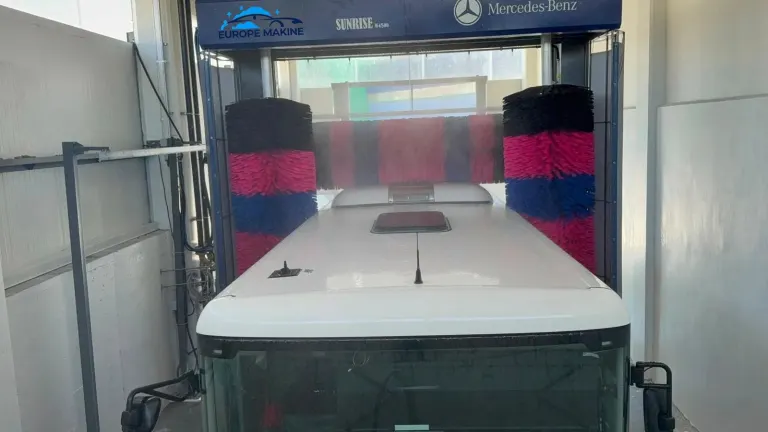
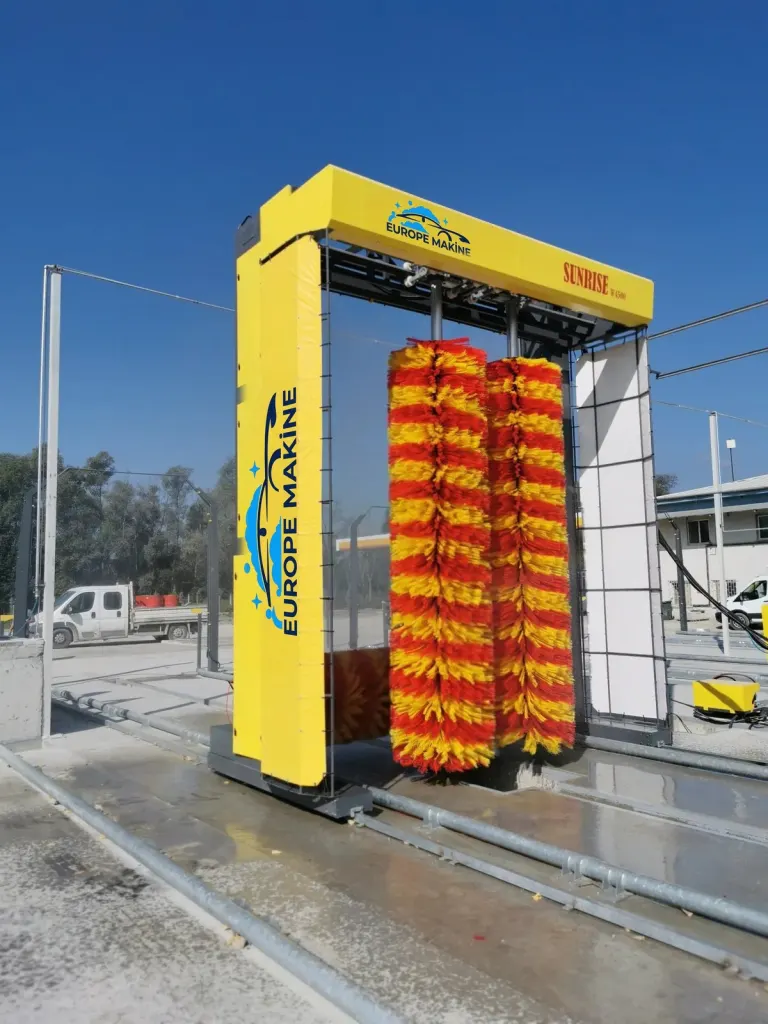
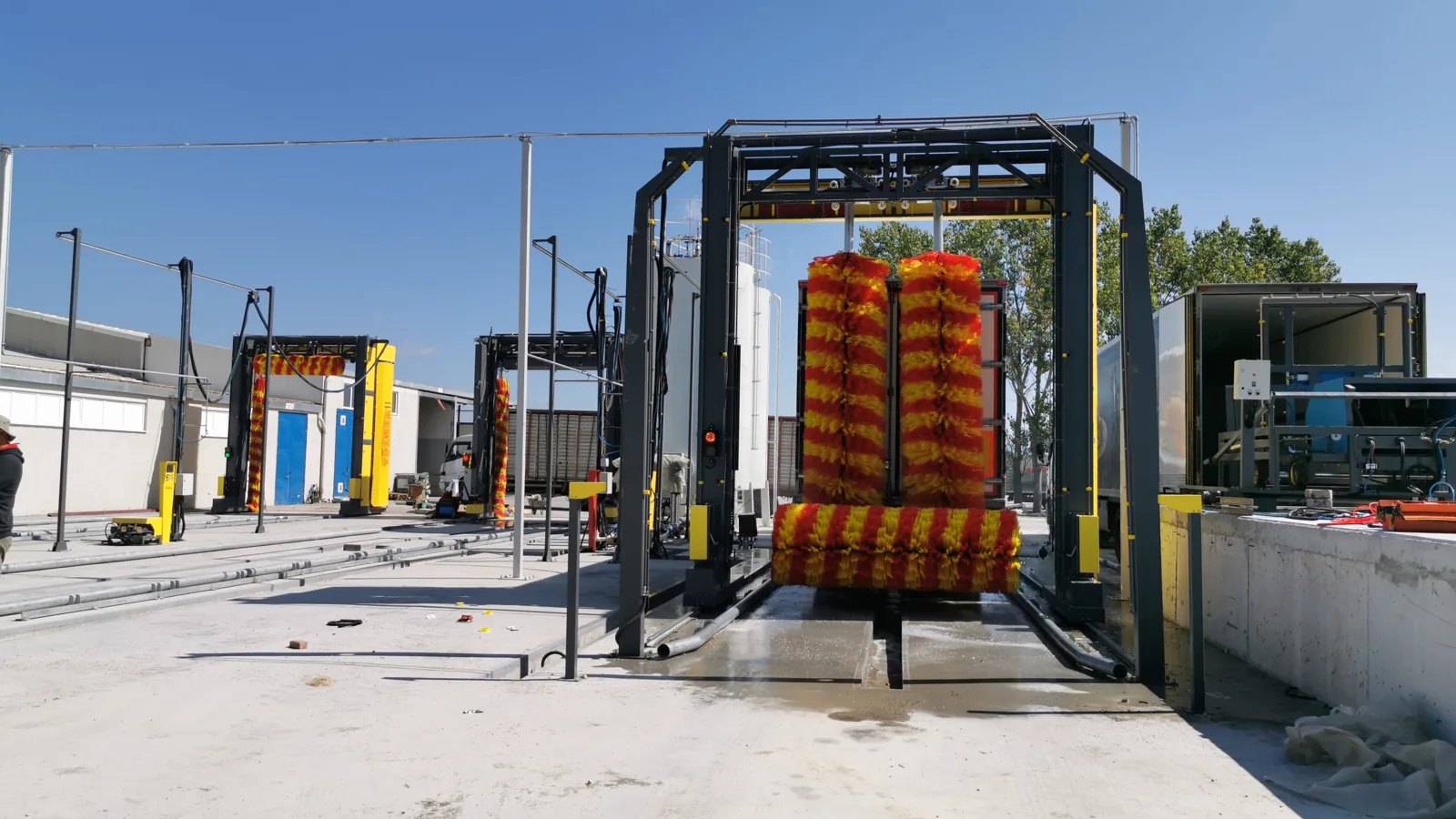
For a fleet yard, our heavy vehicle wash is the SUNRISE W4000 and W4700.
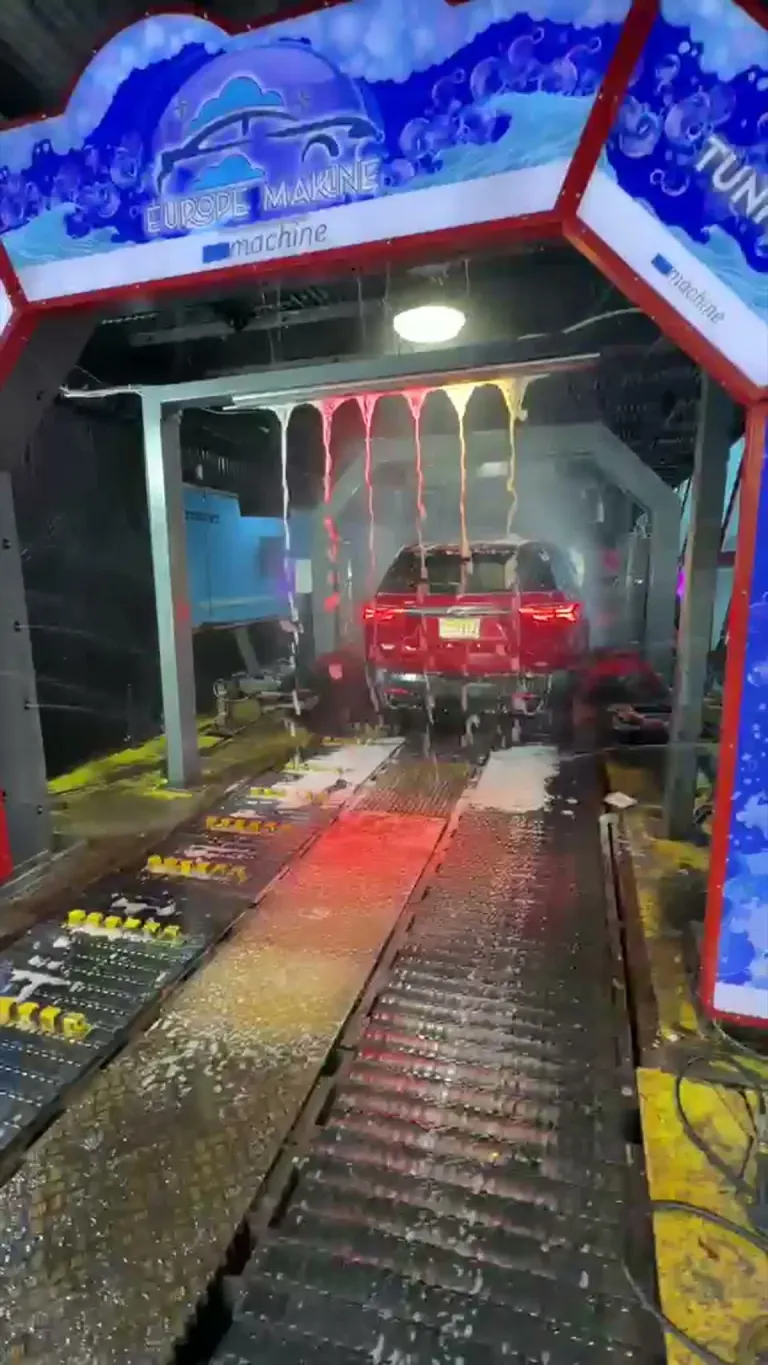
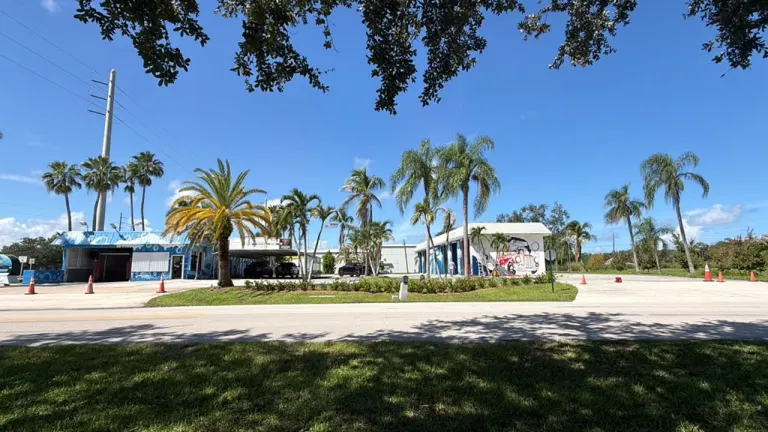
If you decide to wash on site, the permit and water questions above are part of the project from the start. We also build turnkey car washes: we secure the site, clear permits, install and calibrate the machines, hire and train the crew, and hand over a running operation, as we did for Ali’s Car Wash in Ocala, Florida. Our US base is in Greenacres, Florida, and we have more than 30 years of manufacturing experience.
Whoever you choose, ask what the supplier knows about your local water rules and what they will leave to you.