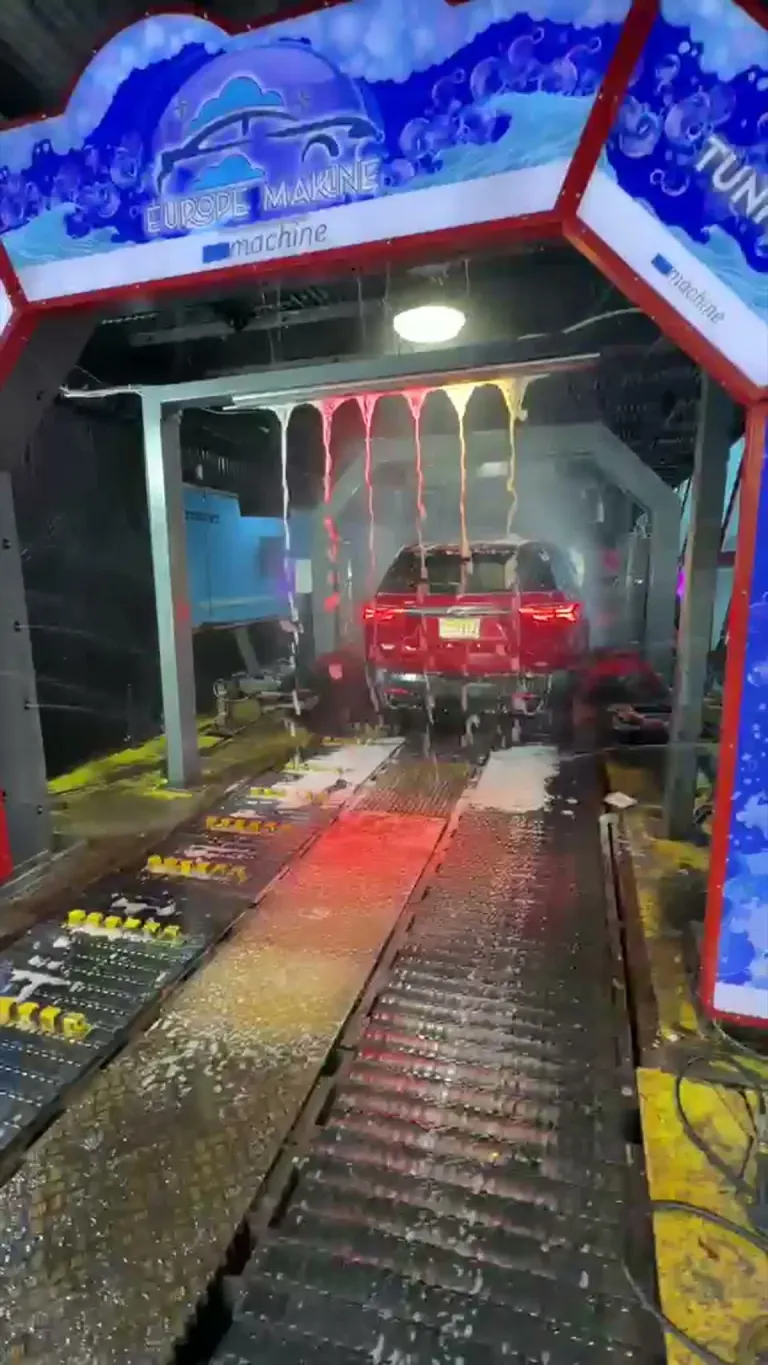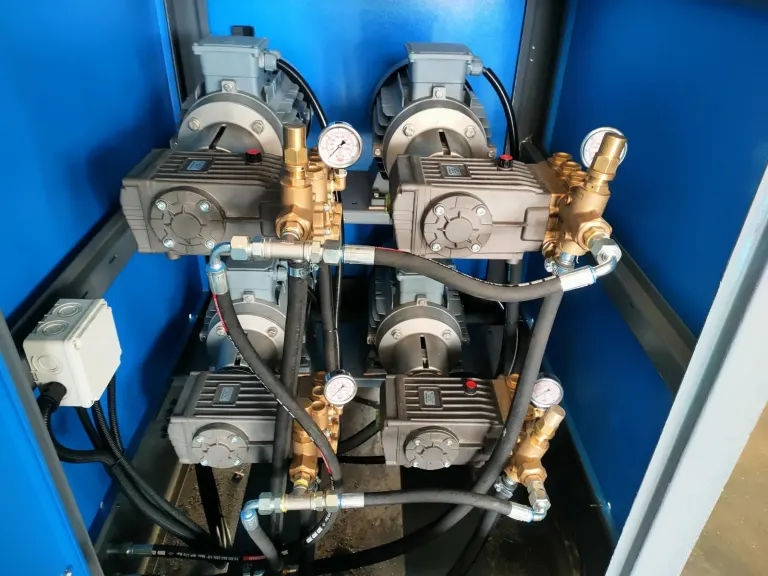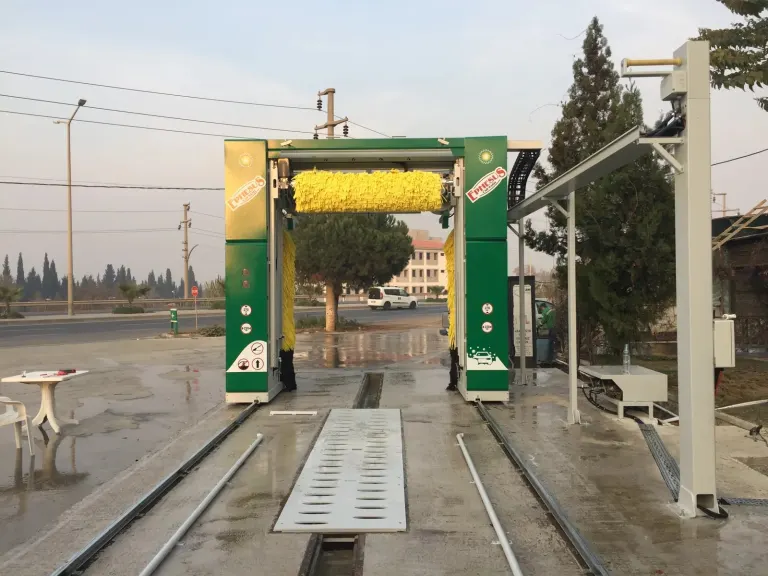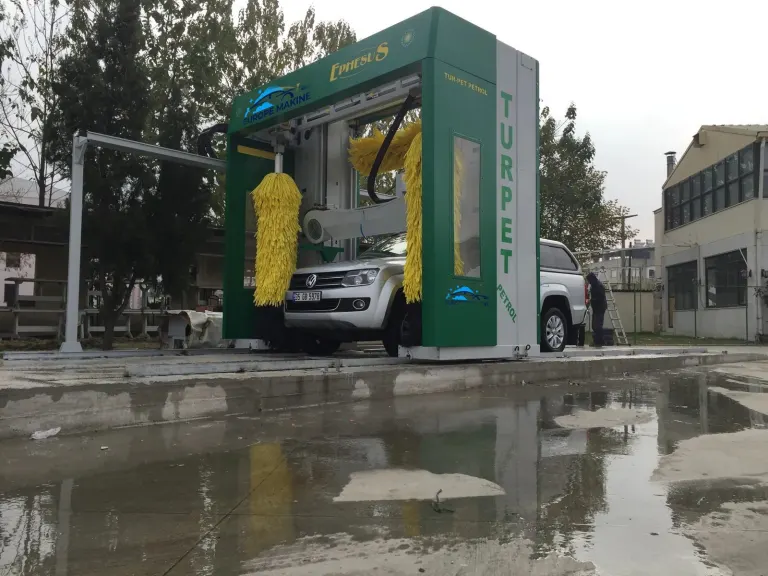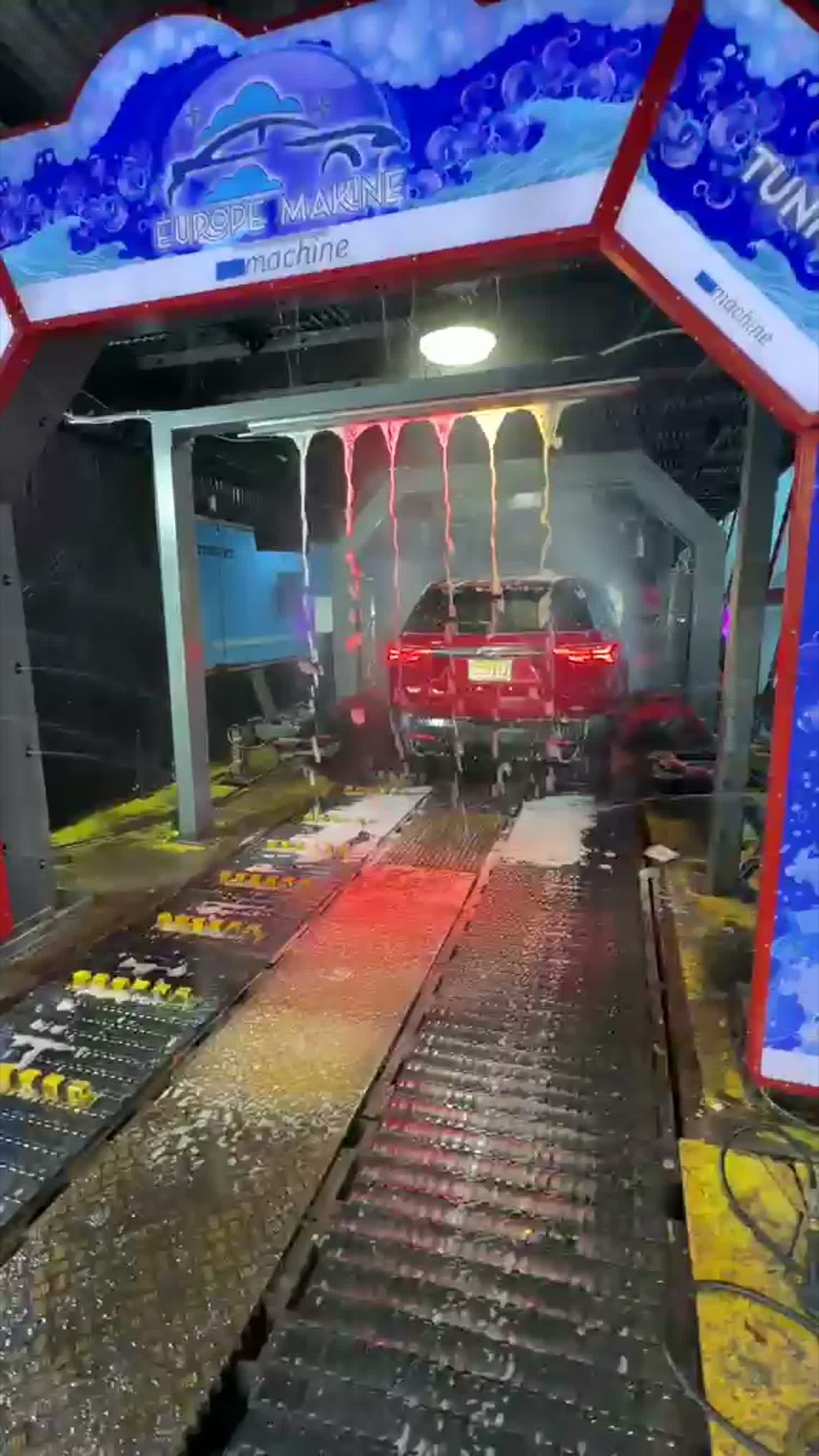
Car wash conveyor loading runs smoothly when the entrance hands each car to the conveyor without a stop. The driver arrives already decided and already paid, knows where to line up, and the conveyor takes the car while the one ahead is still moving. Most holdups come from what happens before the wheels reach the conveyor, not from the conveyor itself.
What the conveyor does, and why the entrance matters
The EPA WaterSense guidance on vehicle washing describes a conveyor system as one that uses a conveyor belt to pull vehicles through a washing tunnel made of spray arches and/or washing cloths. The customer can stay in the vehicle or wait outside, and in some states the driver and passengers must wait outside. That last point is worth checking against your own state’s rules before you design an entrance around drivers staying in their cars.
The definition makes the division of labor plain. The conveyor moves the car at a pace the tunnel equipment is set up for. Everything before the conveyor, which is payment, lining up and positioning, sets the pace. A tunnel can only wash at the rate cars are put onto it. If the entrance releases cars unevenly, the rest of the line sits idle in the gaps and is overloaded in the bunches.
That is why it helps to think of the entrance as a feeder. Its job is to present one correctly positioned car after another to the conveyor, at a steady rhythm, without anyone having to stop and think.
Holdups usually start with a stop
Every point where a driver has to stop, read, decide or pay is a point where the queue can compress behind them. In The Next Evolution of the Car Wash, published through the Champions Corner of carwash.org, operators are described as looking at the whole customer journey rather than single pieces of equipment, with the stated objective of keeping cars moving.
The same article suggests that fewer stopping points and frictionless transactions can improve customer experience and site throughput while using less labor. It pictures an entrance with fewer transaction points: customers buy by phone beforehand, are recognized as they approach, and drive into the tunnel without interruption. Attendants are then free to concentrate on service and upselling rather than taking payment.
The aim is continuous movement, and transactions are the main thing that interrupts it.
Pre-payment and plate recognition
A second Champions Corner piece, Are You Keeping Up with the Digitization of the Car Wash?, describes license-plate recognition that opens the gate and activates the right wash service.
If the wash package is already known when the car reaches the entrance, nobody needs to stop at a pay point, and nobody needs to explain the menu through a window. If it is not known, the stop happens at the entrance, which is the one place you least want it. Whether you solve that with a pay station further back, an app, plate recognition or an attendant with a tablet is a site decision. Plan where the stop moves to. Ideally it moves far enough back that a slow transaction affects a holding lane and leaves the conveyor in-feed moving.
Lanes, layout and what one operator does
One operator’s announcement on carwash.org describes multiple entrance lanes to speed up the wash, customers staying in neutral, and a dual conveyor belt running through a 130-foot tunnel.
It illustrates a design idea worth understanding: more than one lane can feed the conveyor, so that a car being positioned in one lane does not hold up the car in the next. Whether that suits your site depends on the land you have, how many cars arrive at once, and how your tunnel is configured.
If you run a conveyor, the instruction you give drivers, on neutral gear or anything else, should come from your equipment supplier’s guidance and your own insurer and legal advice.
Questions a layout has to answer
Rather than copy a layout, test it against a few plain questions.
- Where does a car wait if the conveyor is momentarily full, and does that waiting car block the way in or out of the site?
- Can a driver see, from the moment they turn in, where to go and what to do?
- Is there one point that every car must stop at, and what happens behind it when that stop runs long?
- What happens to the line when a car stalls, a driver hesitates or a wash package needs changing?
If you cannot answer these for your own entrance, you do not yet know where your holdups come from.
Reading your own entrance
The most reliable source of information is your own site. Spend an hour at the entrance with no other task. You are looking at three moments.
The approach
Watch where drivers slow down and why. If they slow because the signs are unclear, because they are unsure which lane to take or because the pay point is ahead of them, that is a design problem. Note how many cars hesitate at the same spot. Repeated hesitation at one point is a strong sign that something there needs changing.
The lining up
Look at how cars are positioned as they reach the conveyor. Are they square to it, or do they arrive at an angle and need correcting? Does anyone have to wave, shout or walk out to adjust a car? Each correction costs time and puts a person close to moving equipment, which we come back to below.
The release
Look at the gaps between cars once they are on the conveyor. Uneven gaps usually trace back to uneven loading. If one car follows another with almost no space and the next one is a long way back, the entrance is feeding the tunnel in bursts. Smoothing that rhythm is usually worth more than any one change to the equipment.
Write down what you see in plain words, including the times things go wrong. That record is more useful than a general figure from another site, because it describes your entrance, your customers and your tunnel.
People at the entrance
Even a highly automated entrance has someone watching it. Carwash.org’s article The Power of People cites the International Carwash Association’s Q2 CAR WASH Pulse report: 21% of consumers say staff are part of what makes a wash great, and 7% say a helpful employee is the single thing that separates an average wash from a great one.
A friendly, clear instruction at the entrance is part of the experience customers remember, and a driver who is confident about what to do is also a driver who loads the conveyor cleanly.
Training is available. The International Carwash Association’s LEAD course library lists courses titled How a Conveyor Car Wash Works, Optimizing Workflow and Efficiency, and Implementing a Car Wash Safety Program, plus a Tunnel Operations & Team Coordination template. It says courses run under 30 minutes and come in English and Spanish. That makes it a practical place to start for a new entrance attendant.
Whatever training you use, the aim is the same. The attendant should know what a normal load looks like, what to do when a car is mispositioned, and when to stop the line rather than push on.
Safety at the conveyor in-feed
The entrance is where people and a moving conveyor are closest together. It deserves more attention than speed does, because a faster entrance that puts staff in harm’s way is not an improvement.
OSHA’s publication Safeguarding Equipment and Protecting Employees from Amputations (also available in an HTML version) covers conveyors in general. It says conveyors present amputation hazards, because hands or fingers can be caught in nip points or shear points. For belt conveyors it names the take-up and discharge ends, where the belt enters or exits a nip point. The safeguards it lists include barrier guards or nip guards, and safety trip controls such as a pressure-sensitive body bar or a safety tripwire cable on the in-feed section. It also says to forbid employees from riding on conveyors.
It covers conveyors in general and is a sound reference for what to ask about. When you look at an entrance, ask where the in-feed is, what guards are in place, whether a trip control is within reach of the person who needs it, and whether anyone is ever tempted to step onto the conveyor to fix a problem.
Clearing a jam is a servicing task
Entrances jam. A car stalls, a wheel catches or a driver brakes at the wrong moment. The moment someone reaches in to clear it is a moment of risk. OSHA’s standard on the control of hazardous energy, 29 CFR 1910.147, covers the practices needed to disable machinery during servicing, commonly called lockout/tagout. OSHA also publishes a short lockout/tagout fact sheet if you want a plain summary before reading the standard itself. Which tasks at your entrance count as servicing, and what your procedure must be, is something to settle with your equipment supplier and a qualified safety adviser.
An OSHA news release dated September 23, 2026 reports that the agency cited an express car wash operator for lockout/tagout failures, with proposed penalties of $446,864. Those are proposed penalties, not final findings. The release is a reminder that regulators look at exactly the situation a jammed entrance creates.
The handoff to the equipment
Loading does not end when the car is on the conveyor. The EPA guidance mentioned above says to calibrate conveyors by timing spray nozzles so that they activate only as the vehicle reaches the spray arch. That bears on the handoff between conveyor and equipment, not on loading itself, but it shows why consistent loading matters. Equipment timed to a car’s position works best when cars arrive in a predictable position and rhythm. A car that is loaded crooked or late is also a car the downstream equipment may treat differently from the one the timing was set for.
This is another reason to fix the entrance first when a tunnel seems slow. The slowest-looking part of a line is sometimes just the first place where an upstream inconsistency becomes visible.
Where we fit
Our conveyor tunnel washes up to 130 cars an hour on a long line and 30 to 60 on shorter lines. That is what the line can wash; the entrance still has to feed it at that rate.
We also build turnkey car washes: we secure the site, clear permits, install and calibrate the machines, hire and train the crew, and hand over a running operation. Our US base is in Greenacres, Florida, with service technicians and spare parts stock. Layout, equipment calibration and crew training are easier to get right when they are planned together than when they are fixed one by one after opening.