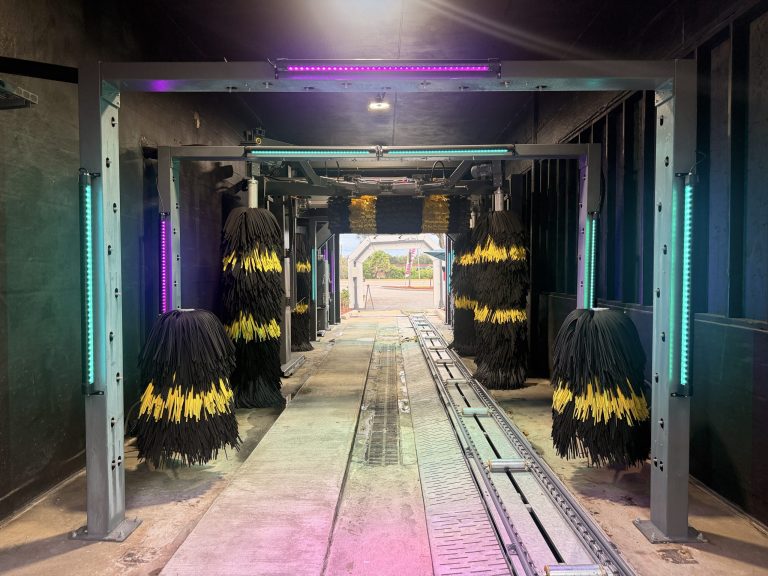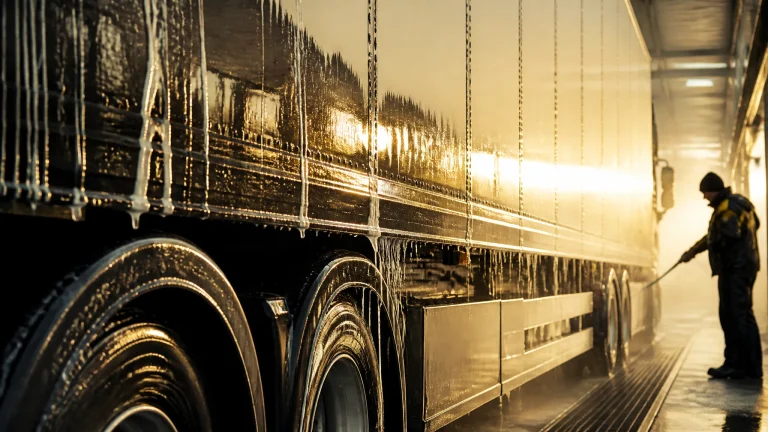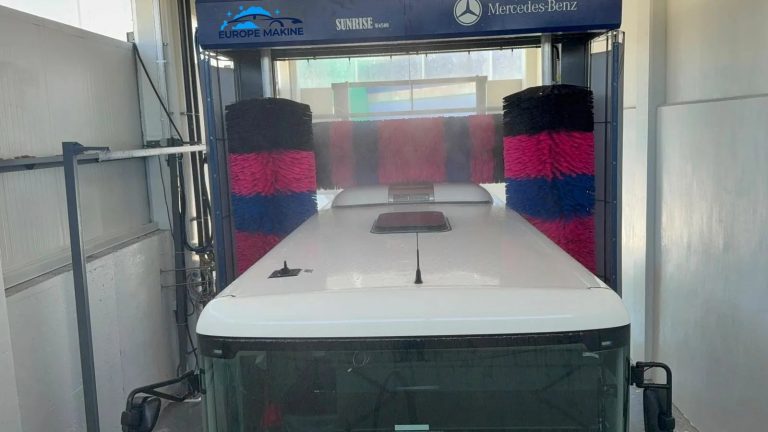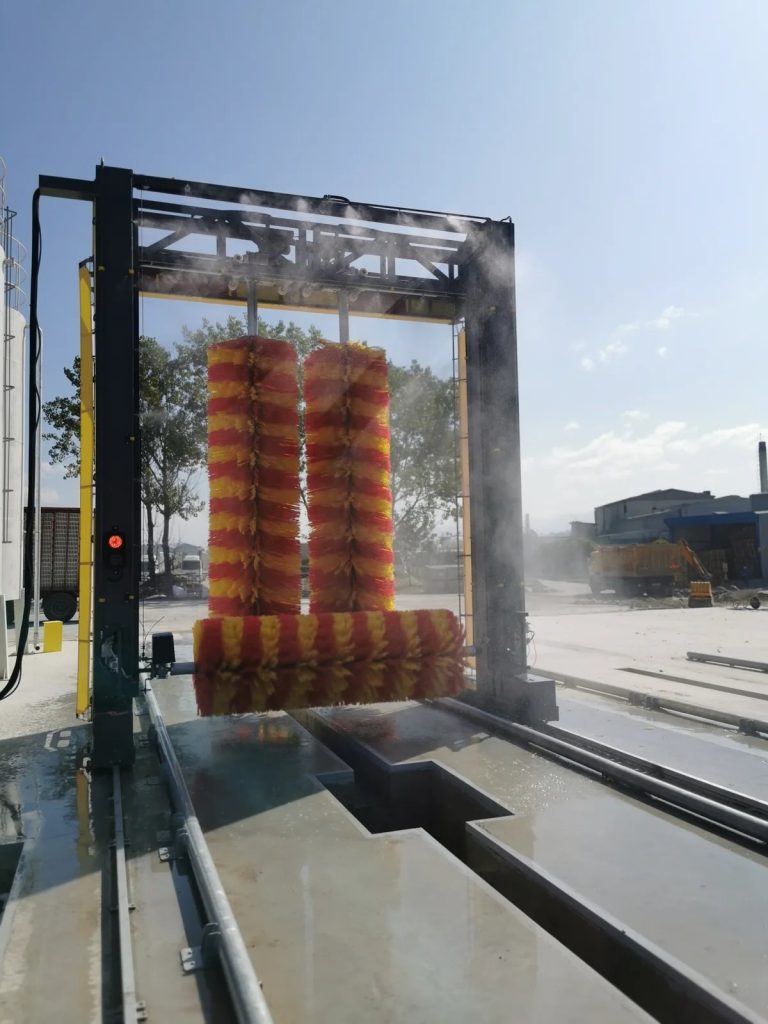
For most dealers, the right dealership car wash equipment is a single in-bay automatic (rollover) machine in a dedicated, properly drained bay. A conveyor tunnel only makes sense if the site is very high volume. Whichever you choose, settle the drainage, pretreatment and local discharge approval first, because those decide what you can legally and practically install.
A dealership wash is its own kind of operation
The International Carwash Association (ICA) recognises that vehicle washing also happens at auto dealerships. In its carwash industry information, it lists dealerships alongside fleet operators, rental car facilities, hand wash or detail shops and mobile units, and it leaves them out of its retail industry estimates.
That matters for you in one practical way. The published industry figures describe retail washes, not dealer washes. There is no sourced data here on dealership throughput, payback or customer retention, so any number you are quoted for those should be checked against your own site and your own vehicle counts.
Two jobs, one bay
A car dealer car wash usually has to do two different jobs. The first is keeping lot stock presentable: vehicles that need cleaning before display, before handover or after transport. The second is washing customers’ vehicles, typically alongside a service visit.
These jobs pull in different directions. Lot stock can be washed in batches at quiet times. Service customers expect a clean vehicle at a set time. Before you look at machines, write down which job comes first, how many vehicles you expect on a busy day, and who will run the bay. Those answers are more useful than any brochure figure.
Choosing the type of machine
The EPA’s WaterSense at Work guidance on vehicle washes sorts commercial washes into three types: conveyor, in-bay automatic and self-service.
- Conveyor: vehicles are pulled through a tunnel of spray arches and/or washing cloths.
- In-bay automatic: the vehicle stays still while a gantry moves around it.
- Self-service: the driver washes the vehicle in a bay.
The EPA notes that in-bay automatics are often found at gas stations and similar sites where washing is a secondary service. A dealership is in much the same position: the main business is selling and servicing vehicles, and the wash supports it. That is why a rollover machine in one bay is the usual starting point. It takes the footprint of a bay rather than a tunnel, and it can be run by the people already on site.
Touchless or brush
The EPA describes both in-bay and conveyor options as either friction or frictionless. Its guidance recommends adding a friction component if a frictionless in-bay system is retrofitted. The choice between touchless and brush rollovers is therefore a real decision about how clean you need vehicles to come out, not a cosmetic one. Think about the condition of the vehicles you wash most often before deciding.
Sensors
The same EPA document says most in-bay automatic equipment can use sensors to detect vehicle length, which saves water on shorter vehicles. On a lot with a mix of hatchbacks, SUVs and pickups, that is worth asking about when you compare machines.
When a conveyor makes sense
A conveyor tunnel suits a very high-volume operation. If you are washing a handful of vehicles an hour, it is more machine, more space and more water treatment than you need. Do not size a dealership wash for your busiest imaginable day.
Water use and reclaim
Water is the other half of choosing dealership car wash equipment. According to EPA guidance, many commercial washes adopt water reclamation for three reasons: wastewater discharge limits, lower sewer fees (often based on metered water use) and conserving fresh water.
The EPA gives these figures for in-bay automatics:
- Without reclaim, an in-bay automatic can use up to 74.1 gallons per vehicle.
- With a reclaim system, it can use as little as 19.1 gallons per vehicle.
- The EPA recommends limiting fresh water to 40 gallons per vehicle for in-bay automatics.
For conveyors, the EPA’s section 5.5 on vehicle washing recommends 40 gallons per vehicle, a figure it attributes to ICA’s WaterSavers programme. Section 5.4 recommends 35. The two editions differ, so check the current version when you set a target.
At a minimum, the EPA says a reclaim system should separate grit, oil and grease. It also suggests a five-second dwell time before the vehicle leaves the bay so that runoff is collected. Some water agencies, such as San Antonio Water System and Denver Water, offer rebates or drought-time flexibility to washes that follow conservation guidelines. Ask your own utility whether anything similar applies.
Reclaim matters most where you must treat and discharge your own wash water, which is the case for most dealerships.
Drains and wastewater: plan these first
Dealerships already have a drainage question, even before a wash is added. The EPA’s stormwater guidance on vehicle maintenance and washing lists auto dealerships among the businesses that wash and maintain vehicles. It warns that outdoor washing can send detergent-rich water to storm drains, and says commercial car washes limit stormwater impacts because they often recycle water or must treat it before it goes to the sanitary sewer.
Floor drains in service bays are a separate federal issue. The EPA’s Underground Injection Control programme regulates motor vehicle waste disposal wells as Class V wells. These are generally floor drains or sinks in service bays connected to septic systems or dry wells. The EPA gives April 5, 2000 as a nationwide date that applies to wells built after it. The EPA’s small entity compliance guide names new and used car dealers as potentially regulated businesses. It says floor drains must go to a holding tank or the sanitary sewer if a permit cannot be obtained or the drains cannot be eliminated, and that work areas should never be hosed down. It also notes that some states are stricter.
Do not connect a new wash bay to an existing drain on the assumption that it is acceptable. Confirm where each drain goes before you commission anything.
Sewer discharge
ICA’s study, Water Effluent and Solid Waste Characteristics in the Professional Car Wash Industry, reports that more than 99% of professional car washes discharge to a sanitary sewer and a publicly owned treatment works (POTW). It adds that the POTW sets pretreatment guidance and discharge limits, usually through local rules.
Those rules vary by state and by municipality. Talk to your local sewer authority and permitting office early, and ask what pretreatment and sampling they expect, before you buy a machine.
Keeping the bay safe to work in
A wet bay is a slip risk for your staff. OSHA’s rule on walking-working surfaces, 29 CFR 1910.22, requires employers to keep these surfaces clean, orderly and sanitary. It also requires floors to be kept dry as far as feasible and, where wet processes are used, to have appropriate drainage or dry standing places. In practice, that means a sloped, drained floor and a dry place for the operator to stand, planned as part of the bay design.
A sensible order of work
- Decide which job comes first: lot stock, service customers, or both, and estimate daily vehicle counts from your own records.
- Speak to your sewer authority and permitting office about discharge, pretreatment and any restrictions on existing drains.
- Design the bay: slope, drainage, standing places, and space for a reclaim system.
- Pick the machine type, touchless or brush, based on the vehicles you wash and the finish you need.
- Ask each supplier for water use per vehicle with and without reclaim, and whether the machine senses vehicle length.
Where Europe Makine fits
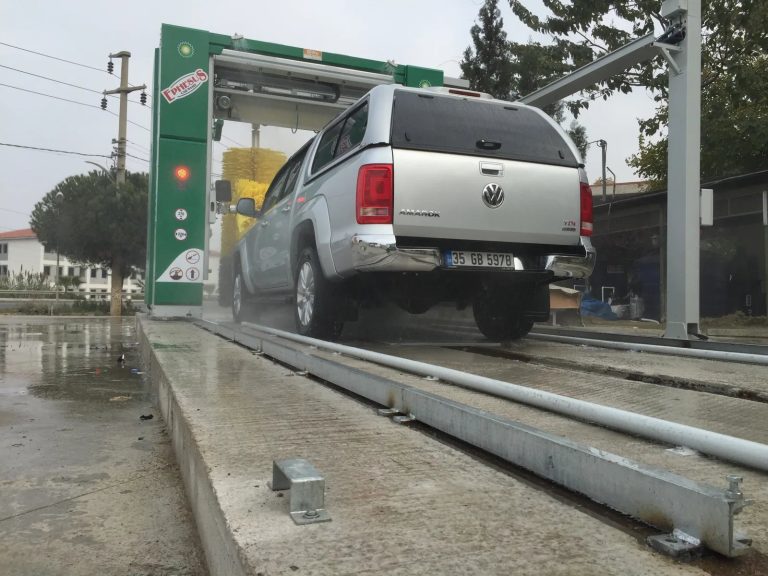
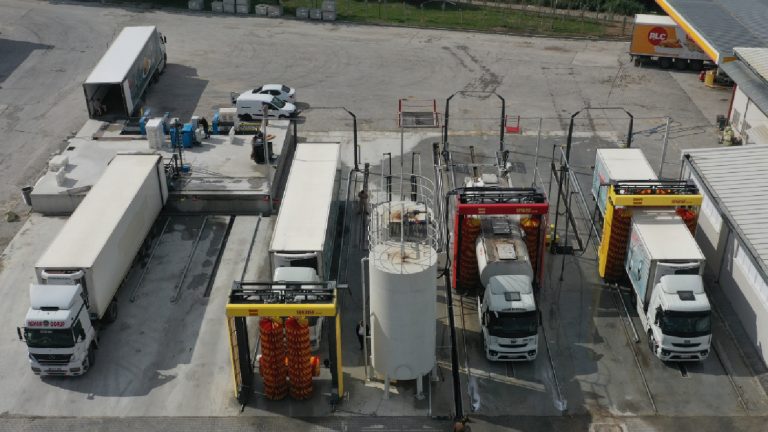
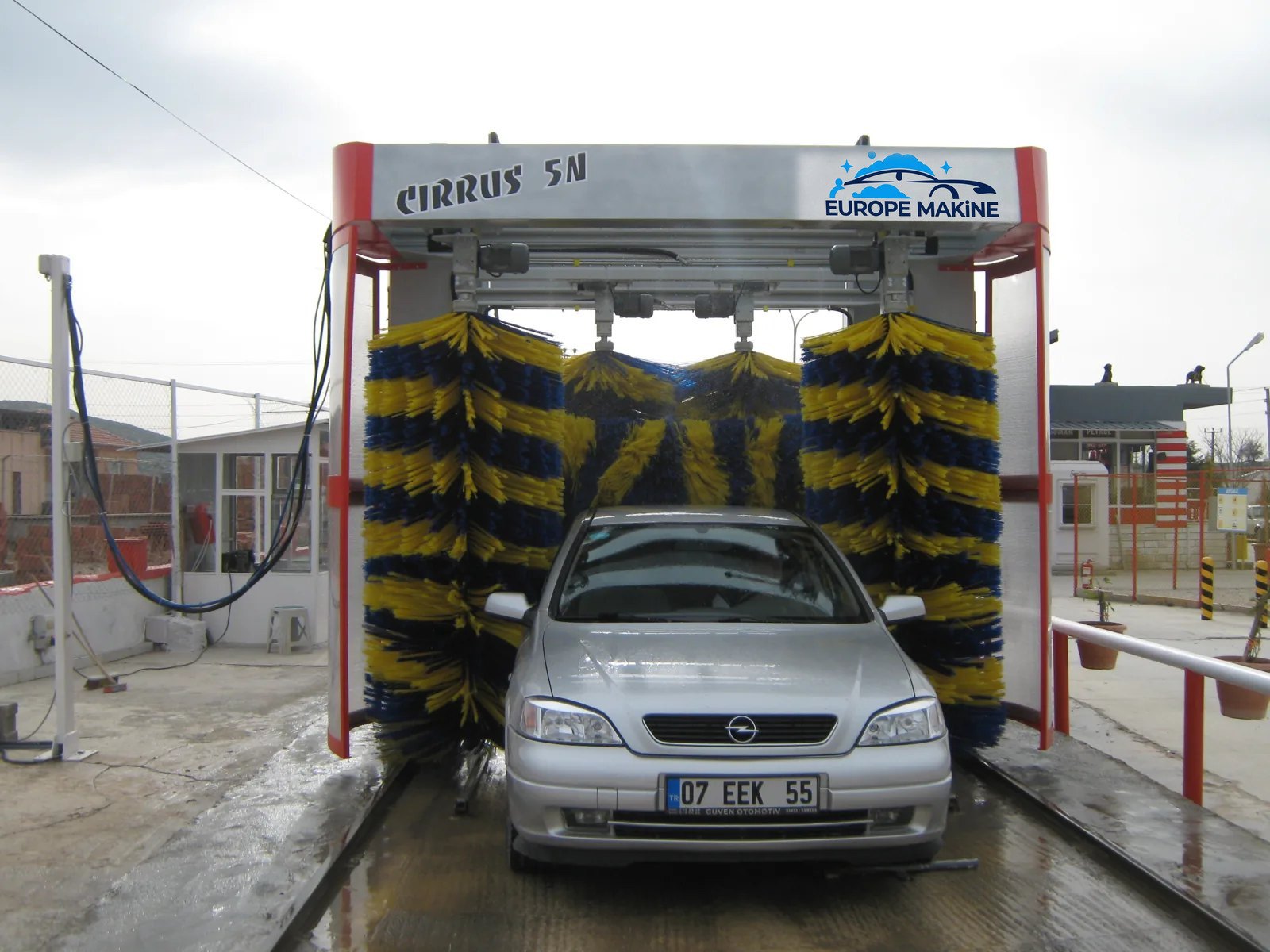
Europe Makine manufactures wash systems, with more than 30 years of manufacturing experience and a 1,500 square metre production facility. Its range includes the Acrobat 2X touchless rollover, the three-brush Ephesus rollover, the five-brush Cirrus 5N rollover, a conveyor tunnel and the SUNRISE W4000/W4700 heavy vehicle wash. The SUNRISE is relevant only if a dealer sells trucks or buses.
For a dealer wash bay, the rollover models are the natural place to look. The company states that the Acrobat 2X washes 3 to 5 vehicles per minute of operation time, and that the Cirrus 5N averages 24 to 32 vehicles per hour wash-only, or about 14 with drying. Its conveyor tunnel washes and dries 30 to 60 vehicles per hour, which is a high-volume tool. Europe Makine has not supplied evidence of a dealership installation, so treat these as machine specifications rather than dealership results.
For owners who want the whole project handled, the turnkey service covers securing the site, clearing permits, installing and calibrating machines, hiring and training the crew, and handing over a running operation. Ali’s Car Wash in Ocala, Florida, is open to the public and runs on Europe Makine machines, built through that turnkey process. The company has a US base in Boca Raton, Florida, and ships machines door to door with free installation and a six month warranty.