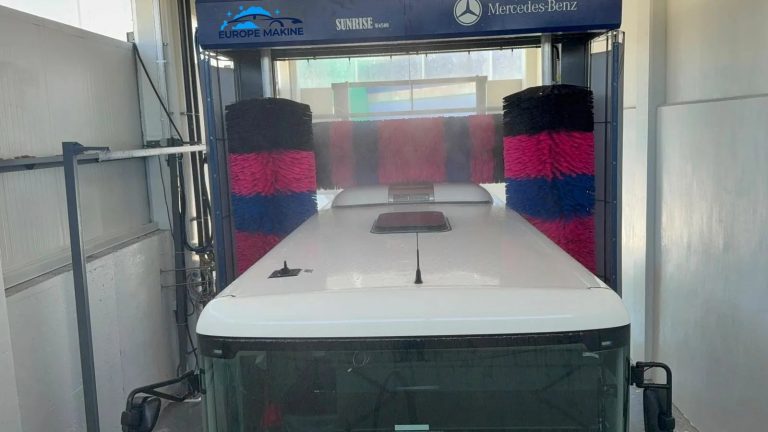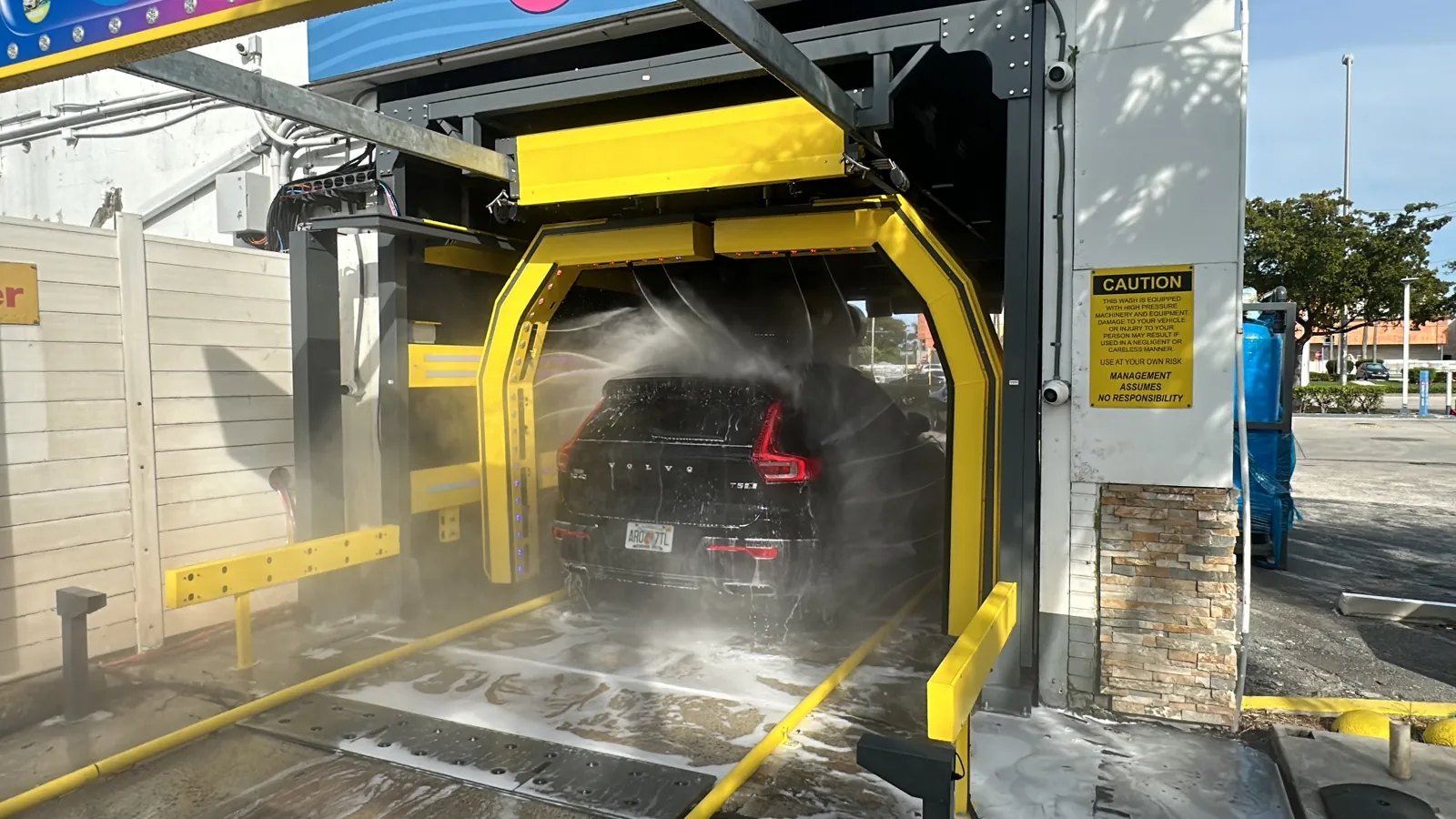
Tunnel chemical application follows the stages a vehicle passes through, not a single fixed product list. In a conveyor tunnel the car meets a pre-soak, then a wash stage, then a first rinse, then an optional wax or sealer, then a final rinse, and finally the dryers. Where each named product sits within that sequence depends on your site, and we found no published US source that gives one order for every tunnel. This article sets out the stage logic, so you can place the products your chemical supplier recommends on your own line and understand why they sit where they do.
That is a deliberately modest answer. Many guides list products in a neat row as if every tunnel were the same. They are not. What you can rely on is the structure of the wash, the way water moves through it, and the safety and dosing disciplines that apply whatever you buy.
Start with the stages, not the product list
The most useful backbone comes from the EPA. Its WaterSense guidance on vehicle washing lists the steps as defined by the International Carwash Association, and notes that vehicle-washing technologies use some or all of them:
- Pre-soak: an automated nozzle or a handheld spray.
- Wash: a high-pressure spray or brushes, with a detergent solution.
- First rinse: a high-pressure rinse.
- Wax and sealers: an optional surface finish sprayed on the vehicle.
- Final rinse: a low-pressure rinse with fresh or membrane-filtered water.
- Drying: air blowers that move air over the vehicle to remove water and assist drying.
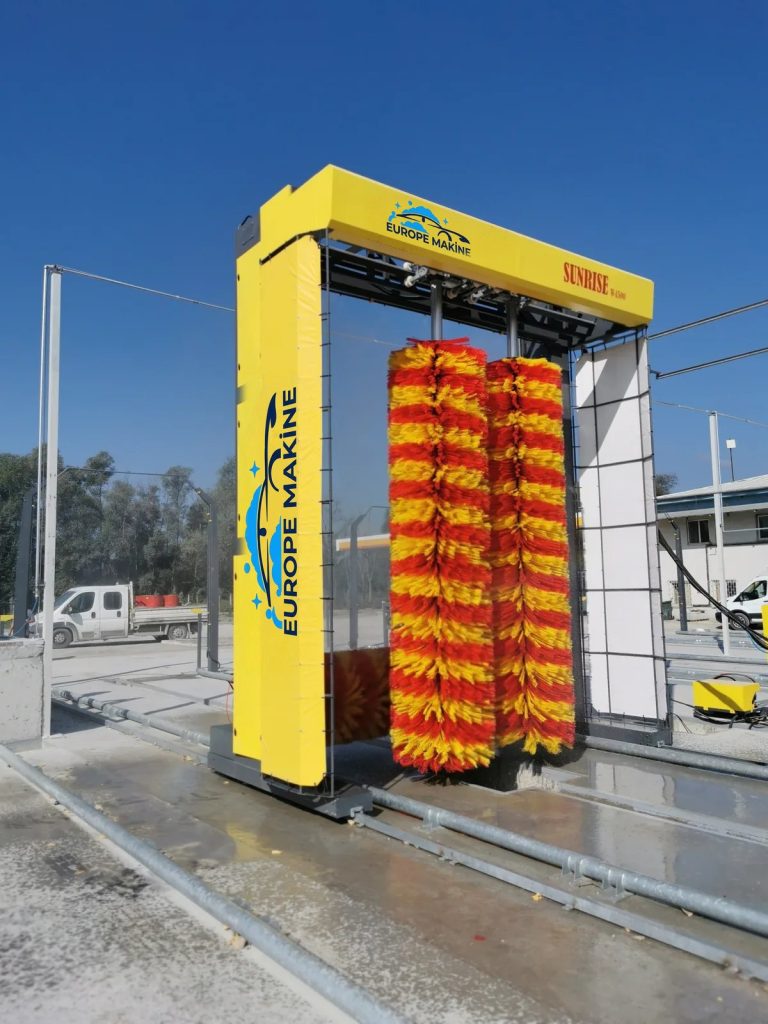
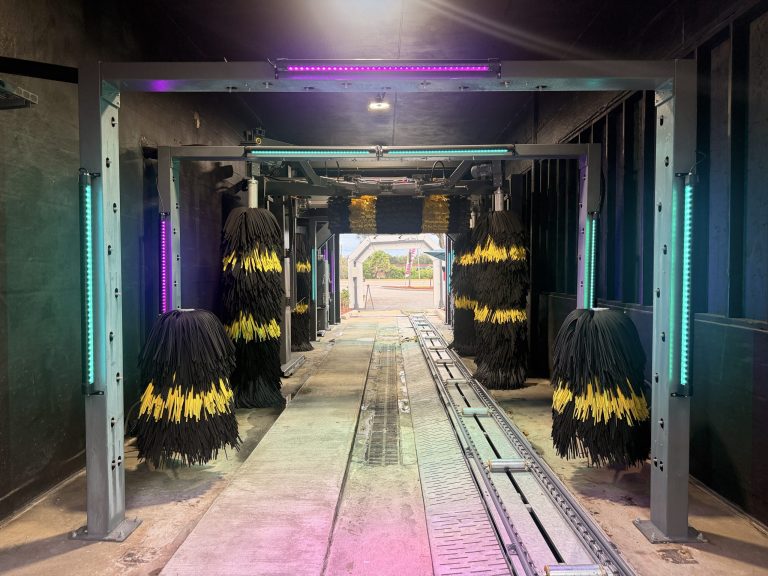
The same EPA document describes a conveyor system as a belt that pulls vehicles through a washing tunnel made up of a series of spray arches and/or washing cloths. That description matters for chemistry. Every chemical you buy has to be applied at one of these stages, through one of these arches or nozzles, at a point where the next stage will either leave it on the vehicle or take it off.
So the first question for any product is not "what does it do?" but "which stage is it part of, and what happens to the car immediately afterwards?"
Why no single order fits every tunnel
It is tempting to look for a universal sequence. The industry’s own material points the other way. A feature on carwash.org, Beyond the Drum, says that water quality, equipment setup, tunnel length, volume, climate and customer base all affect how chemistry performs. The piece is a profile of a chemical supplier, and we use only that general point here.
In practice, that means two tunnels running similar chemistry can place it differently:
- A short tunnel has fewer arches available, so some functions may share a position or be handled by a single product.
- A long tunnel has room to separate stages and give each product more contact time before the next rinse.
- A high-volume site may need different dosing from a quiet one, because the product is passing through the line at a different rate.
- Climate and customer base change what is on the vehicle when it arrives, and so what the first stages have to cope with.
The sensible reading is that your supplier, your equipment layout and your water set the final arrangement. What follows is a way of thinking through each stage so that conversation is more productive.
The pre-soak: first contact with the vehicle
The pre-soak is the first chemical stage. The EPA, citing the International Carwash Association, describes it as an automated nozzle or handheld spray. In a tunnel, this is normally the first arch or applicator the car passes under after the entrance.
The logic of its position is simple. Whatever is applied here has to do its work during the time it takes the car to travel to the next stage. That travel time is set by the conveyor speed and the distance between the pre-soak applicator and the wash stage. If you change either, you change the contact time, and the same product at the same dilution may behave differently.
Two practical points follow:
- Coverage matters as much as chemistry. A good product applied unevenly gives uneven results. Check that nozzles are clear and aimed where intended.
- Hand application is still part of some sites. The EPA notes handheld spray as an option, so an attendant stage before the tunnel entrance is a recognised arrangement, not a workaround.
The wash stage: where commercial car wash soaps do the main work
The wash stage, in the EPA’s description, uses a high-pressure spray or brushes with a detergent solution. This is where vehicle wash soap is applied as the main cleaning agent, and it is the stage most operators think of first when they talk about commercial car wash soaps.
Soap positioning is shaped by the equipment more than by the chemistry:
- In a friction tunnel, the soap is carried onto the vehicle and worked by the cloths or brushes. The soap applicator therefore sits ahead of the contact equipment, so the surface is wetted with solution before it is touched.
- In a high-pressure arrangement, the detergent solution is delivered through the spray itself.
Either way, the soap is diluted and metered into a water stream. That makes dilution and water quality as important as the product. We return to dosing below.
One caution on terminology. Suppliers use many names for products that sit at or near this stage, such as foams, shampoos and conditioners. We have not found an approved US source that defines these names or fixes their order, so do not assume a name tells you where a product belongs. Ask your supplier to state, in writing, which stage each product is designed for and how it should be applied.
The first rinse: clearing what the chemistry has loosened
After the wash stage comes the first rinse, which the EPA describes as a high-pressure rinse. Its job is to remove the soap solution and the soil it has lifted before the vehicle moves on to any finishing product.
This stage affects chemical placement in a quiet but important way. Any product applied before the first rinse is, by design, short-lived on the surface unless it is intended to survive the rinse. Any product that is meant to stay on the paint belongs after it. That is plain process logic rather than a rule from a source, but it is a useful test. If someone proposes a product position that would have the next rinse strip the product straight off, ask why.
The tunnel layout helps here. The EPA notes that tunnel length lets wash wastewater be separated from higher-quality rinse water, which makes conveyor sites good candidates for water reclamation. In other words, the line is naturally divided into a dirtier section, where chemistry and soil are present, and a cleaner section, where the water is better. Your chemical stages sit across that division.
Wax and sealers: an optional finish
The EPA describes wax and sealers as an optional surface finish sprayed on the vehicle. The word optional is worth noting. Not every tunnel applies a finish, and those that do may offer it only on higher wash packages.
If your site does apply a surface finish, two considerations govern where it sits:
- It follows the cleaning and rinse stages. A finish applied onto a surface that still carries soap solution has no good reason to be there.
- It is typically followed by treated water. The EPA table in section 5.5 pairs the wax or sealer stage with reverse osmosis or deionised water, and its section on vehicle washes refers to RO treatment that supplies spot-free rinse water and advises capturing and reusing the reject water.
We would not call that pairing a rule. It does show how the water side and the chemical side of the tunnel are linked. The stages after the finish are fed by treated water, and the product choice and the water supply need to be thought about together.
The final rinse and the dryers
The final rinse is a low-pressure rinse with fresh or membrane-filtered water. It is the last time liquid is applied to the vehicle. Then the air blowers move air over the vehicle to remove water and assist drying.
From a chemical point of view, the main lesson is that the end of the tunnel is a water stage, not a soap stage. If you see residue or spotting on finished vehicles, the cause may lie in the water feeding the final rinse, or in a product carried through from an earlier stage, rather than in the final stage itself. Working back through the stages in order is a more reliable method than changing several products at once.
Some operators also add products designed to assist drying. We have no approved source that fixes where such products belong, so treat the position as something to settle with your supplier and your equipment manufacturer, and confirm by observing the results on the line.
Specialist products: wheels, tyres and the rest
Wheel and tyre cleaners, foams in several colours, and similar products are common across the industry. We found no approved source that gives a standard position for them, so we do not state one. They fit the same stage logic as everything else: each must be applied at a point where it can work and where the following stage will either leave it in place or rinse it away as intended.
These products also deserve extra care on safety. Some cleaners carry specific hazards, and the right response is to read each product’s safety data sheet rather than rely on its category name. For one example of why, carwash.org hosts a review of hydrofluoric acid and its use in the car wash industry. We are not drawing conclusions from it here, and we have no information on how common any one ingredient is. The point is only that a product’s ingredients, not its label or reputation, tell you how to store, handle and apply it.
Dosing and dilution: set at commissioning, watched afterwards
Placing a product at the right stage is only half the job. The other half is how much of it reaches the car. Chemicals in a tunnel are typically diluted and metered, and the settings are made when the line is commissioned. The Beyond the Drum feature mentions supplier teams walking operators through applications, dilution settings, safety and best practices, which fits that picture: dosing is something people are trained to set and check, not something that looks after itself.
Monitoring is becoming more detailed. A carwash.org news item reports a system that fits flow meters to individual chemical lines and gives usage, diagnostics, alerts and cost-per-wash reporting, in its report on per-wash chemical monitoring. We cite it only as evidence that per-line dosing can be measured. We do not endorse the product or repeat its claims.
Whether or not you use metering equipment, a few habits make a difference:
- Record the dilution setting for each product and each line when the tunnel is commissioned.
- Check settings against the record on a regular schedule, not only when something looks wrong.
- When results change, check dosing, nozzle condition and water quality before changing the product.
- Keep a note of any change you make and the date, so you can tell cause from coincidence.
Safety: labels, safety data sheets and training
Every product on the line brings a duty to handle it properly. OSHA’s Hazard Communication overview says manufacturers and importers must evaluate chemical hazards and prepare labels and safety data sheets for downstream customers. It also says all employers with hazardous chemicals must have labels and safety data sheets for exposed workers and train them to handle the chemicals appropriately.
The detail is in 29 CFR 1910.1200, which requires a hazard communication program that includes container labelling, safety data sheets and employee training. For a tunnel, that translates into plain tasks:
- Keep a safety data sheet for every product in the chemical room, and make it easy for staff to reach.
- Make sure containers, including any decanted or dilution containers, are labelled.
- Train staff before they handle a product, not after.
The OSHA and NIOSH InfoSheet on cleaning chemicals adds general guidance of the same kind: safety data sheets must be readily accessible to workers, and training must happen before a worker begins using the cleaner, covering hazards, handling, use and storage, including dilution procedures. It is general cleaning-chemical guidance and is not specific to car washes, but the principle carries over directly. This article is not legal advice, and your own obligations should be confirmed against the regulation and, where relevant, your state and local requirements.
Wastewater: a short note
What goes onto the car ends up in the wash water. The EPA’s study of carwash wells says carwash cleaning solutions generally consist of soap solutions, rinse water and wax. That Class V study is historical (the report number, EPA/816-R-99-014d, points to about 1999) and focuses mainly on coin-operated or manual carwash wells, so it is not a guide to tunnels. The EPA’s consumer guidance says commercial car washes are required to dispose of wastewater properly and that many filter and recycle their water.
We have not verified any specific discharge permit or pretreatment rule that applies to car wash soaps, so we make no claim about local sewer limits or product requirements. Check what applies to your site with your local authority before you settle on a chemical programme.
A way to map your own line
You can put all of this to use without any template. Walk the tunnel from entrance to exit and, at each arch or applicator, write down four things in your own words:
- Which stage is this: pre-soak, wash, first rinse, finish, final rinse or drying?
- Which product is applied here, and what does the supplier say it is designed to do at this stage?
- What happens to the vehicle immediately afterwards, and will that leave the product on or rinse it off?
- What water is used at this point, and where does that water go afterwards?
Then check the answers against the safety data sheets and against the dilution record. Gaps are usually easy to see: a product with no clear stage, a rinse that follows a finish too closely, or a dilution setting nobody can account for. Bring those gaps to your supplier. A good answer will refer to your tunnel’s length, conveyor speed and water, not to a generic chart.
Where Europe Makine fits
Europe Makine manufactures five wash systems, including a conveyor tunnel system, and publishes a throughput of 30 to 60 vehicles per hour for it. It also builds turnkey car washes: it secures the site, clears permits, installs and calibrates the machines, hires and trains the crew, and hands over a running operation. That commissioning stage is where stage layout, dilution settings and staff training come together, which is why we mention it here. We do not supply chemicals or set chemical dosing, so those decisions remain with you and your chemical supplier.