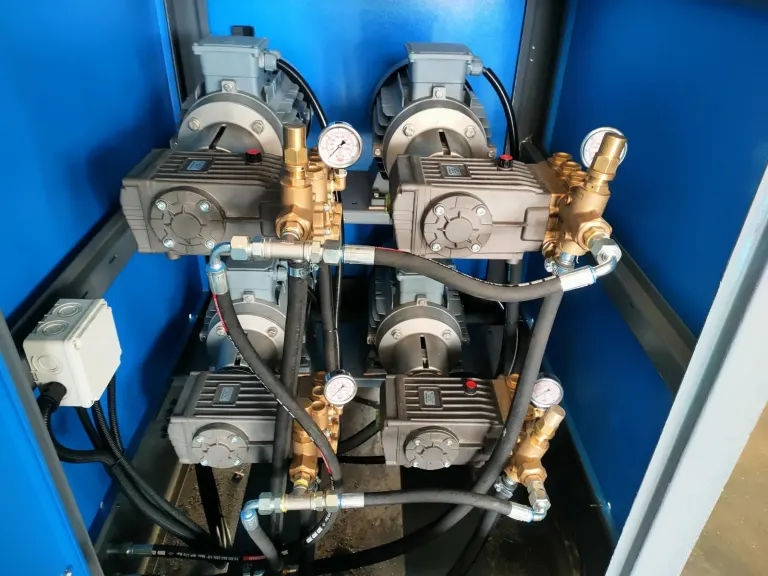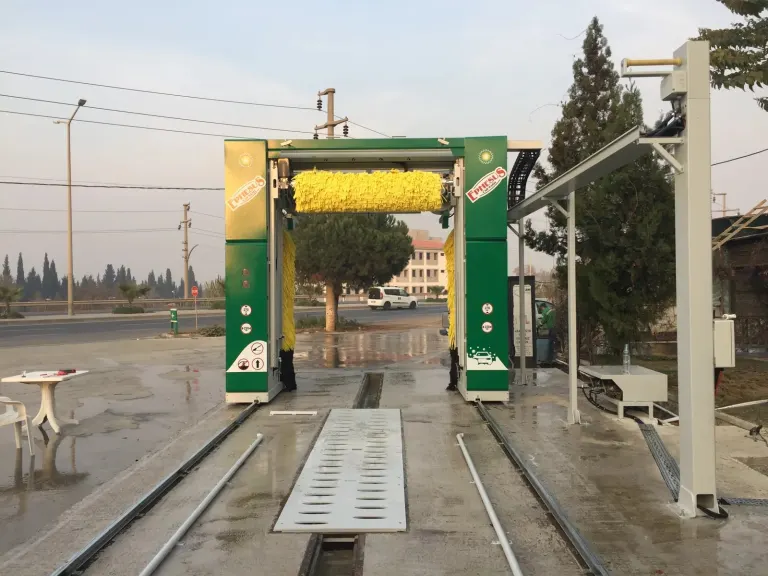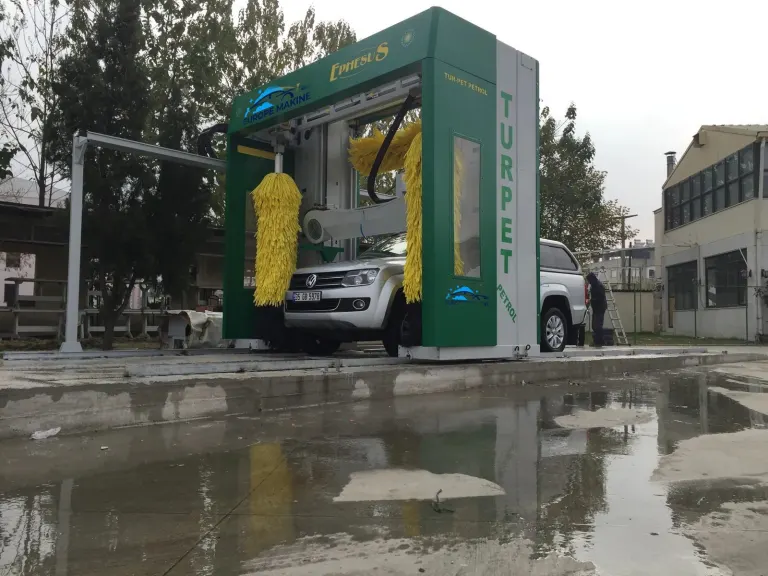
A tunnel maintenance checklist is a short, repeatable routine that you run at set points: a walk-around before the first car each day, a closer inspection each week, and a review of your records each month. Its job is to catch noise, heat, leaks and drift before they stop the conveyor. There is no federal or industry standard list of tunnel tasks with intervals, so set your actual intervals from the equipment manufacturer’s manual and from your own maintenance records.
Why a tunnel needs a routine
A tunnel is not one machine. The industry body’s own description, in an article on automation, reliability and uptime from the International Carwash Association (ICA), is of several sub-systems running in sequence: conveyor, pumps, blowers, chemical delivery, doors and the pay station. The same article warns that small drift in one of them can cascade into rewash complaints, chemical waste or a shutdown.
That is why one failed part matters more in a tunnel than in a single-bay wash. An ICA piece on bearings in car wash conditions says a single seized bearing can stop every car in line. Our conveyor tunnel washes up to 130 cars an hour on a long tunnel and 30 to 60 on shorter lines, so a stoppage holds up a queue quickly. ICA’s recap of The Car Wash Show 2026 calls equipment downtime one of the most direct threats to wash profitability and notes that the show added a dedicated maintenance and equipment education track.
A tunnel that is checked on a routine fails less often in the middle of a busy afternoon, and when it does fail, the records tell you where to look first.
Three layers of checks
Treat the three layers as a structure to fill in, not a schedule to copy.
- Daily: quick checks that use your eyes, ears and hands, done before the first car and at close.
- Weekly: closer inspection and adjustment of the parts that wear or drift.
- Monthly: a review of what the logs say, so that you plan work instead of reacting to it.
Which task sits in which layer depends on your machines. Where the manual and this list disagree, follow the manual.
The ICA uptime article also notes that predictive maintenance and AI tools help only after the fundamentals are in place: consistent controls, reliable instrumentation and clear response plans. A checklist is part of that foundation. If nobody knows what normal looks like on your tunnel, no software will tell you either.
Lockout/tagout comes before any hands-on work
Every task on a maintenance list that involves reaching into, under or behind the equipment starts with isolating its energy. In the US, OSHA’s general industry standard, 29 CFR 1910.147 on the control of hazardous energy, covers the servicing and maintenance of machines and equipment. OSHA’s lockout/tagout fact sheet says the energy involved can be electrical, mechanical, hydraulic, pneumatic, chemical or thermal. It also says the employer develops an energy control program suited to the workplace, generally by de-energizing machines and placing lockout or tagout devices on the energy-isolating devices. OSHA’s overview of hazardous energy control is a good starting page for the wider picture.
This is not only a paperwork matter. In a news release dated September 23, 2026, OSHA described citations against an express car wash operator for willful and repeat violations. They included failing to lock out equipment before maintenance and lacking clear lockout procedures and employee training. The same release mentions noise-monitoring and hearing-protection items, including training for exposure above 85 decibels. OSHA proposed $446,864 in penalties, which can be contested. The lesson for a tunnel operator: written procedures, trained people and a habit of isolating first.
On a checklist, this becomes a gate. Put a line at the top that says no hand goes inside a guard or onto a moving part until the equipment is isolated, locked or tagged, and the stored energy is dealt with as your procedure says. Whether a particular daily check counts as servicing is a question for your own safety procedures and, where needed, a qualified adviser. Do not settle it on the wash floor.
Conveyor hazards are well known
OSHA’s general guidance on conveyors is not written for car washes, but its warehousing hazards and solutions page lists the right habits: inspect conveyors regularly, guard pinch points and develop lockout procedures. OSHA’s publication on safeguarding equipment and protecting employees from amputations notes that conveyor-related injuries typically involve hands or fingers. In a tunnel, that is a reason to keep every guard in place after each task and to report any missing or loose guard the moment someone notices it.
Daily: walk the tunnel before the first car
The daily routine is about noticing change. It should take a person who knows the tunnel a short, steady walk from entrance to exit, with notes made on the spot.
Listen, feel and look
The ICA bearings article names the main threats to tunnel bearings and drives: washdown, aggressive chemicals, grit and temperature swings. It lists the warning signs as noise, heat and vibration. Its simple habits make a good daily core:
- Keep a baseline of normal sound and temperature. You cannot hear a new noise if nobody has agreed what the old one sounded like. Short written descriptions, or a recording on a phone, are enough to start.
- Look for leaking seals or rusty purge around bearings and drive units.
- Check belt and chain tension by eye and by hand, where your procedure allows it safely with the machine isolated.
When you find something, write down where, not just what. The same article advises tracking failures by location so patterns show up. A bearing that keeps failing at one spot is telling you something about that spot, such as spray exposure, alignment or contamination.
Conveyor, guards and the path of the car
Walk the conveyor path with the machine at rest. Check that guards are fitted and secure, that nothing has fallen onto the track, and that the entrance and exit areas are clear. If your tunnel has doors, confirm they open and close as they should before the first car, and that the pay station accepts a transaction and releases the car into the wash as normal. Add or remove anything your manual says.
Spray arches and nozzles
Look at each spray arch with the system running or primed, depending on your procedure. You are checking for blocked nozzles, a nozzle that has moved, and spray that is hitting the wrong place. The US EPA’s WaterSense at Work section on vehicle washes suggests aligning spray nozzles parallel to the spray arch. It is a recommendation, not a legal requirement, but a useful visual test on any tunnel.
Chemistry area
A daily look at the chemistry area is a safety check as well as a quality check. Containers should be labeled and the safety data sheets should be somewhere staff can reach them quickly. OSHA’s Hazard Communication overview says employers with hazardous chemicals in the workplace must have labels and safety data sheets for exposed workers, and must train them to handle the chemicals appropriately. The standard text is at 29 CFR 1910.1200. On the checklist, that becomes three short questions: are the labels legible, are the data sheets in reach, and does anyone see a leak or a damaged container?
Drains and leaks
Look at drains and the floor under the equipment for standing water, unusual foam, or fresh leaks from pumps, hoses and fittings. EPA’s guidance for all vehicle wash types is to run routine inspections for leaks and to train staff to report them. If your team does not know that a small drip is worth mentioning, the inspection will miss it.
Weekly: inspect the parts that wear and drift
Weekly work goes deeper than the daily walk. It is also where the manufacturer’s manual is most likely to give specific instructions, so use the list below as a prompt to look them up.
Bearings, chains and belts
Go back over the daily observations and ask whether anything has moved from a note into a trend. Bearings that run warmer than last week, a chain that needs taking up more often, or a belt that has started to slip are all worth acting on while the tunnel is still running well. The ICA bearings article encourages a shift from replacing parts when they break to predicting before they break. A weekly comparison against your baseline is the cheapest way to start doing that.
Spray timing and pressure
EPA’s guidance for conveyor systems is to calibrate the conveyor so that spray nozzles activate only as the vehicle reaches the spray arch. In its WaterSense at Work section on vehicle washing, it also advises minimizing pump head pressure based on the manufacturer’s recommendations, and making sure the main shut-off valve works. Timing that has drifted shows up as wasted water and chemical, and as rewash complaints. A weekly check with a test vehicle, or by observation at the arch, will tell you whether the sequence still matches the car. If it does not, the manual will say how to recalibrate, or you can call the installer.
Main shut-off and leak reporting
Operate the main shut-off valve once a week, or at whatever interval your manual and your risk assessment set, so that you know it works when you need it. Add a minute to the weekly team talk to ask who has seen a leak, a new noise or a spray pattern that looked wrong. Staff who work the line every day often notice drift before any inspection does.
Grit traps and treatment equipment
If your site has a grit trap or similar treatment, the weekly layer is where cleaning usually sits.
Wastewater and grit traps
The US EPA’s 2007 study of car washes under the underground injection control program describes a maintenance program for car wash well treatment systems that includes:
- daily inspection and weekly cleaning of grit traps;
- maintaining gravity separation units following the manufacturer’s procedures;
- monitoring oil and grease every six months and metals annually;
- replacing multimedia filters as necessary; and
- disposing of removed solids so they do not pollute waters of the state.
That study covers facilities that inject wastewater into wells and summarizes a state manual, so it is an example of a drain and solids routine rather than a federal rule for every tunnel. Your own discharge arrangements, whether to a sewer, a recycling system or something else, are governed by state and local rules; check them with the relevant authority and your system’s manual before you copy any interval from this section.
Monthly: review the records and the machines
The monthly layer is where a checklist becomes a maintenance system. At this point, you stop asking only whether each machine looks fine and start asking what the history says.
ICA’s Champion’s Corner piece on maintenance data recommends logging every inspection, repair and replacement for each major component. It suggests asking the same questions for every machine:
- What work was done?
- When was it last serviced?
- How many wash cycles or operating hours has it run?
- Has this issue happened before?
- What else can be done while a technician is on site?
The article says this approach makes maintenance proactive instead of reactive. Its examples are component categories that any tunnel will recognize: conveyor drive motors, gearboxes, drive chains, chemical pumps and blowers. It also gives a motor example based on a round number of wash cycles. That is an illustration from the article, not a standard, so do not use it as a replacement interval. Use your own cycle counts or operating hours and the manual.
What to look for in a monthly review
- Repeat faults. The fourth time the same chain has been adjusted is not routine maintenance. It is a sign to look at alignment, wear or the cause upstream.
- Location patterns. Group faults by position in the tunnel. Clusters point to exposure, contamination or a shared cause.
- Work that can be combined. If a technician is already on site for one job, which other items on the list could be done at the same time?
- Notes that never get closed. Anything on the daily or weekly list that is repeatedly noted and never fixed needs an owner and a date.
- Training and procedures. Check that lockout procedures, chemical handling instructions and reporting routines are still current, and that new staff have been trained on them.
Keep the log simple enough to use
A log that takes ten minutes to fill in will not be filled in. Aim for something short that a supervisor can complete at the end of a shift. For each entry, record the date, the component or area, what was seen or done, who did it, and any follow-up needed. Add operating hours or cycle counts where your controller reports them. Keep the language plain, so that the person reading it six months later can understand it without asking.
Whether the log is paper, a spreadsheet or software matters less than whether it is used. The ICA uptime article is clear that analytics help only once consistent controls, reliable instrumentation and clear response plans exist. A paper log that is kept up to date beats an expensive system that nobody feeds.
Make the manual the source of intervals
How often depends on the machine, the water, the chemistry, the volume and the climate. The washdown, aggressive chemicals, grit and temperature swings that the ICA bearings article names as threats vary from site to site. Two tunnels with the same equipment can need different attention.
So use a three-step approach:
- Start from the manufacturer’s manual for each machine. Copy its intervals and procedures into your checklist and cite the page.
- Run the routine for a few months and record what you find.
- Adjust. If a daily check never finds anything and the manual allows it, think about moving it to weekly. If a weekly check keeps finding problems, move it earlier, or fix the cause.
Changes to the interval should be written down with the reason, so the next person knows why.
Ask for the routine at handover
The best time to set up a checklist is when the tunnel is installed. We build turnkey car washes, which includes installing and calibrating the machines and hiring and training the crew. If you are buying a tunnel from any supplier, ask for the maintenance routine at that point: what to check, how often according to the manual, and what normal sounds and feels like when the machine is running well. Record those baselines on day one, while the equipment is new and the installer is on site.
For our conveyor tunnel, the commissioning notes and the manual are the source for intervals; the manual turns more than 30 years of manufacturing experience into specific tasks for your machine. Whatever the make, the maker sets the intervals, and your records tell you whether they fit your site.
A short version to put on the wall
- Before anything: isolate, lock or tag, and follow your written procedure.
- Daily: listen, feel, look; guards and conveyor path; spray arches and nozzles; chemistry area labels and data sheets; drains and leaks; doors and pay station.
- Weekly: bearings, chains and belts against baseline; spray timing and pressure; main shut-off; grit trap and treatment checks where they apply.
- Monthly: read the log, find repeats and patterns, combine jobs, close open notes, refresh training.
- Always: intervals come from the manual and your own records, not from a generic list.
Used consistently, a list like this does not make a tunnel immune to failure. It makes failures smaller, earlier and easier to diagnose, which is usually the difference between a quick fix and a lost afternoon.