Truck wash access control for a public wash comes down to three jobs: recognizing the vehicle, deciding whether its account may wash, and taking payment. Fleet cards are one way to handle the third job, and they work best when the first two are already settled. You can do all three with an attendant in a booth, with a pay station, or with a plate-reading gate. The right choice depends on who pulls in and how much of the day you want staff at the entrance.
Three jobs
People often talk about access control as if it were a single piece of hardware, such as a gate or a keypad. It is easier to plan if you split it into three questions.
- Who is this vehicle? This is identification. It might be a license plate read by a camera, a barcode on the windshield or a code the driver types in.
- Is this vehicle allowed to wash, and on what terms? This is authorization. It means looking the vehicle up against a fleet account, a member plan or a one-off purchase.
- How is the wash paid for? This is payment. It might be a bank card, a fleet card, a card on file or an invoice sent to the fleet owner.
A walk-up driver with a bank card needs almost nothing from the first two jobs. A fleet with forty tractors and a monthly invoice needs all three working together. A public wash usually has both kinds of customer at the same entrance, so the design has to serve each without slowing the other.
Who pulls into a public truck wash
Think through the customer types before you choose equipment. Broadly, a public truck wash sees three groups.
- Casual and owner-operator drivers who want to pay once and leave. They need a clear price on screen, a familiar payment method and no registration step.
- Regular fleet drivers who wash the same vehicle often. They want to arrive, be recognized and drive in, with the cost going to the fleet and not out of their pocket.
- Fleet managers who never visit the wash but need to know which vehicles washed, when and on whose account.
The second and third groups are why fleet features matter. A trade-body news item quotes a fleet-payments executive saying that government and commercial fleets spend over $3 billion a year on car washes and oil changes (carwash.org report on a fleet payments partnership).
Identifying the vehicle: plates, barcodes and codes
Identification decides whether a truck can move from the road to the wash bay without anyone speaking to the driver. There are three common approaches, and they can be combined.
License-plate recognition
License-plate recognition (LPR) uses a camera to read the plate and match it to an account. One vendor describes its upgraded AI-based LPR as offering "up to 99.9% accurate" recognition, automating club-member sign-up and transaction processing with no attendant needed, and tracking members’ usage patterns. Treat that as a ceiling, not something to expect on every truck in every kind of weather.
Heavy vehicles raise questions a car-oriented description does not answer. Where is the plate mounted on a tractor unit, and where on a trailer? Which plate should the account be registered against if the same tractor pulls different trailers? How readable is a plate at the point where the truck has to stop, and what happens when it is dirty on arrival, which is, after all, why the driver is there? These are questions to test on your own lane with your own supplier, not assumptions to make from a brochure.
Barcodes and tags
A barcode or tag attached to the vehicle gives you identification that does not depend on reading a plate. One fleet-plan feature set described by the trade body generates barcodes automatically and sends them to the fleet owner, who adds and removes vehicles through a customer portal. The practical gain is that the fleet owner, not your staff, keeps the vehicle list up to date. The practical risk is the same as with any physical token: a tag can be transferred, damaged or left on a sold truck, so you need a way to switch it off.
Codes and keypads
A code typed at a pay station or keypad is the lowest-tech option and works for drivers who visit rarely. It does depend on the driver remembering the code and on someone being able to cancel it. Shared codes are convenient and hard to audit. If you offer them, decide whether a code is tied to one vehicle or to an account, and who can see how often it was used.
Authorizing the account: what a fleet needs behind the gate
Recognizing a truck is only useful if the system knows what to do next. For a fleet customer, that means an account with rules. The same trade-body item on a fleet-plan solution gives a useful picture of what that can look like by category: a portal where the fleet owner adds and removes vehicles, automatic barcode generation, billing by card on file, auto-bill or non-card methods, support for tax-exempt fleet customers, and a choice between paying per wash and an unlimited plan. You can read the carwash.org description of the fleet-plan feature set for the detail. It is one vendor’s offering.
Turning that into questions for your own wash:
- Vehicle list. Who maintains it? If your staff do, every new truck is a task. If the fleet owner does, you need a way to stop one fleet seeing another’s vehicles.
- Wash entitlement. Does the account allow any wash, or only certain services? A fleet may want exterior only, or a cap on extras.
- Tax status. If some fleets are tax-exempt, how is that recorded and shown on the invoice? Get your accountant or adviser to confirm the rules for your state.
- Plan type. Pay-per-wash suits irregular use. An unlimited plan suits fleets that wash often, but it needs usage tracking so you can see what is being used.
- Removal. What happens when a truck leaves the fleet? The plate or tag should stop working without a phone call.
None of this requires a particular brand. It requires that the account system and the gate talk to each other, and that you can read the records.
Taking payment: cards, fleet cards and invoices
Payment at a public truck wash usually falls into three streams. Each has its own friction.
Bank cards at a pay station
This is the default for casual drivers. The pay station needs to be reachable from the cab, which for a tall truck often means positioning it carefully or offering a second point, and it needs to give a clear confirmation so the driver knows the wash has been activated. A driver who is unsure whether a payment went through will stall the queue, whatever your hardware.
Fleet cards
Fleet cards matter because many drivers carry one and are not allowed to pay otherwise. One trade-body item says virtual fleet card payments need no specialized equipment and let car wash operators accept two named fleet card networks. That is the capability of one payment vendor. Before you assume fleet card acceptance, ask your payment provider:
- Which fleet card networks can you accept at the lane, and which only through a manual or virtual process?
- What data does the card ask for (such as odometer or driver number) and can your pay station collect it?
- How and when are you paid, and what happens to a declined or disputed transaction?
- What fees apply, and are they shown in plain terms?
Fleet card acceptance is a commercial agreement as much as a technical one, so get the answers in writing from the provider.
Account billing
Some fleets prefer not to pay per transaction at all. They want a monthly invoice, a card on file charged automatically, or another non-card method. This needs an account record, a billing cycle and someone to chase late payments. It also needs the gate to treat these trucks as pre-authorized, so they do not stop at the pay station. If you offer it, decide in advance who decides credit terms and how an overdue account is switched off at the entrance.
Be clear about fees with fleet customers
Fleets compare costs closely, and unexpected charges damage trust quickly. The US Federal Trade Commission has shown regulators take fees on fleet products seriously. A 2019 post on the FTC business blog describes a complaint alleging that a fuel-card issuer made misleading representations and charged unexpected fees to trucking and fleet customers. Those are the FTC’s allegations in a complaint. The FTC blog post on fuel card claims is a useful reminder that terms should be plain and complete.
If you add a surcharge for fleet card use, a minimum wash charge or a late-payment fee, say so at the point of sale and on the invoice. Check any consumer or business-protection rules that apply in your state with a qualified adviser.
Making it work without an attendant
Many operators want a public truck wash that runs with few or no staff at the entrance. The trade-body material describes this in car wash terms, but the logic carries over to a heavy-vehicle lane.
A commentary piece on car wash digitization describes a workflow in which the customer buys a plan in a mobile app and enters a license plate. On arrival, LPR recognizes the vehicle, opens the gate and activates the correct wash service, with no staff interaction or pay station needed. The same piece says digitization has enabled automatic vehicle recognition and remote access, management and reporting of car wash technology, and notes that mobile apps can use push notifications to remind members of upcoming credit card expirations and so prevent involuntary churn. It is written for car washes generally, not trucks, so test the approach on your own site.
For visitors who are not on a plan, an unattended site has a different problem. There may be nobody to explain the options or help a customer join. A trade-body item on a QR-code approach describes one location-specific code that routes members and non-members to the right experience. Whether you use a QR code, a pay station or both, the driver should reach a clear choice in a few seconds without leaving the cab.
Plan for the failure cases
Unattended does not mean unsupported. List what can go wrong and decide in advance what the driver sees and who is told:
- The plate is not recognized or is read wrongly.
- The driver is on an account that has been suspended.
- A card is declined, or a fleet card asks for data the driver does not have.
- The gate opens but the wash does not start.
- The network or power drops.
Each of these should have a visible fallback, such as a help button, a phone number on the sign or a manual pay option, and an alert that reaches someone with authority to fix it. Remote management helps only if somebody is watching the alerts.
Layout: where identification and payment sit in the lane
Access control is also a question of geometry. Trucks are long, slow to maneuver and unforgiving of tight turns. A few principles apply before you pick equipment.
- Put identification before the commitment point. The truck should be recognized, or fail to be, before it is committed to the bay entrance, so a failed read does not leave a vehicle stuck halfway.
- Give a failed vehicle somewhere to go. A bypass or a short stacking lane stops one problem account holding up everyone behind.
- Separate the two kinds of driver where you can. A pre-authorized lane and a pay lane let regulars pass while casual drivers pay.
- Think about the driver’s reach and sightline. Pay stations and screens have to be usable from a cab, in daylight and at night, in wet weather.
- Keep the queue off the public road. Stacking space decides whether a busy hour is an inconvenience or a hazard.
The planning here is less about technology than about how a long vehicle moves through the site. Walk the lane, with a real truck if possible, before the cabling is laid.
Questions to ask any payment or access supplier
Because access and payment are normally supplied by specialist third parties, your best protection is asking precise questions. A short list to start from:
- How does the system identify a vehicle, and what is the fallback when that fails?
- Can the fleet owner manage their own vehicles, or does every change go through you?
- Which fleet cards and billing methods are supported at the lane, and which need manual processing?
- How are tax-exempt customers recorded and reported?
- What reporting do you get on usage by vehicle and by account?
- Can you suspend or remove a vehicle or account immediately?
- How is customer data stored and who can see it?
- What happens during a network outage?
- What are the ongoing fees, and who pays them?
If an answer relies on a vendor claim, ask for a demonstration on your own lane. A claimed recognition rate on a clean demonstration plate says little about a dirty tractor at dusk.
Where we fit
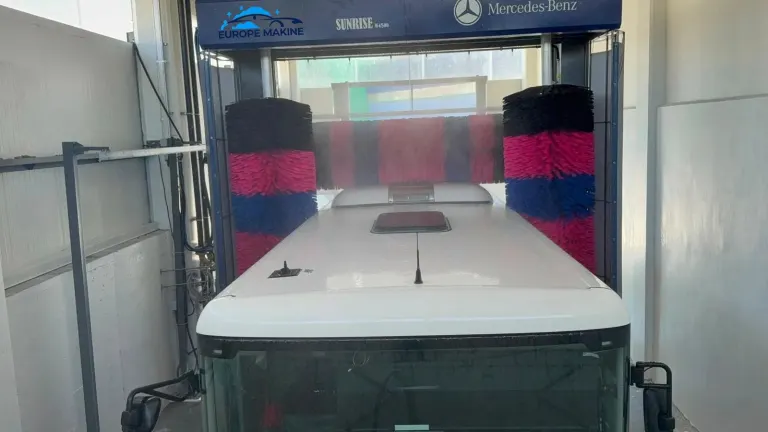
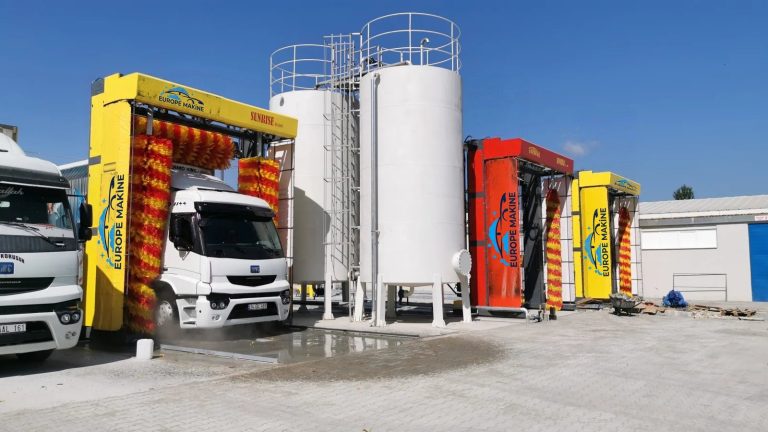
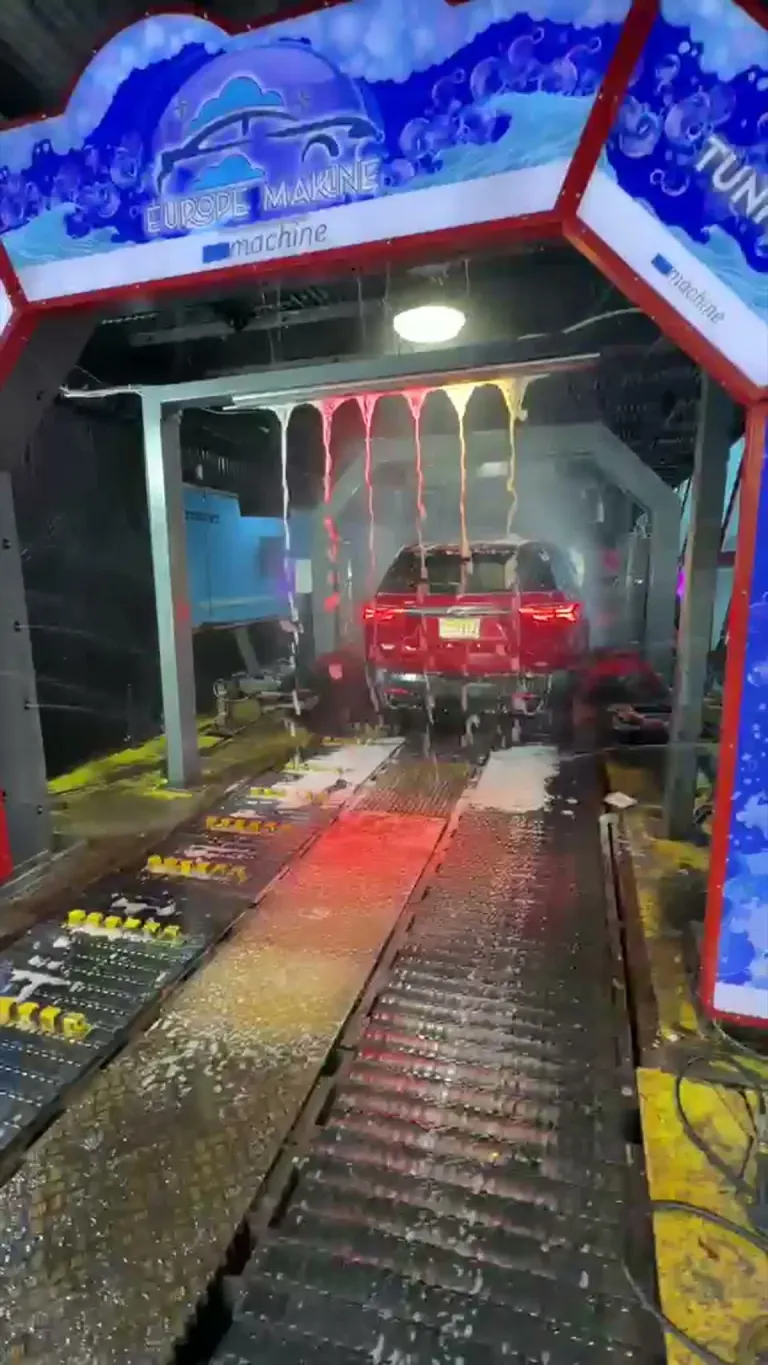
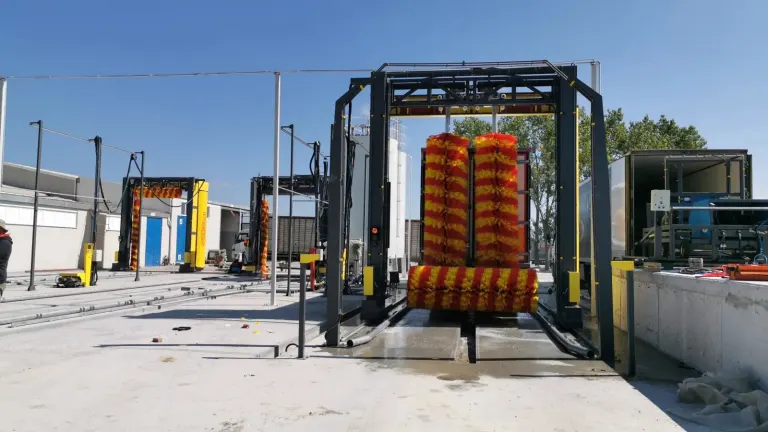
We manufacture wash systems, including the SUNRISE W4000 and W4700 heavy vehicle wash, and build turnkey car washes that cover site, permits, installation, calibration, crew training and handover. Payment and access control come from third-party suppliers; a turnkey project plans for them, including space for gates and pay points, power and data routes, and how the lane flows. Confirm any integration requirement with the supplier you choose.
A simple way to decide
Start with your customers. If most of your trade is casual and cash-light, a clear pay station with bank card payment and a QR option may be enough. If you expect regular fleet work, add account-level features and identification that avoids a stop at the pay point. If you want little or no staff presence, invest in the fallbacks and remote alerts, not only the gate. In every case, write down the three jobs, who does each one, and what the driver sees when it goes wrong.